Estimated Reading Time: 27 minutes
The 2025 NFL playoff field is set, and the road to Super Bowl 60 starts now.
The 14 best teams in the NFL head into the postseason, all with hopes of lifting the Lombardi Trophy, but only one team can. So, we’ll look at the biggest strengths and weaknesses of every playoff team to see who really has the edge as we head into wild-card weekend.
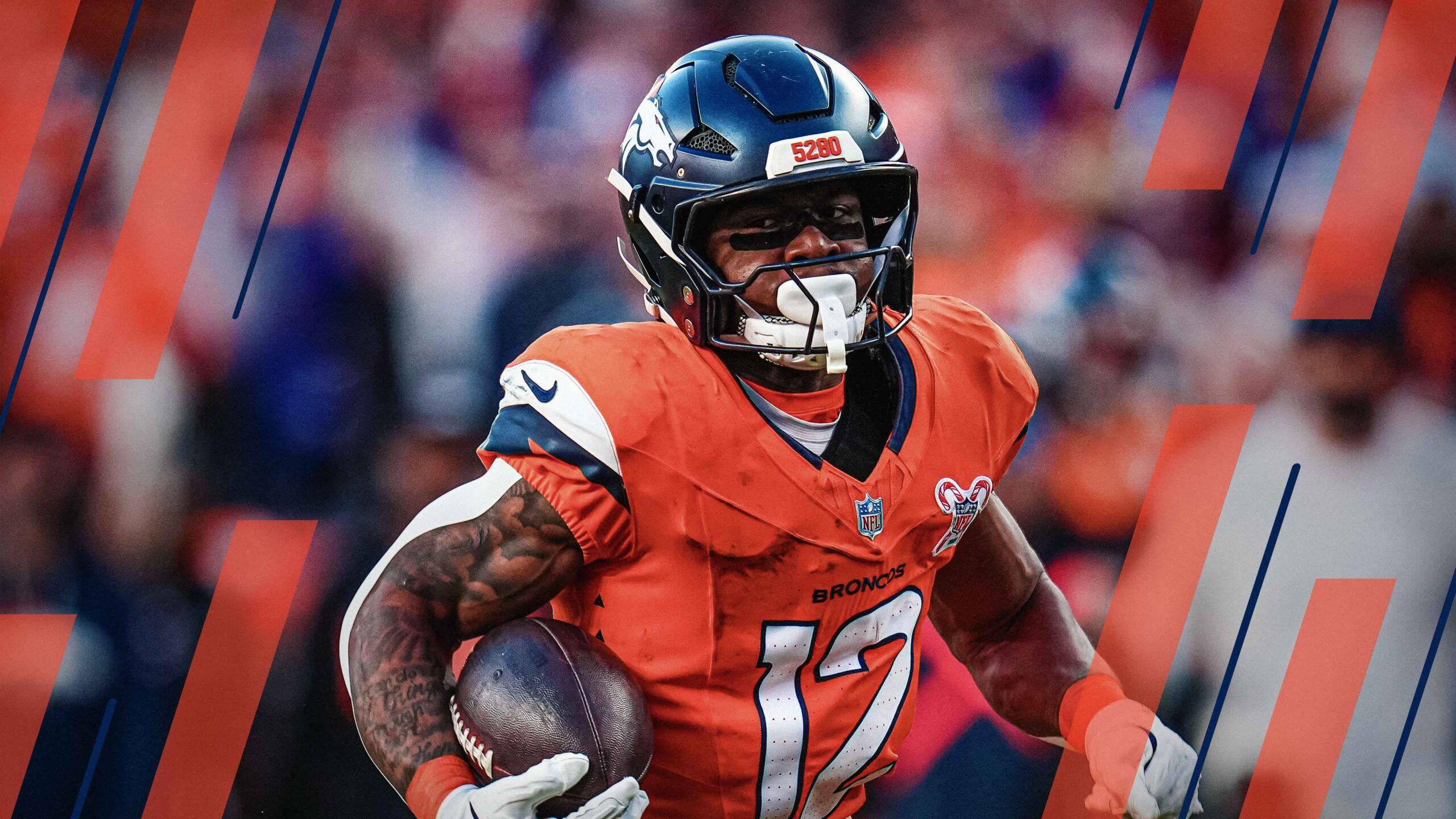
Denver Broncos (14-3)
Biggest strength:Pass-rushing
The Broncos’ defense as a whole is one of the premier units in the NFL. The group possesses tough tacklers against the run, is excellent in coverage and has talent at all three levels. But it’s the Broncos’ ability to rush the quarterback that elevates them to elite status. Only the Vikings pressure opposing quarterbacks at a higher rate than the Broncos (42.1% of passing snaps), but no team has more sacks in the NFL (79) than Denver.
The Broncos can beat you in a variety of ways. With Nik Bonitto (77.1 grade, 22nd) and Jonathon Cooper (66.3 grade, 61st) combining for 127 pressures and 27 sacks, the Broncos can win off the edge. They can also win inside with Zach Allen (62.6 grade, 48th), who has 73 pressures and 10 sacks, and John Franklin-Myers (61.3 grade, 53rd), who has 39 pressures and eight sacks.
They can also blitz better than most defenses. The Broncos blitz at the sixth-highest rate in the NFL and rank seventh in EPA allowed and third in success rate when blitzing.
Biggest weakness: Running the ball
Overall, the Broncos’ offense has question marks. Bo Nix’s (75.2 grade, 17th) play has been uninspired at times in 2025. His 20 turnover-worthy plays are sixth among quarterbacks, and his 6.4 yards per attempt ranks 34th in the NFL. However, Nix has shown he can manage the offense. It’s the Broncos’ ability to consistently run the ball that could come under scrutiny in the postseason.
The Broncos rank 25th in rushing success rate in 2025 and 20th in first-down rushes. Their efficiency has improved since RJ Harvey (68.3 grade, 42nd) took over as the starter in Week 11, but the Broncos still rank 21st in EPA per rushing play over that stretch. Their PFF run-blocking grade (75.1) is sixth in the NFL, and the Broncos are also sixth in yards before contact per attempt (1.5). Denver is creating lanes, but the Broncos are dead last in yards after contact per attempt (2.5) and rank 18th in explosive rushes.
New England Patriots (14-3)
Biggest strength: Quarterback play
The New England Patriots are blessed. Drake Maye (90.1 grade; 3rd) has hit the ground running in his second year in the NFL, and the Patriots are reaping the benefits. Maye has separated himself as one of the clear MVP candidates in 2025, completing a league-best 72.0% of his pass attempts for 4,394 yards, 31 touchdowns and eight interceptions. He’s been one of the most accurate quarterbacks in the league — Maye is seventh in percentage of throws with plus accuracy — and one of the most aggressive, with the second-most completions of 20 yards or more.
He’s everything wrapped into one. Maye is the type of quarterback that front offices, coaches and fans dream of, and he’s carried the Patriots to a 14-3 record in his second season in the league. A lot will be said of the Patriots facing the easiest schedule in the league, but Maye has shown enough on the field, against a variety of defenses — and with a less-than-stellar supporting cast — to eschew the belief that his play only exists because of the strength of his opponents. The Patriots will be able to lean on Maye for years to come.
Biggest weakness: Defending the run
After a hot start to the season, where the Patriots allowed over 75 rushing yards just twice in their first nine games, their effectiveness against the run fell off a cliff. That can be attributed to the short-term losses of Milton Williams (65.0 grade; 43rd) and Khyiris Tonga (67.2 grade; 38th), but the Patriots are 29th in success rate against the run this season, and rock bottom since Week 10.
It’s no secret that offenses get bogged down come playoff time. Teams become more conservative, and running the ball is a necessary component for success. Naturally, that means defenses have to be up to snuff against the run. Right now, that’s not the case for the Patriots. That has to change fast.
Jacksonville Jaguars (13-4)
Biggest strength: Forcing turnovers on defense
The Jaguars are a team hitting their stride at the right time, winning eight consecutive games heading into the postseason — and they’re doing it while looking great across the board. First-year head coach Liam Coen has the offense humming and Trevor Lawrence (84.7 grade; 8th) playing some of the best football of his career, but it’s the defense’s propensity for forcing takeaways that feels like the Jaguars’ biggest strength down the stretch.
Turnovers aren’t created equally and can often be heavily luck-based, but the Jaguars have forced a turnover in 14 of their 17 games this season and are 11th in EPA generated off a turnover. They have a group of players who have a knack for getting the ball out, and they’re getting the rub of the green.
The margins for error are increasingly thin in the postseason, and every possession counts. If the defense can force turnovers and hand the offense extra possessions, that’s a huge boost.
Biggest weakness: Drops
In just one season in charge, Coen has turned the Jacksonville offense into one of the best in the league. The Jaguars rank 17th in EPA per play and 16th in success rate in 2025, and Lawrence has had the best season of his career under center. However, the passing game has suffered from drops in 2025 — more so than any other team in the NFL. Lawrence’s 39 drops by his receivers are the most in the NFL, and the Jaguars have played just one game this season without a drop — all the way back in Week 4.
Three Jaguars receivers — Parker Washington (79.9 grade; 18th), Brian Thomas Jr. (65.5 grade; 69th) and Dyami Brown (55.5 grade; 115th) — are in the bottom 25 for drop rate in 2025, while Brown has the highest mark in the league (17.4%). The addition of Jakobi Meyers (72.1 grade; 38th) has lifted the Jaguars’ passing offense, and Meyers has only one drop in nine games for the team. But drops are drive-killers for offenses. Coen needs Lawrence to trust his receivers.
Pittsburgh Steelers (10-7)
Biggest strength: Defensive line
The Steelers are synonymous with toughness on the defensive line, and though the defense may not stack up against previous iterations, it still knows how to drag you into the mud. It starts with Cameron Heyward (90.4 grade; 1st), who, even at 36 years old, is one of the best players at the position. Heyward has a team-high 50 pressures and 41 stops on the season, but the Steelers just have a myriad of players on the defensive line who can come in and contribute. Veteran T.J. Watt (74.2 grade) has dealt with injuries in 2025, but still has 46 pressures and 28 stops, and Nick Herbig (85.7 grade) continues to ascend with a career-high 47 pressures and eight sacks.
With young talent like Herbig, Derrick Harmon (53.3 grade) Keeanu Benton (58.6 grade) and Jack Sawyer (51.4 grade) showing flashes in 2025, the Steelers’ defensive line is set for now and down the line. The Steelers are fourth in PFF pass rush grade (83.5) and 14th in PFF run-defense grade (69.1), and their success is down to an immensely talented defensive line.
Biggest weakness: Creating explosive plays
The Steelers’ offense runs on Aaron Rodgers (68.7 grade; 29th) time, and in recent seasons, that revolves around the veteran quarterback getting the ball out of his hands quickly. That means relying on yards after the catch, with the occasional deep shot downfield if there’s an isolated matchup. In a sense, it’s worked. The Steelers are 10-7 and won the AFC North, with the offense holding up its end of the bargain enough times, but it comes with major hangups heading into the postseason — namely, their lack of explosiveness on offense.
The offense has generated just 123 explosive plays in 2025, 27th in the NFL, with Rodgers completing just 18 passes of 20 yards or more. Rodgers’ 2.56-second average time to throw is the fastest of his career, and just 10.4% of his passing attempts are 20 or more yards. The Steelers' offense has often felt congested in 2025, and could face the same fate in the postseason.
Houston Texans (12-5)
Biggest strength: Their superhuman edge rusher duo
The Texans’ defense is one of, if not the best, in the NFL. The unit ranks first in EPA per play allowed, first in success rate and allows the fewest points per game in the league. The Texans are excellent at all three levels, but it’s the duo of Will Anderson Jr. (92.3 grade; 2nd) and Danielle Hunter (89.3 grade; 5th) that gives them the edge.
Anderson and Hunter wreak havoc off the edge with their ability to rush the passer and stop the run. The duo has combined for 176 pressures and 29 sacks, as the Texans have the third-best pressure rate and best pass-rush win rate in the NFL. Their ability to take the game to offensive linemen, hurry the quarterback and disrupt passing games has lifted the Texans to the playoffs.
Biggest weakness: Running the ball
After a slow start, combined with losing C.J. Stroud (72.9 grade; 21st) to a concussion midseason, the Texans’ passing game has looked a little closer to a unit that’s capable of holding up its end of the bargain in the postseason. Since Stroud returned in Week 13, he’s completed 61.9% of his passes for 1,339 yards, eight touchdowns and three interceptions, compiling a 74.4 overall PFF grade. The Texans are 13th in EPA per passing play during that stretch, but have been one of the worst rushing teams in the NFL all season.
Through 18 weeks, the Texans are 30th in rushing success rate, 18th in PFF rushing grade (78.4) and 30th in rushing success rate since Week 13. They’re also bottom-10 in yards before contact per attempt and yards after contact per attempt. The offensive line has struggled up front, but the lack of dynamism in the running back room is double jeopardy for the Texans.
Buffalo Bills (12-5)
Biggest strength: Running the ball
There’s been a shift in the strength of the Bills’ offense in recent seasons. The offensive line has improved, and the additions of David Edwards (71.4 grade; 19th), as well as the growth of Spencer Brown (76.2 grade; 21st) and James Cook (83.4 grade; 9th), have meant that the Bills have leaned into a more run-heavy approach in the last two seasons. The passing game, led by Josh Allen (87.4 grade; 6th), is still one of the best in the NFL, but it’s the running game — where Allen is also a factor — that has become the team’s identity.
The Bills’ 90.8 PFF rushing grade is first among offenses in 2025, and they’re also top five in rushing success rate and EPA per rush. Cook has carried the ball 309 times for a league-leading and career-high 1,621 yards and 12 touchdowns, averaging 95.4 rushing yards per game. Allen has seen his rushing numbers decline, in large part because the Bills don’t need him to be a wrecking ball in the run game as much, but he’s still rushed for 579 yards and 14 touchdowns in 2025.
The Bills can grind opponents down in the run game, but have that explosive element too — they’ve tallied the third-most explosive rushes in the NFL.
Biggest weakness: Stopping the run
As strong as the Bills are up front on offense, and as much as running the ball has become their identity, their inability to prevent gains on the ground in the postseason could be their undoing. Losing Ed Oliver (87.3 grade) for the majority of the season and DaQuan Jones (75.5 grade; 11th) for a stretch has hurt the Bills, but the defense has been soft up front regardless. Their 50.4 PFF run-defense grade is 27th in the NFL, and Buffalo is 30th in EPA per rush allowed as well as 28th in rushing success rate.
That inability to stop the run means that teams can commit to rushing the ball, controlling the clock and, importantly, keeping the Bills’ offense off the field. The formula to attack the Bills relentlessly on the ground has worked, with the Dolphins and Falcons both rushing for well over 150 yards in wins against the Bills. Buffalo could be in for a tall task against a Jaguars team that's efficient on the ground.
Los Angeles Chargers (11-6)
Biggest strength: QB Justin Herbert
There might be no player more important to their team in 2025 than Justin Herbert (83.2 grade; 9th). The Chargers' offense has felt labored for large stretches, struggling to run the ball and to protect the quarterback, but Herbert has dragged the offense through the mud and into the playoffs. His ability to drive the unit in tough spots has been key, and the addition of the rushing side to his game has been another wrinkle for defenses.
Herbert has carried the ball 83 times for a career-high 498 rushing yards and two touchdowns, and his 16 rushes for 10 yards or more are the fourth-most among quarterbacks. The former Oregon Duck is one of the NFL’s top quarterbacks and one of the few who can carry a team on his back.
Biggest weakness: Offensive line
As good as Herbert is, he has to contend with a bad offensive line, making life even tougher. Herbert has been sacked 54 times in 2025, third-most in the NFL, and has been pressured on 42.7% of his dropbacks. The Chargers' offensive line has dealt with injuries throughout the year, losing starting tackle Rashawn Slater before the season and tackle Joe Alt (79.0 grade; 17th) in the middle of the year. At points, the Chargers have been down to their fourth and fifth-string tackles, and feeling the brunt of it.
Los Angeles has allowed the highest pressure rate in the NFL, with Herbert earning a 58.7 overall PFF grade when pressured. Additionally, no quarterback has thrown more touchdowns while pressured (10). It’s no way to live, though. And up against the top defenses in the NFL in the postseason, the Chargers’ offensive line is in for a rough ride.
Seattle Seahawks (14-3)
Biggest strength: Defense
Like the Broncos and Texans, the Seahawks have one of the NFL’s elite defenses. But whereas the Texans’ unit is more top-heavy with elite star power, the Seahawks just have bodies and bodies of depth all over the field and do everything well. Their 82.8 PFF grade is fourth among defenses in the NFL, and they’re second in EPA per play allowed as well as fourth in success rate. The Seahawks are just one of three teams, along with the Texans and Browns, to be top five in PFF grade, EPA per play and success rate on defense.
The Seahawks blitz at the sixth-lowest rate in the NFL, but get pressure at the fifth-highest rate in the NFL and have 57 sacks — the fourth-most in the league. There’s just a ludicrous amount of talent up front for the Seahawks, with the addition of veteran DeMarcus Lawrence (82.9 grade; 12th) in particular paying dividends. Lawrence has 52 pressures and eight sacks, while second-year interior defender Byron Murphy II has broken out with 50 pressures and a team-high nine sacks. The secondary is filled with talent, too, and the Seahawks’ 84.3 PFF coverage grade is second in the NFL. This is a unit full of difference-makers.
Biggest weakness: Sam Darnold under pressure
Seahawks quarterback Sam Darnold (79.3 grade; 10th) has been a hit in his first year in Seattle, leading the team to a 14-3 record — their best since 2013 — and the top seed in the NFC. Darnold’s numbers dropped from a year ago, but he had an improved big-throw rate, turnover-worthy play figure and pressure-to-sack clip as he quarterbacked one of the NFL’s best offenses. His connection with Jaxon Smith-Njigba (92.8 grade; 2nd) led to the Seahawks housing one of the most explosive passing offenses in the league, but as good as Darnold has been, he often still feels on the precipice of implosion — especially when pressured.
The Seahawks have done a good job of protecting Darnold, who has been pressured on 34.2% of his dropbacks in 2025 and sacked just 27 times — the 17th-most in the NFL. However, Darnold can be cataclysmic in those moments. When pressured, Darnold has thrown the most interceptions in the NFL (8) and is top-10 in turnover-worthy plays (10), while compiling a 47.9 overall PFF grade.
Darnold could be facing a series of defenses that have the chops to get after him in the postseason, including the Rams. In two games against Los Angeles, Darnold was pressured on 38.1% of his dropbacks, sacked six times and tagged for four interceptions while notching a 40.5 overall PFF grade.
Chicago Bears (11-6)
Biggest strength: Running the ball
A staple of Ben Johnson’s offense in Detroit was the ability to run the ball. In his three years as the Lions’ offensive coordinator, the offense was one of the best units in the NFL, and consistently found ways to win on the ground. Now, in his first season with the Bears, Johnson has taken that identity and run with it. The Bears finished the season with an 11-6 record, won the NFC North and made the postseason for the first time since 2020, all on the back of an excellent offensive performance that largely started with the ability to run the ball.
The rebuilding of the Chicago offensive line has been a central force in the Bears’ improvement, with guard Joe Thuney (77.9 grade; 6th), guard Jonah Jackson (73.9 grade; 13th) and center Drew Dalman (76.5 grade; 7th) all joining the team in the offseason. Tackle Darnell Wright (82.8 grade; 11th) also took a big step forward and became a legitimate All-Pro candidate. The Bears' 90.2 PFF rushing grade is tied for third in the NFL, and their 77.4 PFF run-blocking grade is third.
The Bears have been effective rushing the ball on a down-to-down basis and when creating big, explosive plays. They’re second in rushing success rate and EPA per rush, and have more explosive rushes than any team in the NFL.
Biggest weakness: Rushing the quarterback
The Bears have outperformed all expectations in 2025, but it isn’t a fairytale story. They’re legitimately one of the best teams in the NFL, and in a season where there isn’t a clear favorite, why not them? However, if there’s anything that could hold the Bears back, it’s their ability to rush the passer. Through 18 games, the Bears have 41 sacks, 19th-most in the NFL, but pressure opposing quarterbacks on just 32.2% of passing plays — 25th in the NFL.
When the playoffs come around, and you want to challenge for a Super Bowl, you need star power on the defensive line, — namely a player with the caliber of pressuring the quarterback half a dozen times throughout the game. The Bears have Montez Sweat (70.9 grade; 42nd) — who leads the team with 53 pressures — and Gervon Dexter Sr. (57.7 grade; 72nd) — who has 39 pressures — but neither exudes the necessary talent to constantly live in opposing backfields. Sweat has just three games with five or more pressures in 2025.
Philadelphia Eagles (11-6)
Biggest strength: Pass coverage
The Eagles’ Super Bowl defense is still alive, though it hasn’t been plain sailing in 2025. However, they’ve been blessed with a defense that has stepped up with heaps of young talent, and it’s in the secondary where they’re really the strongest. The cornerback duo of Quinyon Mitchell (74.4 grade; 16th) and Cooper DeJean (77.3 grade; 8th) has helped shut down some of the NFL’s top passing attacks in 2025, and the Eagles’ 67.4 PFF coverage grade is 14th.
Mitchell has been a true shutdown corner in 2025, allowing just 36 receptions on 82 targets for 389 yards, while DeJean has 12 pass breakups — the fifth-most in the NFL. Combined, Mitchell and DeJean have allowed just one touchdown in coverage. But beyond Mitchell and DeJean, Philadelphia's linebacking corps — Zack Baun (83.9 grade; 5th), Jihaad Campbell (76.2 grade; 13th) and Nakobe Dean (61.7 grade; 42nd) — have all been pivotal in shutting down the middle of the field.
Biggest weakness: Offensive consistency
The success of the 2024 Eagles was largely predicated on their talent across the board. In 2025, that star power still exists, but the marriage between the pass and run game has felt more disjointed than ever before. When the passing game is clicking, the Eagles struggle to run the ball, and when Saquon Barkley (67.9 grade; 40th) is rushing well, the passing game can’t catch a break. Through 18 weeks, the Eagles are 21st in success rate on offense and have had three separate games without a completed pass in the second half.
Of course, the Eagles have won all three of those contests, but that’s not a reality you want to live in in the playoffs. Tough defenses pave the road to the Super Bowl, and flatlining on offense for entire halves at a time won’t fly against those opponents. Issues on the offensive line — with the interior grappling with poor play and tackle Lane Johnson (77.4 grade; 18th) dealing with injuries — haven’t helped, but the Eagles have been on the brink of putting it together and failing to do so.
Carolina Panthers (8-9)
Biggest strength: Offensive line play
The Panthers fell backward into the playoffs, losing three of their last four games — including a potential clincher against the Tampa Bay Buccaneers — but were bailed out by the Falcons defeating the Saints in Week 18 to give Carolina a three-way tiebreaker. Now they’re here for the first time since 2017, and the Panthers will believe they can cause an upset against the Rams in the wild-card round. They defeated the Rams 31-28 back in Week 13.
Their strength in that game, and in every matchup, is the play of the offensive line. The Panthers’ offensive line has performed exceptionally well across the board — the team's 75.9 PFF run-blocking grade is fifth in the NFL, while its 67.4 PFF pass-blocking grade is 17th. They’re a big, athletic unit at all five spots, capable of moving defenders in the run game while also adequately protecting Bryce Young (70.5 grade; 26th) — allowing a 28.1% pressure rate. The Panthers are a physical team that can run the ball well, and it starts with the good work up front.
Biggest weakness: Passing game
There will naturally be major questions about Young and the passing game heading into the playoffs, and they’ll all be justified. Young’s 70.5 overall pff grade is a drop from a year ago, but he set career highs in passing yards (3,012) and touchdowns (23) in the Panthers’ best season in almost a decade.
Despite that, Carolina's passing game is hard to trust heading into the playoffs. The Panthers are 25th in passing EPA in 2025, and Young’s big-time throw rate dropped from 6.6% in 2024 to 4.3% in 2025. The passing game has just failed to create explosive plays over the course of the season.
The Panthers are 26th in explosive passing plays in 2025, and Young’s percentage of deep passing attempts dropped from 13.8% to 8.6% — 39th out of 41 quarterbacks in 2025. Pair that with height issues, meaning Young rarely targets the middle of the field, and suddenly there’s few options for how the Panthers can attack defenses through the air. That's true even with the addition of excellent rookie wideout Tetairoa McMillan (78.7 grade; 23rd).
Los Angeles Rams (12-5)
Biggest strength: The Stafford-Nacua connection
Rams quarterback Matthew Stafford (93.5 grade; 1st) has delivered an MVP-caliber performance in 2025, helping lift the Rams to a 12-5 record — their best since their 2021 Super Bowl-winning season. The Rams feel something close to a complete team, and their 96.2 PFF grade is first in the NFL. They’re a team with multiple strengths, but it’s the connection between Stafford and receiver Puka Nacua (96.3 grade; 1st) that’s the real force multiplier for the offense.
Nacua caught a league-leading and career-high 129 passes for 1,715 yards and 10 touchdowns, while Stafford led the league in passing yards (4,707) and touchdowns (46). Stafford’s trust in Nacua is justified. The former fifth-round pick is an automatic bucket. He leads the league in contested catches. He can win in the slot or out on the boundary, and just plays exactly how Stafford wants. They’re the epitome of an elite quarterback-wide receiver connection, and a nightmare matchup for any playoff team.
Biggest weakness: Pass-blocking
The Rams don’t have many weaknesses, but if teams want to get after them, then going after the offensive line might be the best bet. Stafford has been sensational in 2025, but he’s 38 years old and can’t move around the pocket as he once could. The Rams’ 62.3 PFF pass blocking grade is 25th in the NFL, and in the last month of the season, they’ve allowed pressure at the 13th-highest rate in the NFL. The injury to tackle Alaric Jackson (82.9 grade; 11th) forced D.J. Humphries into the lineup against the Falcons in Week 17. But with Jackson back and Rob Havenstein (56.4 grade; 74th) not far away from returning, the Rams feel close to impenetrable. Yet, if defenses can get Stafford off his mark, they’ll have a chance.
San Francisco 49ers (12-5)
Biggest strength: The passing game
The 49ers have crawled through the mud to finish the regular season with a 12-5 record. They’ve been banged up, lost major players to big injuries and endured one of the NFL’s toughest divisions, but they’re out on the other side. It’s a testament to the job Kyle Shanahan has done in 2025, and the passing game — and Shanahan’s inclusion in it — is the 49ers’ biggest strength. 49ers quarterback Brock Purdy (90.0 grade; 3rd) has been on a tear over the last month of the season, completing 69.9% of his passes for 1,188 yards, 12 touchdowns and three interceptions, earning a league-high 94.3 overall PFF grade.
Purdy has often been called a game manager in Shanahan’s offense, but his creativity, ability to extend plays out of the pocket and make magic happen have helped give an edge that hasn’t existed with previous quarterbacks. The San Francisco offense is usually in rhythm when Shanahan is in his bag, but when the play breaks down, Purdy has proven that he can make Shanahan right. His connection with tight end George Kittle (90.8 grade; 1st) and running back Christian McCaffrey (78.3 grade; 16th) elevates the offense, too. They’ll head into the postseason as a unit to fear.
Biggest weakness: Rushing the quarterback
Injuries have plagued the 49ers all season, and losing Nick Bosa after just three games set the tone for their defensive struggles. The 49ers are tied for 28th in PFF defense grade (52.8) and 26th in success rate on defense, but the real struggles come when the defense is tasked with pressuring the opposing quarterback. No team has sacked the quarterback less than the 49ers in 2025 (24), and their 30.5% pressure rate is 30th in the NFL.
The problem comes with the personnel. Losing Bosa — who is still fourth on the team in sacks despite playing just three games — was a huge blow, and the 49ers just don’t have the horses on the defensive line. Edge defender Bryce Huff (69.2 grade; 44th) leads the team with 45 pressures and five sacks, but beyond Huff, there’s a discerning lack of pass-rushing talent on the team.
Green Bay Packers (9-7-1)
Biggest strength: Passing game
The Packers have fallen by the wayside over the last month, heading into the playoffs with a 9-7-1 record and losing four games in a row — but they’re still one of the most dangerous teams in the NFL. That's especially true on offense, and particularly when Jordan Love (88.5 grade; 5th) has the ball in his hands. Love has been one of the most effective quarterbacks in the NFL in 2025, and the Packers’ offense rolls in the passing game. Their 88.8 PFF passing grade is second in the NFL, and the Packers are third in EPA per passing play and fourth in passing success rate.
From top to bottom, the Packers’ passing game is a well-put-together unit. Head coach Matt LaFleur is a real offensive mind and terrific play-caller. Love has had an excellent season, completing 66.3% of his passes for 3,381 yards, 23 touchdowns and six interceptions while averaging a career-high 5.8% big-time throw rate. Love rarely takes sacks, can make exceptional throws and has receivers he can trust, even without tight end Tucker Kraft (78.1 grade; 6th).
Biggest weakness: Stopping the run
Long has been the issue for the Packers: Their inability to defend the run. It’s cost them in high-leverage moments in seasons past, and heading into the postseason, it might be their one glaring weakness again. Jeff Hafley’s defense looked great to start the season, but the loss of Micah Parsons (92.0 grade; 3rd) has taken its toll. The Packers are 21st in success rate against the run and 23rd in EPA against the run in 2025 despite their strong start.
Since Parsons went down, the Packers are 28th in EPA against the run and 31st in rushing success rate. It’s a small three-game sample size carried by a big performance from Derrick Henry, but it could be a sign of things to come in the playoffs. The Packers’ 57.9 PFF run defense grade is tied for 23rd.