Athletic testing at the NFL Scouting Combine often makes scouts and pundits alike rethink their perspective on draft prospects. Some turned in standout performances that bolster their cases for higher selections, while others didn’t quite live up to that standard for one reason or another. Here are a handful of players whose stock is either up or down following the combine.
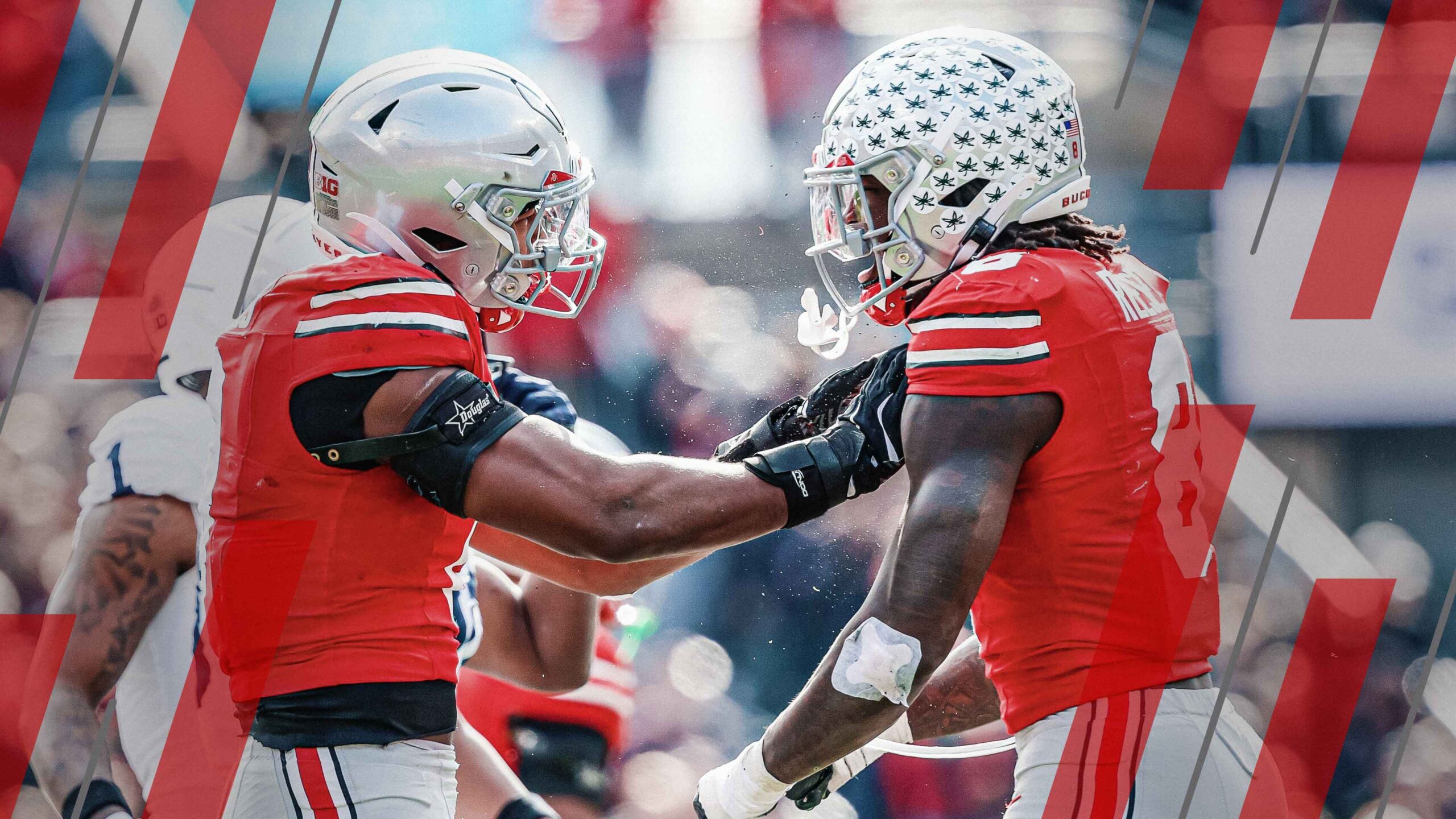
Stock UpLBs Arvell Reese and Sonny Styles, Ohio State
Long expected to be two of the best athletes in the entire class, Ohio State’s Arvell Reese and Sonny Styles put on an absolute show at the combine. Reese officially worked out as an edge defender, while Styles appeared as an off-ball linebacker. Both players led their respective positions with an official 4.46-second 40-yard dash. Styles also posted position-leading marks with a 43.5-inch vertical jump and an 11-foot-2 broad jump.
Both players were likely to be taken within this year’s first 20 selections anyway, but considering their incredible athleticism and college production, it’s hard to envision either of them getting past the first seven picks.
LB Jacob Rodriguez, Texas Tech
Rodriguez is coming off an incredible final season at Texas Tech in which he led the nation with a 93.0 PFF overall grade while garnering enough votes to finish fifth in the Heisman race. His athletic ability seemed to be the final aspect of his game in question, although he has posted PFF Game Athleticism Scores above 82.5 in each of the past three seasons.
Rodriguez may have proven doubters wrong by running a more than adequate 4.57-second 40-yard dash. His 38.5-inch vertical jump and 10-foot-1 broad jump are also respectable figures, and he led a limited group of participants with a 6.90-second three-cone drill. Rodriguez’s production was never in question, but his newly discovered athletic ability may have earned him a top-50 selection, if not better.
S Dillon Thieneman, Oregon
Thieneman was arguably the best single-high safety in the country as a true freshman at Purdue in 2023. His blazing speed allowed him to reel in six interceptions and post a perfect 100.0 PFF Game Athleticism Score. In the following two seasons, he posted 99.3 and 95.1 Game Athleticism Scores while playing in a greater variety of roles at Purdue and Oregon.
His athletic prowess is finally being recognized after he ran a blazing 4.35-second 40-yard dash with an equally impressive 1.52-second 10-yard split. Thieneman also ranked second among the safety group with a 41-inch vertical jump. If he wasn’t a first-round lock before the combine, he certainly is now. He has the opportunity to be among the first 20 players selected in this year’s class.
T Monroe Freeling, Georgia
One complication in projecting this draft class is the lack of proven options at left tackle. Miami’s Francis Mauigoa and Utah’s Spencer Fano both played right tackle in college. There are questions about Alabama’s Kadyn Proctor and his ability to remain at tackle at his size. Utah’s Caleb Lomu is likely considered a good prospect, but not an elite one.
All of those questions could work to the advantage of Georgia’s Monroe Freeling, who is coming off an outstanding final season and combine performance. After earning a terrific 85.6 PFF pass-blocking grade in 2025, Freeling ranked among the most impressive offensive linemen in the class with his 4.93-second 40-yard dash, 33.5-inch vertical jump, and 9-foot-7 broad jump. He still needs to add some polish to his game, particularly on the ground, but a team in the top 20 could certainly take a chance on his athletic potential and pass-blocking ability.
TE Eli Stowers, Vanderbilt
Stowers’ premier athleticism shined at the combine and may have solidified him as TE2 in this class. First and foremost, he weighed in at 239 pounds. While Stowers still likely needs to add at least 10 more pounds to be an every-down option, his explosiveness at that size is hard to ignore.
His 4.51-second 40-yard dash ranked second among the tight end group, behind Oregon’s Kenyon Sadiq, likely the first tight end to be selected in the draft. He led all players with his incredible 45.5-inch vertical jump. Bear in mind that Stowers has played less than three full seasons at tight end after starting his college career as a quarterback. He’ll be an intriguing receiving option who could develop into a starter with some added bulk.
WR Deion Burks, Oklahoma
Standing at just 5-foot-10 and 180 pounds, Burks needed his athleticism to stand out in a deep wide receiver group. He accomplished that mission by posting a blazing 4.30-second 40-yard dash. His terrific 42.5-inch vertical jump also led the wide receiver group. PFF’s Game Athleticism Score advocates for Burks, who posted an elite 99.1 mark in 2023 at Purdue and a similarly impressive 94.7 mark this past season.
Burks’ size and lack of physicality can be a detriment at times, but he is clearly an excellent athlete with route-running chops to boot. His combine performance may have solidified him as a top-100 selection to a team in search of an explosive slot weapon.
Read More Stories Explore PFF Tools 13 min read Quick Read Ryan Smith details the best-scenario for each AFC team in the 2026 NFL Draft. 2026 NFL Draft: Best-case scenario for all AFC teams By Ryan Smith 10 min read Quick Read Keeping top team goals in mind, John Kosko pairs ideal 2026 NFL Draft prospects with each NFC team. 2026 NFL Draft: Best-case scenario for all NFC teams By John Kosko Try the tool Mock Draft Simulator Make picks, trade up, and run your own draft in minutes. Build your board Big Board Builder Create custom rankings with Scouting Mode at the core. Subscribe For Full Access Mock Draft Simulator Be the GM for any team in the 2026 NFL Draft with a fully immersive simulation that lets you trade picks and players for a realistic, in-depth draft experience. Customizable Draft Big Board Trevor Sikkema’s Take control of your rankings with a customizable big board that lets you add players, share with friends, export to CSV and save your personalized list. Scouting Assistant Master the evaluation process with a customizable grading system built for serious scouts. Choose your own scouting categories, assign 0–10 grades in each area and generate a finalized prospect grade tailored to your criteria. NCAA Premium Stats Our exclusive database, featuring the most in-depth collection of NCAA player performance data. Subscribe For Full Access Stock DownWR Jordyn Tyson, Arizona State and CB Jermod McCoy, Tennessee
Tyson and McCoy are the two most intriguing prospects with varying medical concerns. Tyson’s history includes a major knee injury suffered in late 2022, a collarbone injury that ended his 2024 season and hamstring injuries that diminished his 2025 production. He recorded an impressive 26 reps in the bench press but did not participate in any speed or agility tests, which won’t quell concerns about his long injury history.
McCoy is 13 months removed from a major knee injury and also did not participate in any testing aside from the bench press. He earned PFF Game Athleticism Scores of 96.8 and 99.9 in 2023 and 2024, respectively, but scouts haven’t seen him in action since last January. Two very talented cornerbacks, Will Johnson and Benjamin Morrison, fell to the second round in last year’s draft due to injury concerns. McCoy has less of a track record than those players, which makes him a candidate for the same fate if he doesn’t perform well, or at all, at his pro day.
WR Malachi Fields, Notre Dame
Fields’ stock was rising following a nice Senior Bowl performance. However, his long speed and separation ability are likely still in question following a mediocre combine performance. His 4.61-second 40-yard dash was the second slowest among the wide receivers who chose to run.
Many of Fields’ measurements, including identical arm length and vertical jumps, compare closely to current Buffalo Bills wide receiver Keon Coleman, who has yet to pan out for the team through his first two seasons. Coleman was also known for making acrobatic catches despite his lack of consistent separation in college. Some teams could be wary of that archetype, which could hinder the draft stock of Fields, who sits in just the 13th percentile in separation percentage against single coverage over the past three seasons.
RB Emmett Johnson, Nebraska
Johnson was at least in the mix for RB2 in this class with all of the running backs jockeying for positioning behind Notre Dame’s Jeremiyah Love. Unfortunately, Johnson ran a relatively average 4.56-second 40-yard dash. His 35.5-inch vertical jump and 10-foot broad jump are also relatively average marks. He was the only running back to participate in the three-cone drill but logged a well-below-average 7.32 seconds.
Johnson’s game is based more on his vision and craft behind the line of scrimmage, which will still be valuable to an NFL team. He also posted PFF Game Athleticism Scores between 85 and 91 in each of the past three seasons. Johnson can certainly be a productive runner in the NFL, but his lack of elite traits may make him more likely to be selected on the third night instead of the second.