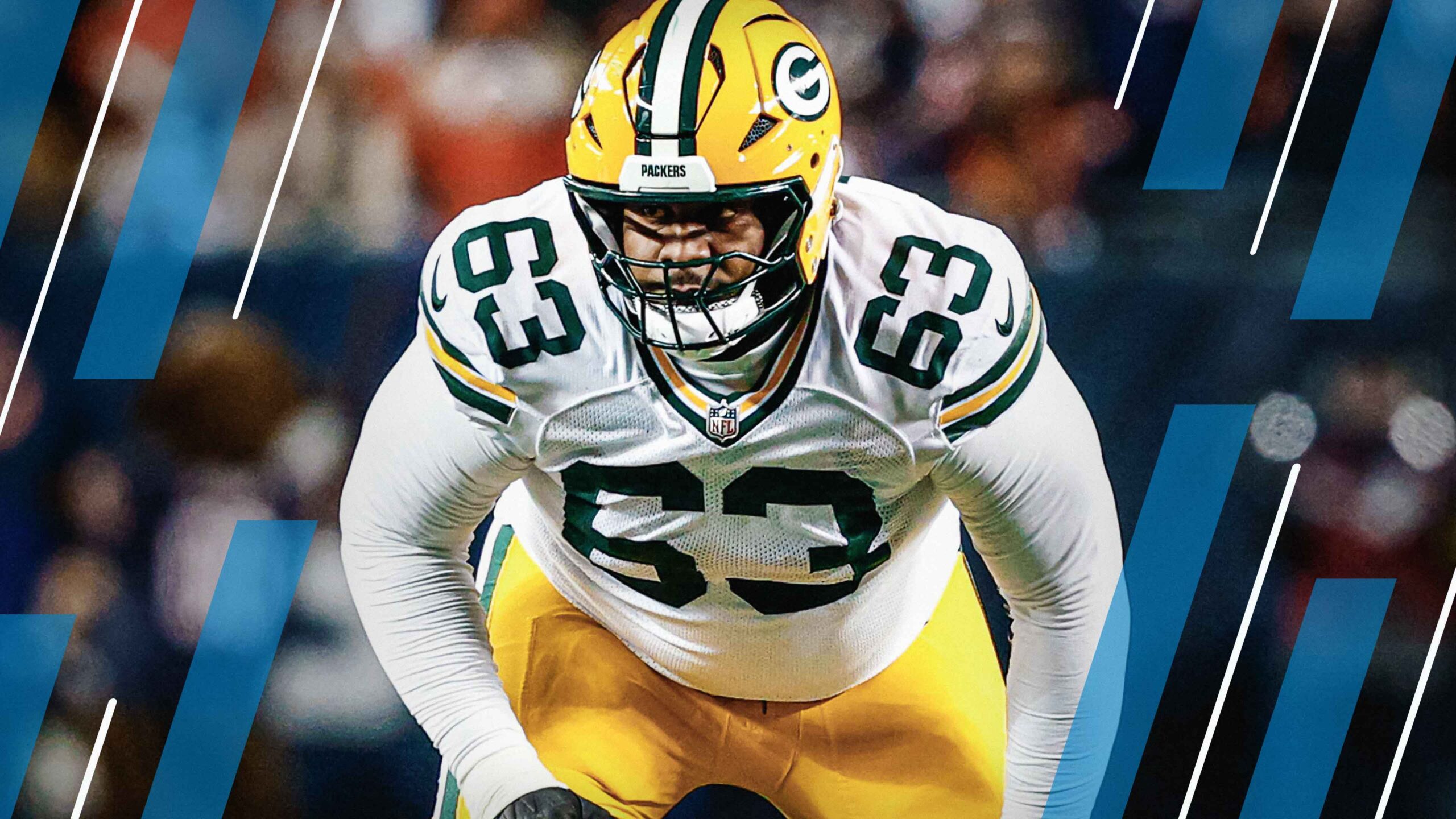
- A drying market based on recent history: NFL teams are growing skeptical of handing out extensive deals over multiple seasons, especially with longer pacts not aging well.
- 2026 NFL Draft season is here: Try the best-in-class PFF Mock Draft Simulator and learn about 2026's top prospects while trading and drafting for your favorite NFL team.
Estimated Reading Time:18 minutes
As NFL teams navigate the waters of free agency, they typically search for lodestars that will direct their franchises for years to come. While improving rosters for the upcoming season is important, so too is establishing pieces for multiple campaigns down the line.
In the cases of players like Alec Pierce, Tyler Linderbaum, Trey Hendrickson and Jaelan Phillips, organizations did just that. Not only did front offices pay them each upward of $27 million per season, but their new teams also tethered themselves to those players for at least three years (based purely on contractual terms).
It’s true that both market-topping names and a slew of other standouts have been rewarded with multi-year commitments in free agency. But a predominant — and interest-piquing — trend has been a plethora of one-year contracts doled out.
With the first wave of free agency complete, at least 56 players have inked a pact for just the 2026 season, excluding the three players who were given the franchise tag. That number is definitely inflated by a combination of aging veterans who may only play for one more season (e.g., Khalil Mack, Tony Jefferson), quarterbacks on veteran minimum deals (e.g., Kyler Murray, Tua Tagovailoa) and players who were released prior to the start of the new league year (e.g., Dalvin Tomlinson, Darnell Mooney). All of that feels relatively standard in the context of the last few years of free agency.
However, a more stunning development pervading the 2026 market has been the number of both young and touted free agents who have signed contracts for only one year.
Of those aforementioned 56 players on one-year arrangements, 34 of them are currently age 28 or younger. That’s a rather staggering figure considering that age group tends to be prime territory for receiving more lucrative and/or longer contracts.
Explore PFF Tools Mock Draft Simulator Be the GM for any team in the 2026 NFL Draft with a fully immersive simulation that lets you trade picks and players for a realistic, in-depth draft experience. Customizable Draft Big Board Take control of your rankings with a customizable big board that lets you add players, share with friends, export to CSV and save your personalized list. Scouting Assistant Master the evaluation process with a customizable grading system built for serious scouts. Choose your own scouting categories, assign 0–10 grades in each area and generate a finalized prospect grade tailored to your criteria. NCAA Premium Stats Our exclusive database, featuring the most in-depth collection of NCAA player performance data. Subscribe For Full AccessIn some situations, these younger players have witnessed declines in production or usage, which explains why they received a one-year “prove it” contract. But in many others, it’s difficult to entirely understand why their markets were so low.
Consider Rasheed Walker, the top tackle in PFF’s Free-Agent Rankings. While Walker’s 2025 season wasn’t as terrific as his prior work, he still sports a 76.8 career PFF pass-blocking grade. The projected market for a 26-year-old tackle who not only stays on the field, but is also strong in pass pro, far surpasses the one-year, $4 million contract he signed with the Panthers.
Another prime example comes via running back Rachaad White. While not an every-down back for the Buccaneers, White still shined by earning an 87.2 PFF rushing grade in 2025 while contributing in pass protection. Even then, the 27-year-old signed with the Commanders for only one year worth a minimal $2 million.
Along similar lines, it’s understandable why some older yet productive players garnered a contract for just 2026. Even then, the likes of Kevin Byard, Al-Quadin Muhammad and Chidobe Awuzie were worthy of longer contracts based on the effectiveness they showed throughout the bulk of last season.
In 2026, perhaps more than ever, the majority of players who didn’t sign on the first day of the legal tampering period proceeded to ink a one-year contract offer. Further, the veterans still available — like Stefon Diggs, Kevin Zeitler and Taylor Decker — will almost assuredly follow suit in the coming weeks and months, with their past pedigrees likely not equating to agreements beyond next season.
Read More Stories Explore PFF Tools 5 min read Quick Read Some NFL teams vigorously attacked roster holes in the first wave of free agency, while others stood pat, leaving them still in search of answers. 2026 NFL Free Agency: Biggest remaining team roster holes By Zoltán Buday 16 min read Quick Read The Colts are banking on Daniel Jones and Alec Pierce, while the Saints need Travis Etienne Jr. to be an elite player in the backfield. 2026 NFL Free Agency: 8 boom-or-bust signings By Dalton Wasserman 18 min read Quick Read The 2026 NFL Draft is coming into focus, and team needs have shifted after the initial wave of NFL free agency. Post-free agency needs for every NFC team By Dalton Wasserman 6 min read Quick Read Thomas Valentine breaks down 10 still available free agents who are flying below the radar but can still help teams succeed next season. Next Free Agency Wave: 10 veterans still flying under the radar By Thomas Valentine 7 min read Quick Read Rams cornerback Trent McDuffie and Ravens edge defender Trey Hendrickson are among the players who earned lucrative new contracts over the past week. 2026 NFL Free Agency: 5 biggest contracts By Mason Cameron Try the tool Mock Draft Simulator Make picks, trade up, and run your own draft in minutes. Build your board Big Board Builder Create custom rankings with Scouting Mode at the core. Subscribe For Full Access Mock Draft Simulator Be the GM for any team in the 2026 NFL Draft with a fully immersive simulation that lets you trade picks and players for a realistic, in-depth draft experience. Customizable Draft Big Board Trevor Sikkema’s Take control of your rankings with a customizable big board that lets you add players, share with friends, export to CSV and save your personalized list. Scouting Assistant Master the evaluation process with a customizable grading system built for serious scouts. Choose your own scouting categories, assign 0–10 grades in each area and generate a finalized prospect grade tailored to your criteria. NCAA Premium Stats Our exclusive database, featuring the most in-depth collection of NCAA player performance data. Subscribe For Full AccessHow can this spate of short-term deals be explained? A few theories come to mind.
First, the market for non-premium players clearly was not as promising as anticipated. That’s especially true at positions like safety, running back and tackle, where large contracts are either rare or can age poorly. The struggles of high-priced 2025 free agents like Dan Moore Jr., Jevon Holland and Trevon Moehrig likely caused teams to be leary of overpaying at those spots.
Moreover, many of these sub-28-year-old players seem content to bet on themselves, parlaying one-year pacts into more money down the line. For someone like Riq Woolen, whose PFF coverage grade has sat below 66.0 in 2024 and 2025 after finishing above 74.0 in his first two years, taking a flier with the Eagles makes sense. The same can be said about names looking to stay healthy and play at a more consistently elevated level like Jaquan Brisker, Isiah Pacheco and Darnell Mooney.
Another school of thought is that front offices are less likely to overcommit resources via free agency, especially considering how badly big paydays can develop. Of the 25 players who inked a deal worth at least $15 million last offseason, just nine garnered at least a 70.0 overall PFF grade while playing at least 500 snaps. A multitude of those names — like Javon Hargrave, Jonathan Allen and Diggs — have already been cut, and it’s fair to assume that teams are waving some caution flags.
Of course, both trades and the NFL Draft affect the perception of the current free-agent pool. NFL teams have continued to pursue big fish via trade, seeming more willing to part with high capital to acquire game-changing stars rather than adding a more average veteran for a high sum. Likewise, in 2025, 18 rookies were picked outside of the first round but produced at least a 65.0 overall grade while playing 500 or more snaps. From a financial perspective, it’s more sound to rely on instant draft production rather than overpaying for a similar kind of contribution.
As recent history has revealed, countless of these 2026-exclusive agreements will prove magical for their teams as well as yield tens if not hundreds of millions down the line. At the same time, the onslaught of new one-year deals represents an adjusted free-agent philosophy from NFL teams. Effectively, organizations don’t want to invest too much time in players with accompanying question marks — even if those names have flourished in the past and possess incredibly high upside.