- The Steelers are turning to much more 11 personnel: Mike McCarthy has ditched heavy-tight-end formations from the last two years, in part due to an improved receiving corps.
- Save on PFF+ for 5 Days Only: Get a full year of PFF+ for just $89.99 before the limited-time offer ends Aug. 25.
With the first two weeks of the NFL preseason complete, the picture has already gotten clearer for the regular-season slate coming up. From starting quarterbacks being decided to depth charts sorting themselves out, more is coming into focus for Week 1.
The preseason slate is often decried for being very basic schematically, with coaches and playcallers not wanting to tip their hand too greatly in games that effectively mean little. However, the first taste of any kind of game action innately presents ideas worth observing — and which can hold gravity for the regular season. That’s especially true for new coordinators taking over specific units, as well as groups that now integrate different players.
Below are five distinctions from the 2026 preseason that are worth paying attention to in September, because they very well may forecast season-wide philosophies.
Los Angeles Chargers’ shift/motion rate
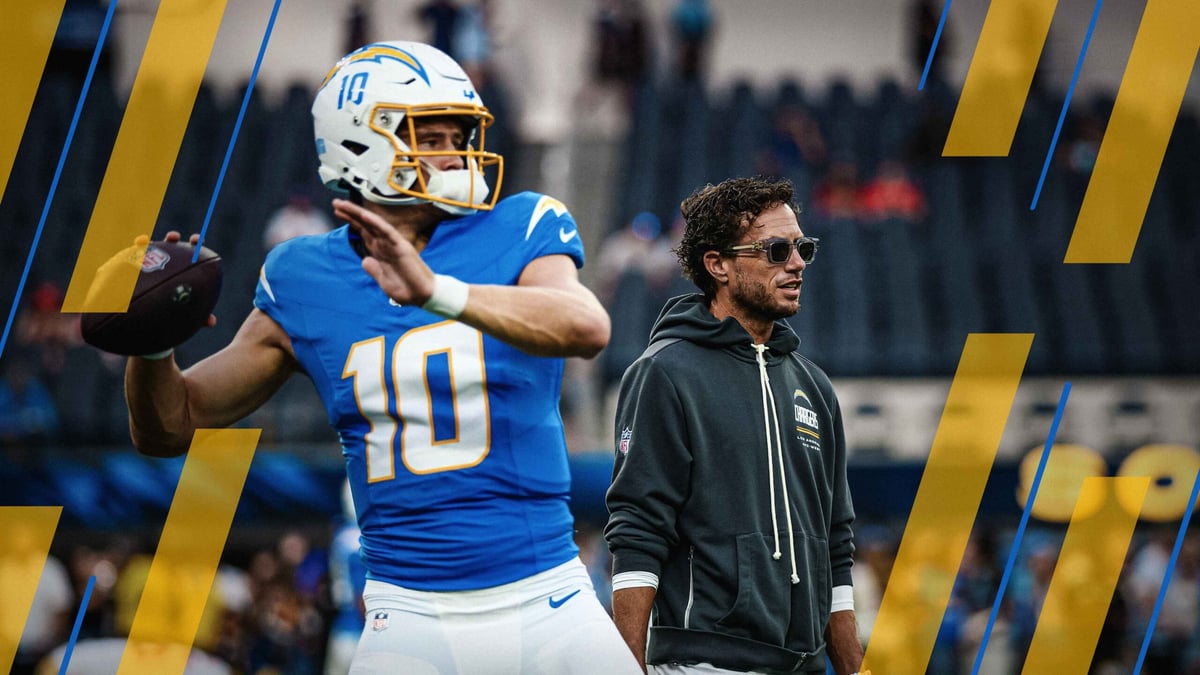
The Chargers’ hire of Mike McDaniel as offensive coordinator was a flashy one, and a move that has built legitimate anticipation of how the unit can perform in 2026. Off the bat, Los Angeles’ bunch looks noticeably different in at least one area: Motion.
Putting players in motion before the snap has been one of McDaniel’s signature elements dating back to his days in San Francisco, but it’s something the Chargers have sorely missed. Consider that the Chargers utilized a shift or motion on 64% of their snaps last season, which ranked 18th. By contrast, LA has climbed all the way to an 88.9% rate this preseason, which leads all teams.
Of note, Los Angeles paces the NFL in both plays with a receiver or a tight end in motion, signifying just how much of a staple it should be all season long. On top of that, McDaniel has implemented some action before the snap on each of the second-most pass and run plays, meaning there shouldn’t be many tells based on motion. Expect much more of the same once Justin Herbert and the rest of the team’s starters take the ball in Week 1.
Baltimore Ravens’ blitz rate
Much like McDaniel assuming command over the Chargers’ offense, Jesse Minter now leading the Ravens’ defense could lead to a serious jump for Baltimore. Minter has already begun transforming the contingent, including with his desire to send pressure.
Last year, the Ravens blitzed on 27.9% of defensive snaps, a figure that ranked 15th and was just below league average. But through the first two preseason games, that number is all the way up to 41.6%, the second-highest rate behind the Vikings.
During Minter’s two seasons calling the shots for Los Angeles’ defense, he tied for 12th in blitz rate at 27%, meaning this shouldn’t be a façade for Baltimore — even if the number dips a bit in the regular season. Another parallel for Minter is late-down pressure. The Ravens have blitzed on a staggering 62.5% of third- or fourth-down plays this preseason, and the Chargers place eighth in that category since 2024 with a 35.5% frequency.
Over the past two campaigns, Derwin James and Daiyan Henley both rank in the top 25 for pass-rush attempts on blitzes among linebackers, safeties and cornerbacks. Minter figures to deploy a similar strategy with stars Kyle Hamilton and Roquan Smith among others in 2026.
Dallas Cowboys’ coverages
First-year coordinators have taken the league by storm this offseason, and one squarely in the spotlight is the Cowboys’ Christian Parker. Parker’s initial chance to lead a defense has already made a strong first impression — and is looking reminiscent of one of his mentors.
Through Dallas’ first two preseason games, the Cowboys have very much diversified their coverage scheme. Per PFF charting, Parker has deployed four separate coverage varieties at least 17.4% of the time: Quarters, Cover 6, Cover 3 and Cover 3-Seam. Meanwhile, the 2025 Cowboys ran Cover 3 on almost a third of snaps, with Cover 2 and Cover 1 folded in accounting for 67.9% of coverage looks.
If Parker’s preferred coverage varieties sound familiar, it’s because they generally reflect what he observed learning under Eagles defensive coordinator Vic Fangio over the past two years. Parker has continued to lean on a heavy frequency of Quarters, Cover 6 and Cover 3, which worked wonders for Philadelphia’s lockdown linebackers and secondary.
Cowboys' and Eagles' coverage frequencies, 2024-26
Season Team Quarters % Cover 6 % Cover 3 % Cover 1 % 2026 PS Cowboys 20.7% 20.7% 18.2% 9.1% 2025 Cowboys 10.6% 5.0% 31.1% 18.1% 2024-25 Eagles 17.1% 17.5% 19.9% 18.5%Unlike Parker, Fangio has relied far more on zone so far, with Dallas’ 11.6% man coverage rate the second-lowest of any team this preseason. It’ll be fascinating to see if Parker continues to stray away from Cover 1 and other man looks into the regular season, but his foundational coverage package seems likely to stick as the calendar flips. Dallas certainly hopes it can create a similar effect on a new-look defense with upgraded talent.
Pittsburgh Steelers’ offensive personnel groupings
The Steelers’ offensive talent looks different in Mike McCarthy’s first season, with Michael Pittman Jr. and Rico Dowdle among the additions in Pittsburgh. But beyond just the pure roster, the team has already ushered in a very different deployment of its weaponry.
Under former offensive coordinator Arthur Smith, the Steelers relied heavily on multiple-tight-end sets. Over the last two years, Pittsburgh ran 12 personnel at a 29.9% clip, tied for the seventh-highest in the NFL. Further, the Steelers’ 305 snaps out of 13 personnel trailed only the Rams in that window.
However, things expectedly look different with McCarthy and new offensive coordinator Brian Angelichio. This August, Steelers have implemented 11 personnel at the ninth-highest rate and have nearly abandoned three-tight-end looks altogether.
Steelers' offensive personnel grouping rates, 2024-26
Personnel Grouping 2026 PS 2024-25 11 70.8% 50.9% 12 14.6% 29.9% 13 1.5% 13.5%Part of this radical change is likely fueled by McCarthy’s offensive background from Green Bay and Dallas, but it also seems likely to project how the Steelers’ offense will actually look in 2026. Pittsburgh’s receiving corps features D.K. Metcalf, Pittman and second-round rookie Germie Bernard, and the cleanest way for all three to see the field is with a robust rate of 11 personnel.
The returning Pat Freiermuth and Darnell Washington at tight end mean that McCarthy could amplify the team’s diminished 12 personnel rate in the regular season — which currently ranks 27th in the preseason. Yet McCarthy will likely stick to an 11 personnel-dominant bedrock as he looks to better Pittsburgh’s offense with his signature passing concepts.
WashingtonCommanders’ under-center rate
Following a cataclysmic 2025 season, the Commanders brought in first-time coordinators on both sides of the ball. On offense, David Blough will be tasked with getting Washington back to 2024 shape, and he seems to already be executing his vision.
Through the team’s first two preseason contests, the Commanders have aligned in an under-center look on 47.9% of their snaps, good for 10th. That may not seem significant on the surface, but it represents a tremendous modification from the last two years.
Indeed, former guide Kliff Kingsbury deployed under-center formations on just 10% of plays over 2024 and 2025, the lowest figure of any offense. Kingsbury’s high no-huddle and screen deployments — combined with Jayden Daniels’ overall excellence — helped catalyze the Commanders’ breakout 2024 unit, but things are now night and day under the hood.
In fact, when Daniels made his preseason debut against the Lions in Week 2, one of his two dropbacks came from under center. Meanwhile, 118 of his 1,684 career snaps so far have been in that look, good for just 7%.
Blough’s commitment to under-center formations parallels top offenses from 2025 like the Rams, Bills and Lions — the latter of whom he learned firsthand under former leader Ben Johnson. While Washington must navigate large worries like its offensive line, running back room and receiving depth this season, this philosophical change under Blough could be a major remedy.