Tourism
50 years promoting Costa del Sol tourismThe board is going to present its new brand at the celebration of the half-century anniversary
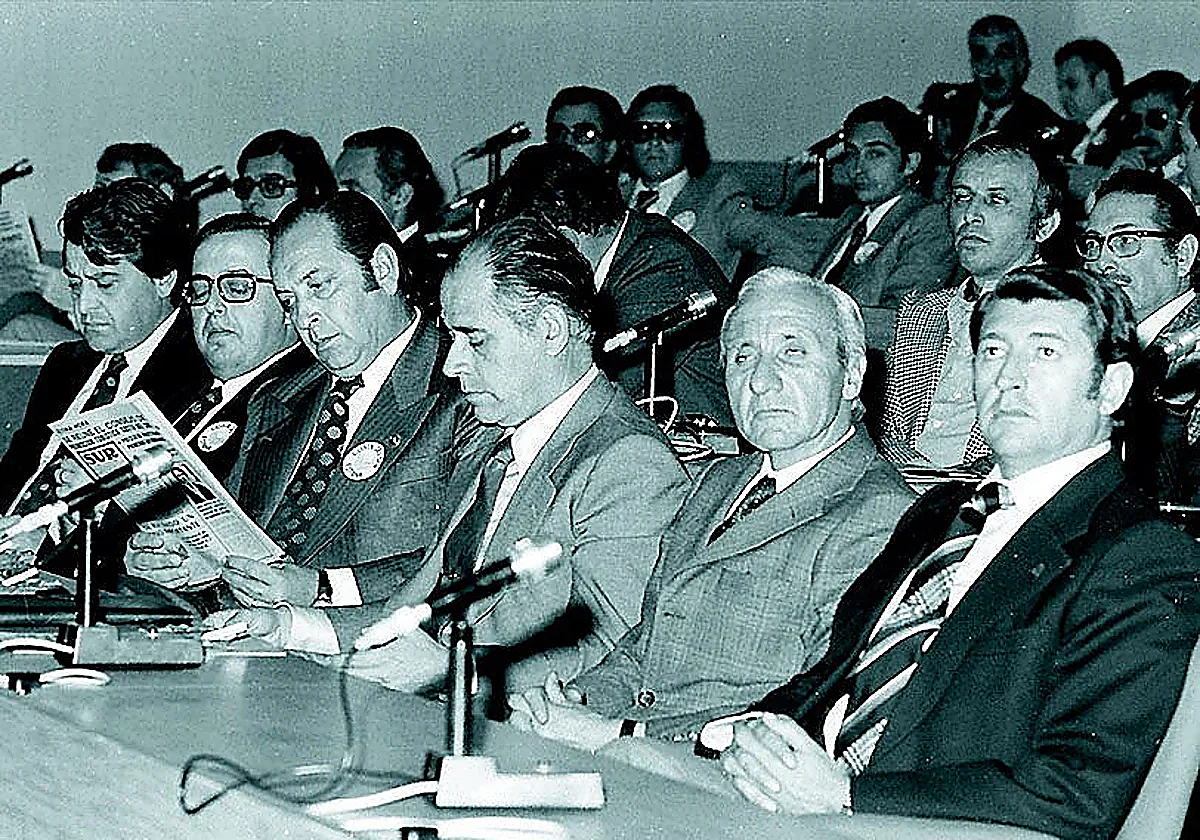
Añádenos en Google The members of the Patronato del Turismo with a SUR newspaper in the Costa del Sol. (SUR)Pilar Martínez
Malaga
26/05/2026 a las 13:07h.The year was 1976 and the Costa del Sol was still basking in the glow of the tourism boom. It had, however, also already experienced the impact of the first crisis in the 1970s.
Planning had to begin for the mass tourism in a destination with an internationally recognised brand. It needed an entity to provide a direct response to the sector's first major recession, unify the scattered efforts of international promotion and professionalise a brand that risked dying from saturation and obsolescence.
On 29 April 1926, the Patronato del Turismo emerged as a key institution that marked a milestone in the history of the Spanish tourism industry by becoming the first promotional body of its kind in the country. The pioneering body was not born in a time of prosperity to celebrate the success of the destination, but as a public-private emergency committee.
Its original purpose was "to promote a consortium with the participation of private companies, the province's leading local corporations in the tourism sector and the central government". Among the numerous professionals and authorities present at the founding were Juan García Soto, Antonio García del Valle, Antonio Buendía and Feliciano Pérez.
This Wednesday, Turismo Costa del Sol, the public company into which the tourism board evolved in 2015, commemorates 50 years.
It wasn't until June 1978 that Malaga registered the provincial tourism board of the Costa del Sol in the registry of associations. Throughout its history, it has modified its statuses on several occasions: in 1983, 1989, 1993, 1996 and 2000. Both the requirements for membership and the governing bodies of the promotional entity remained the same as in their origins.
The first president of the board was José González de la Puerta, whose term was brief, lasting only a couple of months, as he was dismissed from his post as civil governor on 6 June 1976. He was succeeded by Enrique Riverola Pelayo.
Among the Patronato's objectives was the unification of the scattered promotional efforts individual coastal municipalities were undertaking under a single umbrella brand with strong international appeal: the Costa del Sol brand.
In 1976, the Costa del Sol was going through a critical period, marking the end of its first great boom. The destination faced a triple crisis: economic, political and structural. It forced the sector to transition from uncontrolled growth to a strategy of survival and reorganisation.
The tourism sector suffered the direct consequences of the 1973 oil crisis. The rise in crude oil prices triggered global inflation and drastically increased transportation costs, especially charter flights, which were vital for Malaga. As a result, 1976 was the first year with negative growth rates in the history of tourism in this destination, with a 9.2 per cent drop in visitors and a 5.2 per cent decrease in overnight stays due to the collapse of the international market.
The political instability during the democratic transition further exacerbated the decline. The establishment of the Patronato occurred just months after the death of Francisco Franco (November 1975).
This perception of internal instability damaged the image of safety that the country projected to European tour operators, leading to a shift towards other competing Mediterranean destinations.
During the 1960s and early 1970s, the Costa del Sol experienced massive, rapid growth lacking urban planning. By 1976, this model was showing signs of saturation with insufficient infrastructure: deficiencies in water supply, sanitation networks, wastewater treatment and road access. It was at this point that the hotel and leisure sector began to demand a renovation and diversification of its offerings (villas, golf courses, marinas) to attract a higher-spending visitor profile.
The year 1989 marked a turning point in the history of the Costa del Sol tourism promotion agency. That was when the provincial authority became the majority shareholder, assuming responsibility for the majority of the funding, which would increase year after year. From then on, the position of head of the provincial authority has been synonymous with that of head of Turismo Costa del Sol.
Beyond its presence at all major industry fairs and the organisation of numerous events both within and outside the province, several milestones have left their mark on the Costa del Sol's tourism development.
The first significant event was the British travel agents association (ABTA) in 1978, which then returned in 1998; the Latin American travel agents association (COTAL); and the German travel agents association (DRV).
Musical events such as World Dance Costa del Sol and the Rolling Stones concert are now part of the very history of this leading tourist destination in mainland Spain, as is the hosting of major world-renowned golf tournaments such as the Ryder Cup in 1997 and the Solheim Cup in 2023, as well as the Andalucía Costa del Sol Open de España in successive editions.
In terms of advertising materials, the Sunbook was groundbreaking and served to promote the Costa del Sol worldwide. The same can be said of the Bus del Sol, which travelled countless kilometres across Spain to attract Spanish tourists.
In the past 50 years, the Costa del Sol brand has consolidated itself as an innovative and sustainable tourist destination, capable of meeting tourists' needs 365 days a year.