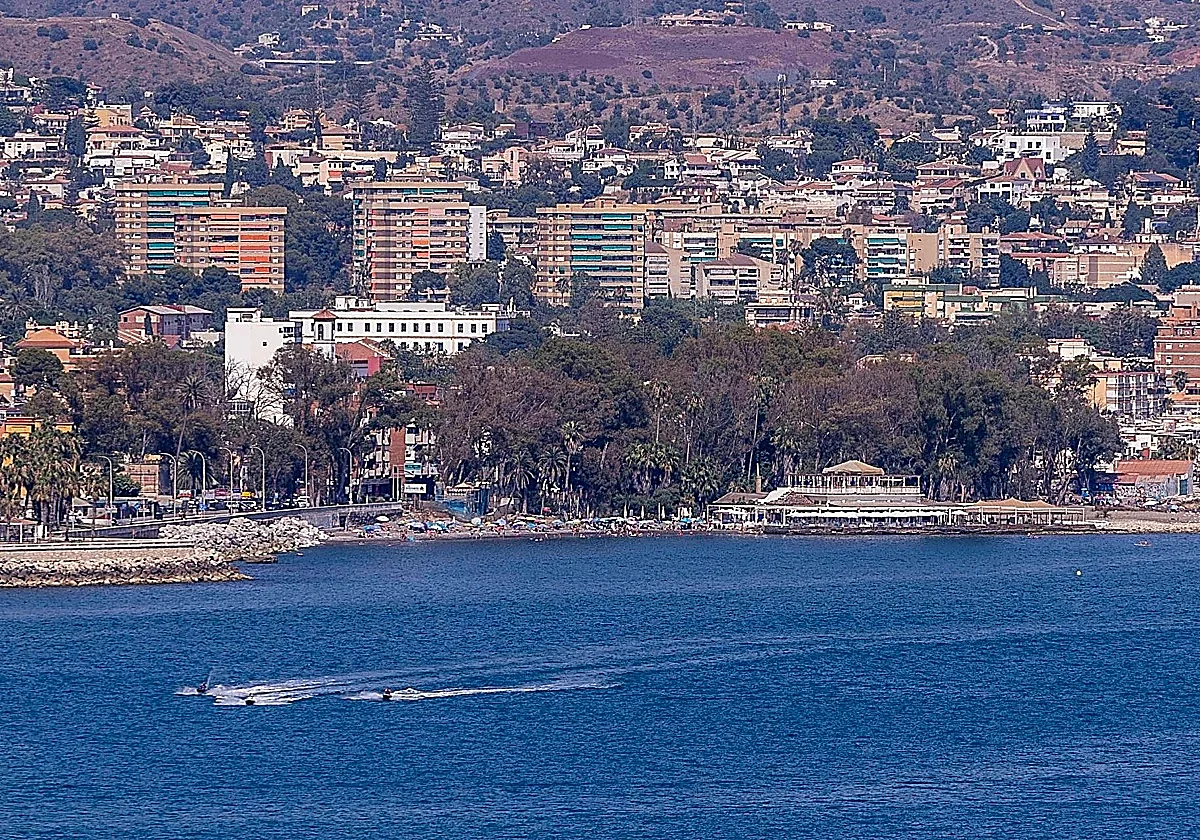
The design includes two breakwaters: one above water, extending from El Morlaco headland out to sea, and another semi-submerged structure running parallel to the shoreline. The plan also includes the addition of 70,000 cubic metres of sand, with a coarser grain size than usual (pebbles), sourced from the Jévar, Totalán and Jaboneros streams.
Beach restoration
Beyond this project, the subdelegation and the coastal authority have outlined a major programme of work along the Malaga coastline after an unusual winter of repeated westerly storms.
The central government has allocated 3.6 million euros across three contracts. Emergency works to repair storm damage account for 1.3 million and will finish shortly. Maintenance contracts, completed in early June, account for a further 2.3 million to keep beaches in good condition for the summer.
The coastal authority has worked on 34 beaches in 14 municipalities across the province. They have moved 272,100 cubic metres of sand and reshaped about 208,200 square metres, an area equal to 30 football pitches. They have also recovered 4,800 square metres of public maritime land by demolishing old structures in several municipalities, especially Fuengirola.
They have concentrated the largest volumes of sand in Malaga, Rincón de la Victoria, Marbella and Estepona to correct changes in the seabed caused by westerly winds, which push sand eastwards. This process often affects areas with obstacles such as breakwaters or cliffs.
Work across municipalities shows the scale of the programme. In Malaga city, the Sacaba beach has received 35,900 cubic metres of sand and reshaping over 20,000 square metres. In Fuengirola, teams have removed old concrete foundations from the former Hotel Marenostrum, demolished in the late 1980s, which posed a risk to swimmers.
In Rincón de la Victoria, workers have added 21,300 cubic metres of sand to La Cala and a further 11,900 to Benagalbón. In Torre del Mar (Vélez-Málaga), crews have placed 15,800 cubic metres near the Berebere beach bar, which authorities demolished due to the lack of a licence.
On the western coast, storms severely damaged the area around the Botavara beach bar in El Bajondillo, Torremolinos. Teams have restored nearly 8,000 cubic metres of sand there. In La Cala de Mijas, at El Bombo beach, authorities have solved a long-standing erosion problem by adding coarser material.
Finally, Marbella and Estepona have also seen major sand replenishment works. However, the head of coastal authority reminded that the removal of sewage wells in Guadalmina falls under the responsibility of the local ruling team. The subdelegate also announced that future breakwaters in San Pedro and Marbella already have environmental approval and now move into the project update phase.
Access environmental monitoring and nature news