Zoom
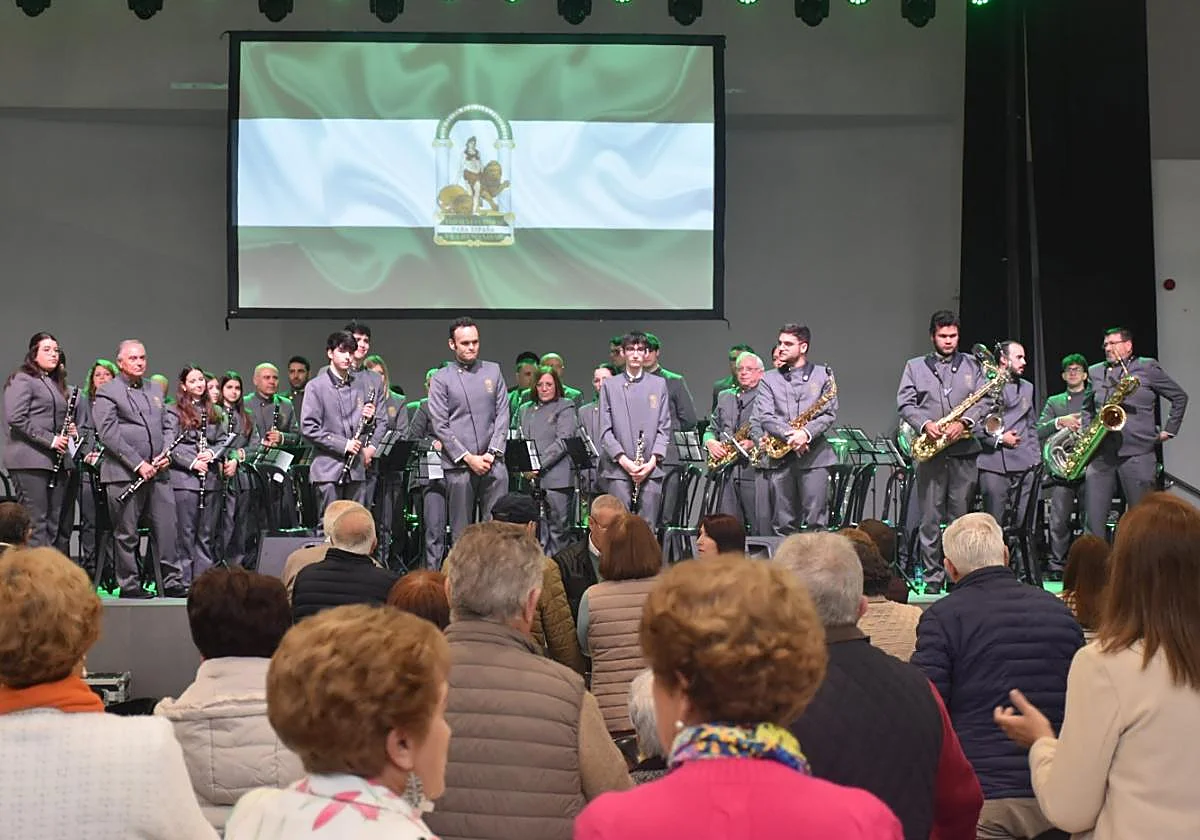
The Andalusian anthem will be performed by municipal bands all over the region on Saturday. SUR 28 February. Andalucía Day Andalucía's anthem: a call to stand up, mobilise and sing for freedomThe Green and White Flag became the region's anthem in 1982, almost 50 years after it was first suggested by Blas Infante
Tony Bryant
Friday, 27 February 2026, 11:21
Every 28 February Andalucía celebrates the anniversary of the referendum which granted full autonomy to the region in 1980. The referendum followed the large pro-autonomy demonstrations of 4 December 1977, events that led to the Andalusian Flag Day being celebrated for the first time in 2022.
The day is now a public holiday throughout the region and in many towns and cities balconies are decorated with the Andalusian flag, first presented by Blas Infante (known as the father of the Andalusian homeland) in 1932.
Politicians and officials traditionally pay tribute to Infante, and, along with the regional government, most town halls hold flag-raising ceremonies and various acts that serve as a tribute to his legacy and his contributions to Andalusian autonomy and culture.
These contributions not only include helping to adopt the green and white flag; Infante also wrote the lyrics to the Himno de Andalucía (Andalusian anthem), which is sung in schools, institutes and public squares on and around 28 February.
The green and white flag
The song La Bandera Blanca y Verde (The Green and White Flag) was brought to the attention of José del Castillo Díaz, the director of the municipal band of Seville, by Infante in 1933, and became the region's official national anthem in 1982.
Known as Maestro Castillo, the Seville composer adapted and harmonised the song's traditional melody. The lyrics appeal to the Andalusians to mobilise and demand land and freedom by way of agrarian reform and a statute of autonomy within Spain - "Arise, o Andalusians, demand land and freedom for a free Andalucía, Spain and mankind."
The music drew inspiration from Santo Dios, a well-known devotional song traditionally sung during harvest time by peasants and day labourers in the region.
A leaflet was published in 1933 with the lyrics and sheet music of the anthem, which was performed for the first time in public by Seville's municipal band on 10 July 1936. Under the direction of Castillo, the performance took place in Alameda de Hércules, just one week before the outbreak of the Spanish Civil War.
The original music scores were destroyed during the three-year conflict and only a manuscript for piano was conserved.
Dismissal and imprisonment
Blas Infante's political stance led to his execution by firing squad by nationalist supporters at the start of the conflic. Castillo was ostracised by the authorities and dismissed from his position with the municipal band of Seville for political reasons at the end of the war.
Castillo also headed the music section of the Seville Athenaeum and was pianist for the Mozart quintet of the same institution, until he was eventually imprisoned in Burgos, although he was later released.
On his return to Seville in 1942, he opened a music and singing academy in the heart of the city (Calle Feria). Castillo, a Freemason, died of cancer, an illness that was said to have been exacerbated by the many misfortunes he endured under the dictatorship.
Along with being responsible for orchestrating and harmonising the Andalusian anthem, he composed several other works, most of which were also destroyed - due to his affiliation with Freemasonry - by the Franco regime.
In March 1977, the newspaper El Correo de Andalucía published for the first time the anthem and the Andalusian coat of arms.
In October 1979, the Seville municipal band played it again, this time at the city's Lope de Vega theatre, where standing ovations led to it being performed three times.
The anthem has since been recorded and performed by countless renowned Spanish artists, including Rocío Jurado, Niña Pastori, David Bisbal and Pastora Soler.
Article 6.2 of the 1981 statute of autonomy of Andalucía stated that "Andalucía has its own anthem and coat of arms, which will be definitively approved by Law of the Andalusian parliament, taking into account the agreements reached on these matters by the Ronda assembly of 1918." According to Blas Infante, it was at this regionalist assembly that "the symbols of Andalucía" - the flag and the coat of arms - were agreed upon.
Sixty-five years would pass before the anthem was officially adopted, and this Saturday it will be sung with pride across the region.