Princess of Asturias Awards
British historian Timothy Garton Ash wins Spain's Princess of Asturias Award for Social SciencesThe prolific author and journalist is honoured for his lifelong dedication to chronicling Europe’s complex transformation from the fall of the Berlin Wall to the modern rise of authoritarianism
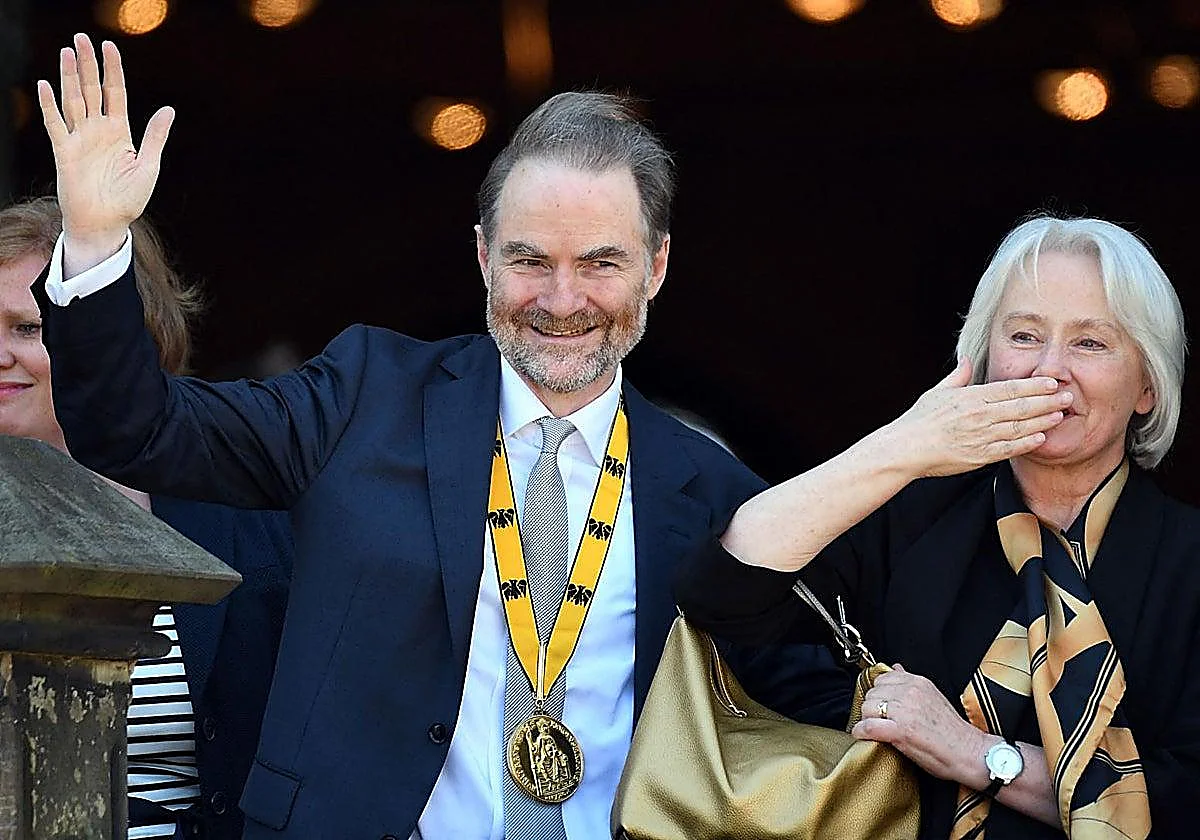
Añádenos en Google Timothy Garton Ash. (SUR)M. F. Antuña
Gijon
02/06/2026 a las 13:48h.Timothy Garton Ash is the latest winner of the prestigious Princess of Asturias Award for Social Sciences.
The British historian has been recognised for his ... tireless pursuit of explaining our present through the lens of our most recent past, tracking a half-century of continental shift. Over a career spanning 11 books, he has deftly and meticulously chronicled the transformation of Europe - a period that saw the physical fall of the Berlin Wall give way to the rise of modern authoritarianism and the devastating return of war to the continent.
A Londoner by birth, the 70-year-old scholar (who will turn 71 by the time he collects the award in Oviedo this October) is the Professor of European Studies and the Isaiah Berlin Professorial Fellow Emeritus at St Antony’s College, University of Oxford. He is also a Senior Fellow at the Hoover Institution, Stanford University, and a long-standing international affairs columnist for The Guardian.
His journey into political essays and contemporary history began in 1981 with a book about East Germany, written and published from the West. This was followed by a series of works aimed at deciphering the Polish Solidarity revolution and the broader shifts across Central and Eastern Europe. Among his most notable titles are In Europe's Name: Germany and the Divided Continent (1993), The File: A Personal History (1997), History of the Present: Essays, Sketches, and Despatches from Europe in the 1990s (2000), Free World (2004), Facts Are Subversive: Political Writing from a Decade Without a Name (2009), and Free Speech: Ten Principles for a Connected World (2016). In 2023, he published Homelands: A Personal History of Europe, which acts as a definitive synthesis of his lifelong research.
A prolific chronicler of Europe
Born in Wimbledon, Garton Ash has always kept Europe at the absolute heart of his work. He prides himself on being "accurate, truthful, and fair" when capturing modern history, even whilst acknowledging how difficult it can be to remain entirely impartial or objective when shaping a narrative. In his latest book, he looks back at 50 years of direct analysis with a critical, yet never entirely hopeless, eye.
A critical turning point
"This cascade of crises - from the war between Russia and Georgia and the financial crash to the refugee crisis and Russia's annexation of Crimea - has led us directly to 24 February 2022 and Putin's full-scale invasion of Ukraine," he reflected in a recent interview.
In hindsight, he offers a degree of self-criticism. He confesses that he long believed history could only progress forward toward greater freedom, democracy, and open, liberal societies. Reality, however, proved more volatile.
"Like many others, I sincerely believed that when Central and Eastern European countries joined the European Union, their EU membership would safeguard their democracy. After all, that is how it should be. That is the constitutional theory of the European Union. No sooner had we reached that conclusion than Viktor Orbán started proving us wrong," he noted.
Defending the free world
The return of full-scale war to Europe in 2022 - something the continent believed it had said goodbye to in 1945 - marked a profound turning point for Garton Ash. He notes that the world's major decision-makers are no longer European, arguing that Brussels must establish a new style of leadership to navigate this new historical era.
To confront these modern challenges, he believes Europe must accept its past missteps, find ways to rectify them, and rally behind its founding democratic and humanistic values.
"We have to prove that free societies work better. That is where we have fallen short. We have not been able to deliver on our promises regarding equality, well-being for all sectors of our societies, or the fight against climate change. It is up to us to turn that fundamental human desire for freedom into effective policies through good political management," he concluded in a discussion with the Heinrich Böll Foundation.