Zoom
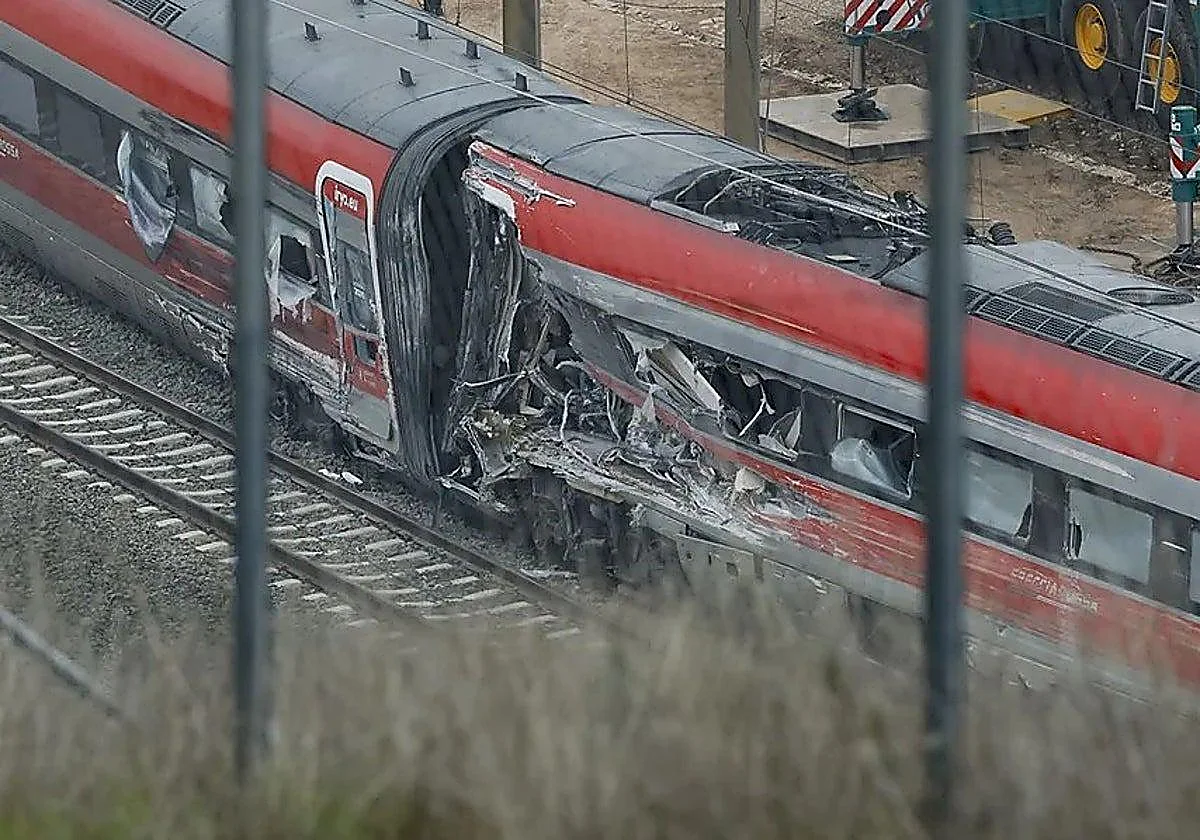
The Iryo crashed in Adamuz Efe Adamuz accident Broken track caused Adamuz train crash, black boxes revealTrains involved in the Spanish rail accident cleared by data analysis, indicating that safety systems were fully functional
Wednesday, 11 March 2026, 14:43 | Updated 15:15h.
REPORT SUMMARY: Adamuz Rail Collision Investigation
Primary Cause: Structural rail fracture at Kilometre Point 318+681. Casualties: 46 Deceased | Multiple Injured
Current Status: Preliminary Report issued by CIAF (11 March 2026)
Core Technical Findings
Infrastructure Failure: A fracture in the rail caused the initial derailment of the Iryo (Málaga-Madrid) train.
System Response: The JRU (Black Box) confirmed all braking and emergency systems were 100% operational on both the Iryo and Alvia trains.
Chain Reaction: The derailed Iryo struck the A645 switch, triggering an automatic "Stop" signal for the adjacent track.
Unavoidable Collision: The Alvia (Madrid-Huelva) engaged emergency brakes at 216 km/h, but struck the Iryo's tail just 15 seconds after the initial derailment.
A new report shows that a fracture on the rail track caused the collision between two trains in Adamuz on 18 January, which left 46 dead and several injured.
Prior to the derailment, the black boxes (known as JRU) from the Iryo and Alvia trains detected no faults, with both the emergency and braking systems fully operational.
The JRU also revealed that the line safety system responded and tried to stop the Alvia train as soon as the derailed Iryo train invaded the track. The Alvia train covering the Madrid-Huelva line hit the tail of the Malaga-Madrid Iryo 15 seconds after it derailed.
According to the latest report by the commission for the investigation of railway accidents (CIAF), the accident occurred due to an anomaly in the rails at kilometre point 318+681, “the location where the fracture would have caused derailment".
Data extraction from the Irya train’s JRU was carried out on 5 March 2026, by specialists who downloaded information and obtained images from the train ’s CCTV for judicial analysis.
Technical cause: the rail fracture
The investigation centered on kilometre point 318+681. Analysts concluded that a structural anomaly in the rail caused a "fracture-induced derailment" of the Málaga-Madrid Iryo train.
Impact on Infrastructure: The derailed Iryo train struck the A645 switch, causing a loss of control and triggering a catastrophic signaling change on the adjacent track.
System Integrity: Data from the JRU (Juridical Recording Unit), or "black boxes," confirmed that both trains had fully operational braking and emergency systems prior to the incident.
The information shows that the Iryo train entered the affected section at 19:43:20 and, nine seconds later, the first emergency signal was recorded when the circuit breaker opened, likely due to voltage disturbances caused by the loss of contact after the derailment.
At 19:43:33, with the train running at 204 km/h, "a temperature alarm registered”. The train's automatic systems immediately "activated the brake". However, the impact of the derailment had already affected operation of the adjacent track on which an Alvia train was travelling in the opposite direction.
The CIAF believe that the derailed Iryo train struck the A645 switch, causing it to lose control and triggering the line's protection systems, this forced the adjacent track to change unexpectedly to a stop signal.
Due to a sudden change in signalling, the Alvia train automatically activated emergency braking while travelling at 216 km/h. Despite this, the collision was unavoidable.
At 19:43:44, the Alvia recorder "stopped storing data, presumably corresponding to the moment of the collision between the two trains".
At 19:43:43, just one second before the crash, there was “activation of the emergency brake by the Irya train’s driver”. However, the train didn’t “come to a complete halt" until 19:44:03 after the impact and derailment from the initial fracture of the rail.
In addition to speed and braking parameters, the commission is analysing, "images from inside the carriages of the Iryo train" to better understand the sequence of events. They explained that the recordings "cover the first moments of the derailment” but do not contain the full sequence following the collision. These visuals will be essential to compare the data to what happened inside the carriages during impact.
Related story