Zoom
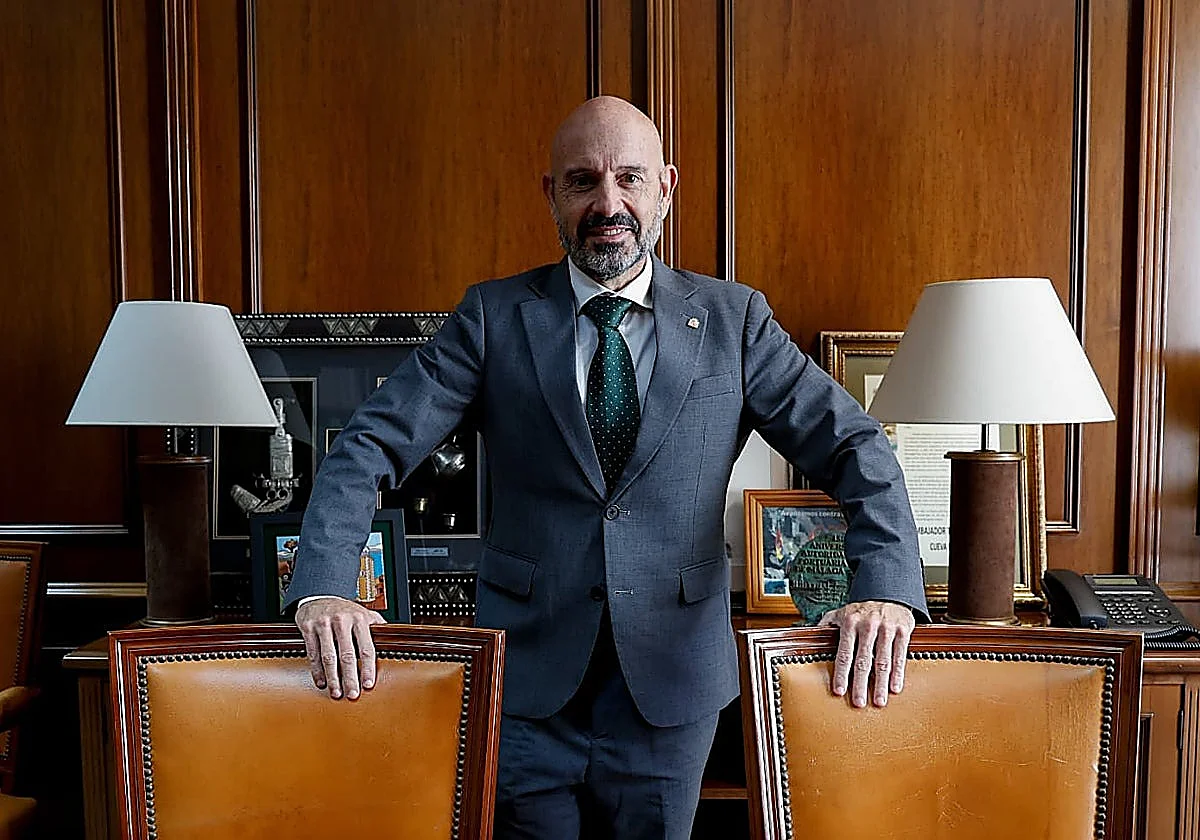
An archive photo of Salas at the subdelegation. Marilú Báez Railway infrastructure Central government considers coastal train section between Fuengirola and Marbella feasibleThe representative of the central government is open to the possibility of collaborating in the Cerro Blanco dam, although the competences in water matters belong to the regional government of Andalucía
Málaga
Wednesday, 14 January 2026, 15:34
The government of Spain considers the coastal train section between Fuengirola and Marbella feasible, announced the government representative in Malaga, Javier Salas, on Wednesday morning.
During his briefing appearance, he listed the priorities and commitments of PM Pedro Sánchez's office in the province of Malaga.
Salas confirmed that the feasibility study commissioned by the Ministry of Transport will be released after the summer and that it will lay the technical foundations for the development of the future railway corridor. He added that, according to what is known so far, "there is a certain feasibility" in one of the "priority" stretches, which is the one between Fuengirola and Marbella.
"According to the data we have, the section with the greatest traffic flow is the stretch between Fuengirola and Marbella," Salas said, adding that different routes are being considered. One of the options is to follow the same route as the A-7 dual carriageway. A more informed decision can be made once the feasibility study is ready.
Deadlines for studies
Salas also confirmed that studies to improve traffic flow on the A-7 will be completed over the course of this year. These will cover both the eastern section, where it will be determined whether the solution should be a third lane, a new dual carriageway or a combination of both, and the western section, where options to improve connectivity between the A-7 and the AP-7 toll motorway will be assessed.
In response to the demands raised by the regional government and the PP party to retake the Cerro Blanco dam project to prevent flooding of the Grande river, Salas said that the central government would be willing to collaborate. However, he reminded other institutions that the regional government holds responsibility in water matters, which means that a regional administration should do the study.
"The government has always offered absolute collaboration to the Junta. We are willing to discuss how we could help, but it is the competence of the Junta," Salas said.
The government representative said that the project included in the national hydrological plan was the construction of a small dam to collect water and take it to the Atabal plant for treatment, but this initiative was discarded due to opposition from the municipalities and environmental groups.
Year of 'the second transformation'
Salas said that 2026 will be the year of "the second transformation" in infrastructure in the province with the studies on roads, railways, the library of San Agustín, the airport expansion project, the work in Baños del Carmen and the arrival of the IMEC.
When asked if the government would be willing to change its position on financing the last of these initiatives, long demanded by Malaga mayor Francisco de la Torre, Salas avoided making a commitment and said that the competences in matters of culture belong to the regional government. He urged the Junta and the city council to continue opening a discussion with the Ministry of Culture, as they have been doing until now.
Salas also highlighted the increase in transfers that the government has made to local councils and defended the new funding model, which gives Malaga 1.17 billion euros more per year.
"This means that every year a new third hospital could be built and staffed in the province or a new Rosaleda stadium," Salas said. "We could also build a number of motorways to Ronda, hire 75,000 doctors or 80,000 teachers annually," he added.
At the same time, Salas criticised Junta president Juanma Moreno for opposing this new financing system. "He is going to put his hand in the pocket of the people of Malaga just because he is bowing to the partisan interests of the PP and Feijóo," he said, adding that first deputy PM "María Jesús Montero has done more for the province than Moreno in seven years".