- BYU looms in the Big 12: Quarterback Bear Bachmeier and running back LJ Martin give the Cougars a formidable offensive punch.
- New heights for Navy?: The Midshipmen should battle to make an inaugural playoff debut by a service academy.
Twenty-seven teams have featured in the College Football Playoff since its inception in 2014. The expansion to a 12-team format has dramatically changed the landscape of what’s possible for previously unsuccessful programs, with 12 different squads making their playoff debut over the last two seasons alone.
The expanded field has created more avenues into the postseason than ever before. Winning a conference championship or losing all but one game are no longer the only realistic paths. Some programs have spent years hovering on the edges of contention, on the outside looking in. Meanwhile, others have built their strongest teams via NIL at the most opportune time to play postseason football.
These eight teams all have a realistic chance of becoming first-time College Football Playoff participants in 2026.
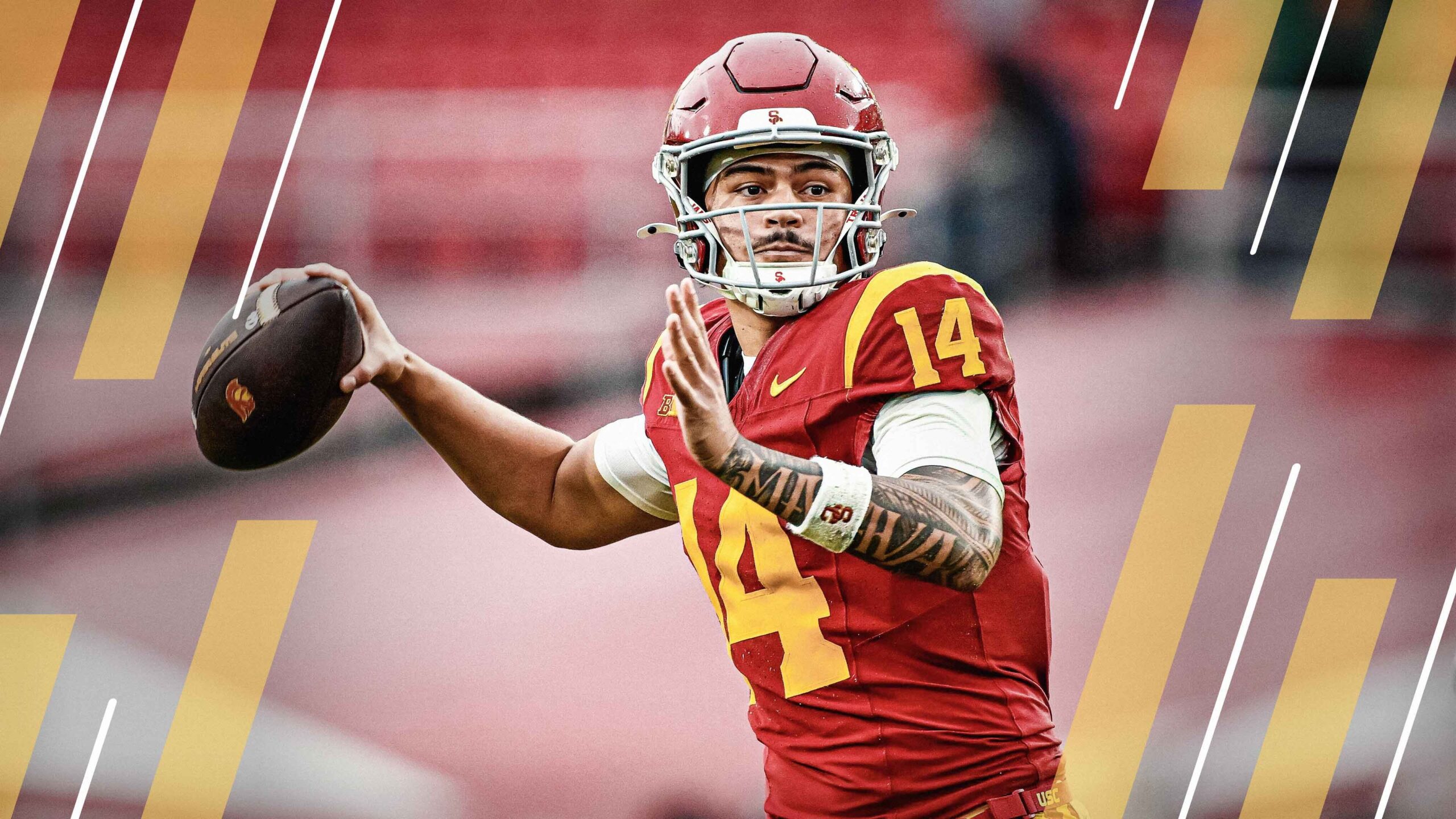
1. USC
If the betting markets are to be believed, USC is the most likely program still waiting on its playoff debut to get the monkey off its back this fall.
The Trojans have recruited at an elite level for years, culminating in the highest-ranked recruiting class in college football for 2026. This class will be inserted into what is already one of the most explosive teams in college football. USC’s 19.6% explosive pass play rate was the highest of any Power Four offense last season.
The Trojans’ transition into the Big Ten came with growing pains at first, but gritty wins over Michigan and Iowa last year brings optimism that Lincoln Riley has built a side that can handle physical football, sometimes in adverse conditions.
A program with USC’s talent ceiling will rarely stay out of the modern playoff picture for long. If the Trojans can pick off two wins in three games against Ohio State, Oregon and Indiana, they stand a brilliant chance.
2. BYU
BYU came close to reaching its first playoff last season before falling to an outstanding Texas Tech side in the Big 12 championship game. Texas Tech has had to replace significant pieces from its conference-winning roster, but BYU has retained much of the nucleus of a team that won 12 games last year.
The return of running back LJ Martin gives the Cougars a key weapon to build around. Martin is the only returning FBS back to rush for over 1,300 yards last season without putting the ball on the ground once.
Continuity is often one of the biggest advantages in the modern transfer portal era. The BYU defense forced the most throwaways of any unit in college football last season. The Big 12’s door is wide open for a team like BYU to reach the conference final in Dallas again this year, hoping to take things one step further.
3. Louisville
Louisville may feel as though the ACC is there for the taking in 2026. Miami (FL) enters a new era after losing several star players to the NFL Draft, including a transition at quarterback. Indeed, Louisville won’t even need to worry about the Hurricanes unless the two meet again in the conference championship game.
The Cardinals attacked the transfer portal as aggressively as almost anyone, bringing in more than 30 new players to reshape the roster. Former Florida State wide receiver Lawayne McCoy headlines that incoming class. He’s yet to drop a pass in his collegiate career.
On defense, prolific edge defender Clev Lubin returns as an established difference-maker on a Cardinals defense which ranked third overall in the FBS in pressure rate last season (40.9%).
The ACC rarely offers the week-to-week depth of the SEC or Big Ten, meaning one standout side can quickly separate itself. Louisville has assembled a roster capable of doing exactly that.
Read more
Read morePFF College 50: The 50 best players in college football ahead of the 2026 season
By Dalton Wasserman and Max Chadwick
(opens in new tab) →4. Florida
The Gators underachieved in 2025 and now need to vastly overachieve to land inside the playoff bracket a year later. Simply reaching the playoff from a packed SEC field requires consistency that Florida hasn’t shown often enough in recent years.
Optimism naturally follows the arrival of new head coach Jon Sumrall, and convincing running back Jadan Baugh to stay put in Gainesville was an important early statement from the new coach. Baugh posted an 89.5 PFF rushing grade in a breakout 2025 campaign.
Florida returns enough pieces to believe this roster is more competitive than last year’s record suggested. The schedule seemingly never does Florida many favors, but if the Gators are still in the mix after October, games against Kentucky and Vanderbilt to close out SEC play could put them in great standing to sneak an at-large bid.
5. Missouri
It may be difficult to believe the Tigers have won 29 games since 2023, the fourth-most in the conference. Yet they’ve largely stayed outside the national spotlight compared to the top three.
Much of their success could depend on the health of Ahmad Hardy. His return timetable remains uncertain, but if he’s fully fit, there’s a legitimate argument that he’s the best running back in college football. Hardy’s 92.0 overall PFF grade from last second ranks second among all returning running backs.
Quarterback Austin Simmons also arrives with plenty to prove. His departure from Ole Miss owed more to the emergence of Trinidad Chambliss during Simmons’ injury absence than any shortcomings of his own. A change of scenery could provide the opportunity Simmons needs to fulfil his full potential.
After Ole Miss, Texas A&M and Tennessee kicked down the playoff door for the SEC’s perceived second class in recent seasons, taking the next step into the playoff picture doesn’t feel nearly as unrealistic as it once did for Missouri.
6. Utah
The biggest reason for optimism around this Utah program is quarterback Devon Dampier. Having an established starter returning under center is one of the strongest predictors of success, and Dampier gives Utah a player capable of elevating his entire surroundings.
The Utes present a potent threat in the run game too, paved by their bulldozing offensive line. Utah logged the second-most rushing yards before contact in the FBS last season, trailing only Navy. On defense, the Utes are always aggressive, consistently among the top of the leaderboard in blitz usage. They held opposing quarterbacks to a passer rating of 62.1 last year — the second-lowest in the FBS.
The Utes appear to have avoided some of the scheduling pitfalls facing other Big 12 contenders. There are no easy weeks in a Power Four conference these days, but Utah’s path, which includes just one trip outside of the state by mid-October, looks more manageable than several of its direct competitors.
7. Houston
Houston’s route will likely be more difficult than Utah’s, but the Cougars won 10 games last season and return experienced quarterback Conner Weigman, giving them one of the Big 12’s highest floors.
Weigman posted a career-high 4.6% big-time throw rate last season. He earned a reputation as a significant rushing threat too, with 815 rushing yards and 11 touchdowns last year alone.
A cross-state road trip to Texas Tech headlines a slate that offers few opportunities to catch its breath, but Houston proved last year that it can compete with quality opposition in any location by going undefeated on the road.
8. Navy
The current playoff format guarantees at least one Group of Five representative every season, making Navy’s road clearer than it might initially appear.
Boise State set the precedent as the first Group of Five program to qualify by way of the new method introduced in 2024. The Broncos are right back in the mix again this time around, but Navy currently sits alongside conference rival UTSA as the second favorites in the betting markets. UNLV also figures to be in the mix in a new-look Mountain West.
Service academies have always been capable of frustrating more talented opponents, and Navy has quietly built enough momentum to believe this season could become something far more significant. That will come despite the loss of do-it-all fullback Eli Heidenreich from the Midshipman backfield, who accounted for 57% of Navy’s receiving yardage.
A service academy playoff debut would represent one of the biggest stories of the 2026 college football season, and would lead to one of the most fascinating Army vs. Navy matchups in several years.