Hospitality
Costa del Sol accommodation supply creation's first slowdown in eight yearsTourist accommodation during the first quarter of 2026 experienced a small 1.23% increase compared to the 13.7% during the same period last year
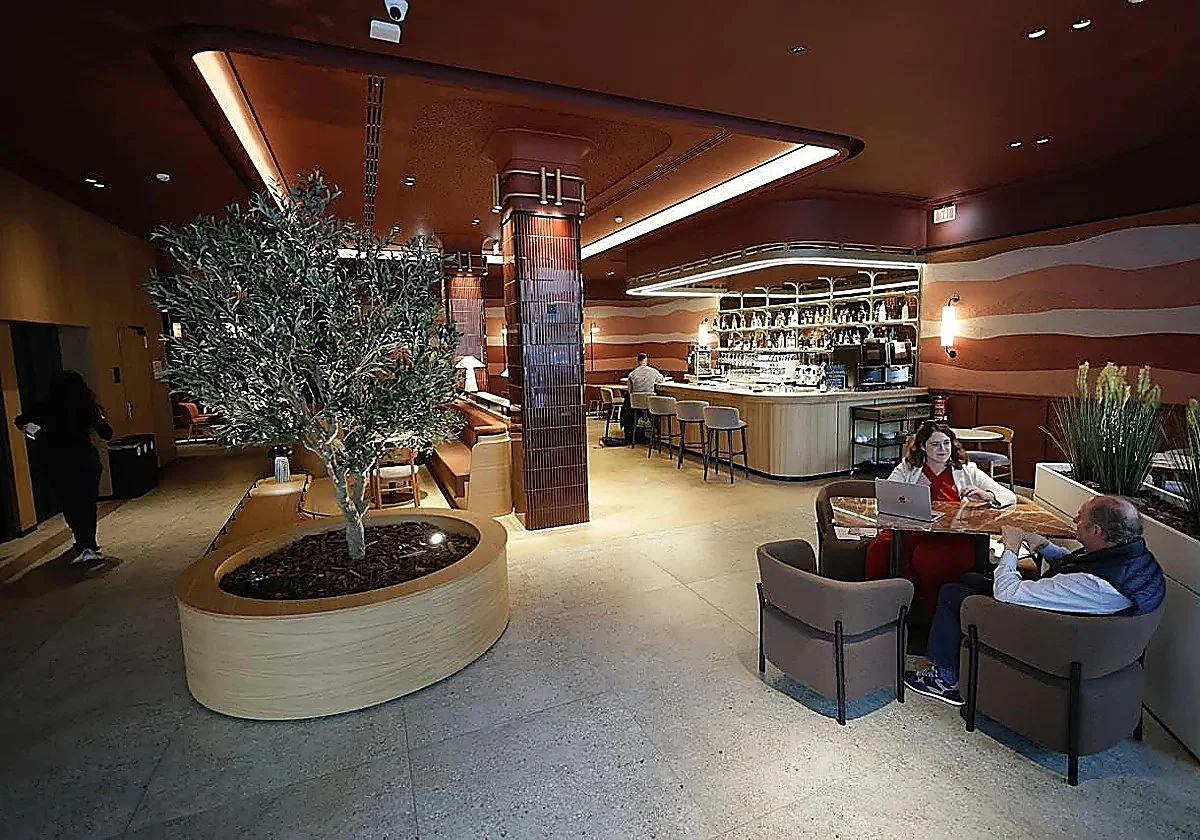
Añádenos en Google The lobby of the Serenay hotel in Malaga, which opened this year. (Migue Férnandez)Pilar Martínez
Costa del Sol
20/05/2026 a las 10:34h.The Costa del Sol is experiencing a slowdown in the growth of its accommodation sector for the first time in eight years. Behind this slowdown is the decline in tourist flats, which have now passed their peak.
Data from Turismo Costa del Sol for March confirms that the number of tourist establishments stagnated in the first quarter of the year, with a slight increase of just 0.8% and a 1.2% increase in available beds, which now stand at 711,670 (some 8,600 more than in the first quarter of 2025).
During the same period last year, the growth rate was 18.6% for accommodation and 13.7% for beds in hotels, tourist flat complexes, rural houses and campsites.
This halt in growth is surprising given that the Costa del Sol's accommodation supply has tripled in the last eight years. This upward trend, at a double-digit rate, began in 2016, which was also the first time Andalucía regulated holiday rentals. Until then, the province's accommodation options totalled 210,000 beds.
This is a far cry from the destination's current capacity, which had easily exceeded 700,000 beds by the end of 2025. Of these, 108,007 were hotel beds, spread across 563 establishments, representing a 1% increase.
More than half (61%) of the province's hotels have four stars, leaving the highest category for 10% of the supply, specifically 30 hotels.
Data from the Andalusian tourism registry indicates that the total number of holiday rental properties in the province of Malaga grew by 2.9% while beds increased by 3.08% this May compared to June 2025. As of 6 May, this mandatory Andalusian registry listed 74,915 properties with a total of 415,195 beds.
This same source confirmed that the moratorium the city council approved is already having an impact, with a net reduction of 66 establishments and a loss of 1,573 beds, dropping from 66,238 in June 2025 to 64,665 as of 6 May.
Along with Malaga city, this downward trend is also noticeable in smaller municipalities such as Arriate, Guaro and Iznate. Industry professionals in these areas see the impact of the single registry the central government imposed, which the EU has questioned due to administrative duplication.
This registry is causing the vast majority of rural tourist accommodations to lack the required documentation despite having received approval from the Andalusian regional government.
Marbella is the fastest-growing municipality in absolute terms, with a 2.79% increase in establishments and a 3.06% increase in beds. In fact, it has added 424 new establishments over the past year.
Similarly, several municipalities in the interior of the province and developing areas have also added units to their inventory. These include Benahavís, which has gone from 2,140 to 2,205 establishments; Alhaurín de la Torre, from 416 to 440 properties; and Antequera, from 228 to 249 establishments.
Investment slowdown
Real estate consultancy Christie & Co said that, although supply growth in the first quarter was more moderate, they "don't consider it to be a stagnation in the strict sense".
The company considers it a stabilisation mainly due "to the limited availability of land and the urban planning restrictions typical of an advanced tourist destination like the Costa del Sol, rather than a lack of interest from operators and investors".
According to Christie & Co, hotel investment in Andalucía reached approximately 73 million euros during the first quarter of 2026, with a total of five hotels and 292 rooms sold. Investment in the first quarter of 2025 was higher, around 116 million with the sale of three hotels, plus a building for conversion, with a combined total of 324 rooms. "This difference is mainly due to the nature and size of the assets sold in each of the two years," the consultancy said.
Furthermore, investors in the Costa del Sol are sharing a balanced interest between the urban and holiday segments. The distribution of investment in 2025 reflects 305 million euros in urban assets and 520 million in the holiday segment, highlighting the attractiveness of both types within the Andalusian market.
Christie & Co stated that the city of Malaga is consolidating its position as one of the most sought-after destinations nationwide. Sales in 2025 totalled around 70 million euros. So far in 2026 the volume is already approaching 60 million euros, "confirming the strong investor interest and the structural solidity of the market".
Christie & Co said that hotel investment in Spain is improving on last year's results, exceeding 900 million euros in the first quarter of 2026, driven by transactions involving flagship properties. Businesses have sold more than 25 properties, totalling 3,500 rooms, during this period, with the Balearic Islands leading the way, accounting for 57% of the total volume.