Zoom
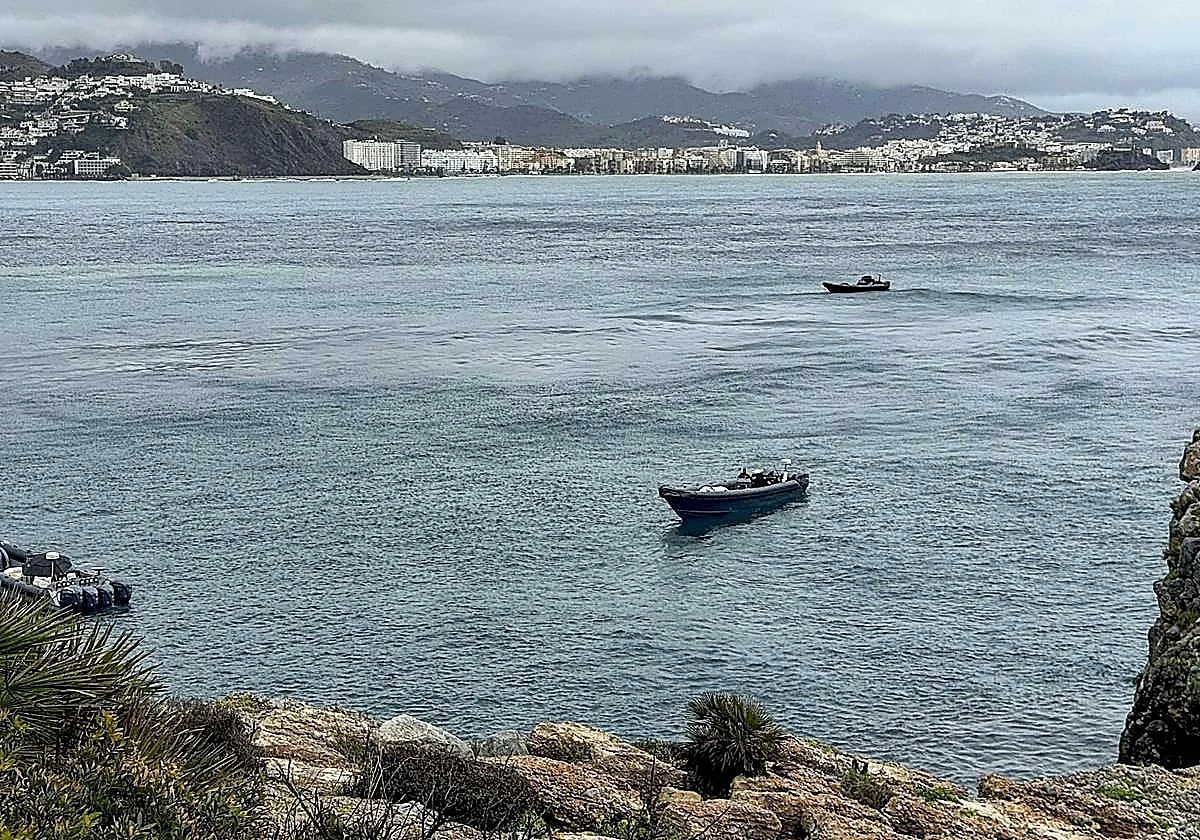
Several narco-boats take refuge from 'Leonardo' in Almuñécar (Granada). EFE Drug-trafficking Costa Tropical on alert: Marina del Este issues emergency protocols over ‘narco-boat’ sightingsStaff at Almuñécar’s port given ‘do not approach’ orders as high-speed smuggling vessels seek refuge from winter storms
Pilar García-Trevijano
Granada
Friday, 13 February 2026, 15:19
The Costa Tropical has become an unlikely sanctuary for illicit high-speed vessels, as dozens of 'narco-boats' have been spotted taking shelter from the recent ‘Leonardo’ storm along the Granada coastline.
The rugged cliffs of Cerro Gordo, Los Berengueles cove, and the Marina del Este port in Almuñécar have seen a surge in sightings over the last two weeks.
Driven toward the shore by treacherous sea conditions, these inflatables have been seen playing a cat-and-mouse game with the Guardia Civil’s maritime patrols.
There have been daily sightings since the storms began to batter Andalucía and they have taken refuge in Marina del Este port, while four others have eluded the Guardia Civil's maritime service patrol boat in La Herradura. In addition, one of these boats ended up stranded on the shore due to strong waves and is now under judicial custody.
Although no arrests have been made to date, The presence of narco-boats along the Costa del Sol is illegal, as this type of fast inflatable boat used by traffickers was banned in October 2018, when the Spanish government approved a royal decree law adopting measures to combat the illicit trafficking of persons and goods.
Forbidden vessels
The regulation prohibits this type of vessel with an overall length of eight metres or more and with a maximum power, regardless of the number of engines, equal to or greater than 150 horse power (hp). Boats are normally equipped with up to four 300 hp engines.
Now Marina del Este marina has given instructions to its staff so that they know what to do if they see a narco-boat. Firstly, they have been told to contact the Guardia Civil and Customs Surveillance. Staff are also urged to call 062 if they see them and to provide video surveillance images.
They point out the "express prohibition" for personnel to approach or demand formalities from these vessels, following the instructions of the police. In addition, the company that manages the port has increased the supervision of the accesses, pontoons and other key areas, as well as reviewing the video surveillance to ensure coverage of areas close to the entrance and shaded areas.
Permanent communication is also maintained between management, operations personnel and the Guardia Civil and the company points out that the safety of users and workers is a "priority".
Normally the drug-boats are grouped together in international waters, some 15 to 17 miles from the coast, outside territorial waters, to avoid the direct action of the Guardia Civil maritime service. An agent working on the coast explained to IDEAL that they drop anchor in a shallow area and await the arrival of a service, usually a pleasure boat, which supplies them with fuel, as well as food, supplies, dry clothes and logistical support.
Fuel at sea can fetch up to ten times the price on land. At other times, they come ashore to drop off their cargo and refuel quickly. These vessels are mainly used to move hashish from North Africa.