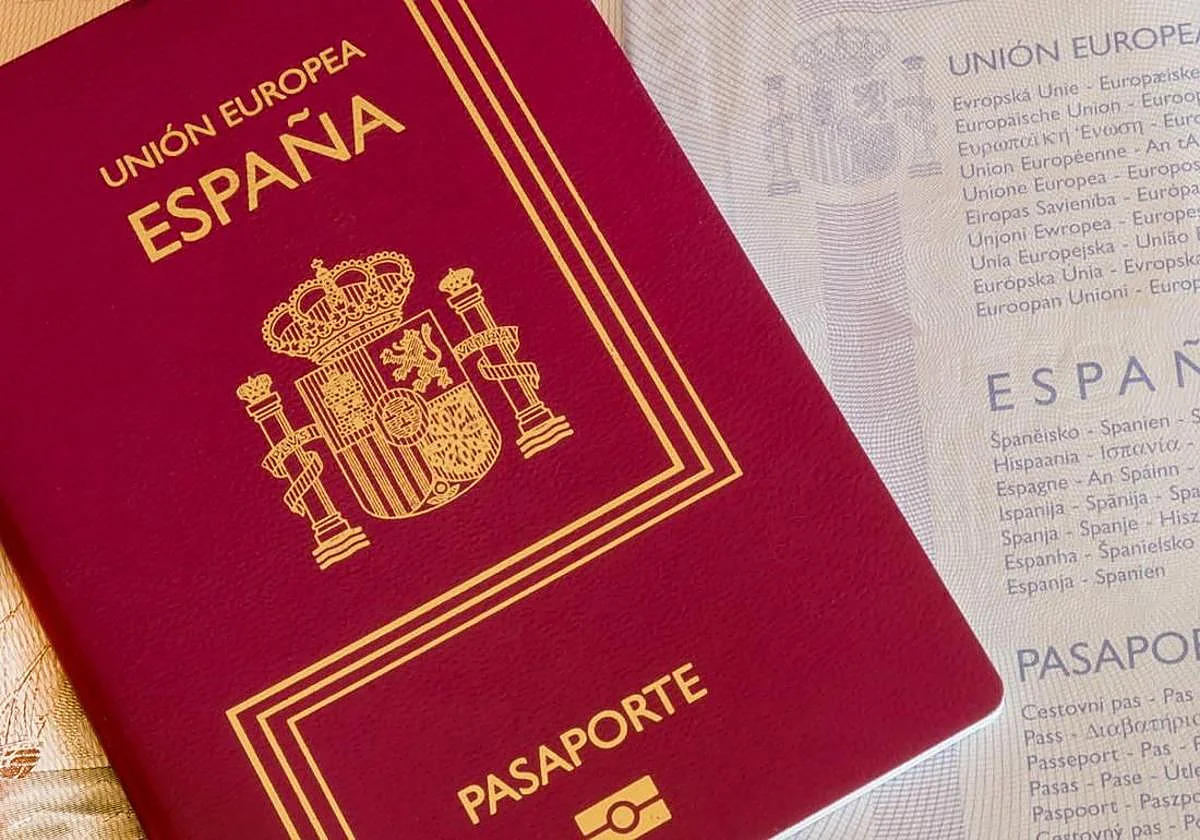
Spanish nationality
Explainer: This is how to obtain Spanish nationalityEverything you need to know about the routes and requirements
Añádenos en GoogleDaniela Craft Márquez
09/07/2026 a las 11:52h.Obtaining Spanish nationality is a defined legal process, but it doesn't look the same for everyone. Your route depends on where you're from, how long you've lived in Spain, and your personal circumstances.
For non-EU nationals, things have become more complicated since Brexit ended automatic EU residency rights. Expect longer queues at airport passport control, a capped 90-day stay without a visa, and a real question of what it actually takes to stay long-term.
Under the Spanish system, there are four routes to acquiring Spanish nationality: by residency, by option, by discretionary conferral and by posession of status. Eligibility to apply for Spanish nationality is very broad and can be filed by anybody over the age of 14, and by people under 18 with the help of their legal representative.
Residency
This is the most common way foreign nationals in Spain acquire nationality. This route requires proof of continuous legal residency in Spain immediately prior to the application. The length of time the person is required to be resident varies depending on their nationality or personal circumstances. Most often, the requirement is ten years, with fewer demands for those who have obtained refugee status, and for nationals of Latin American countries, Andorra, Philippines, Equitorial Guinea, Portugal and descendents of Sephardic Jews.
An exemption to the usual ten-year wait for residency is when the applicant is married to a Spanish national. There is no such thing as instantly attaining Spanish citizenship by marriage, and the candidate must have lived in Spain for one year before applying. However, this is a significant reduction compared to the usual ten-year requirement for most foreigners. The applicant can also still apply for Spanish citizenship if their Spanish spouse is deceased, provided they submit a death certificate and a registered certificate of historical coexistence.
The candidate through residency must also demonstrate good civic behaviour. This is evidenced by a criminal record certificate from the country of origin and includes any reports issued by relevant Spanish authorities.
Another demand is to prove integration in Spanish society, which includes having to pass both Spanish language tests (DELE A2) and assessments of the applicants' constitutional and sociocultural knowledge of Spain (CCSE). Nationals of Spanish-speaking countries are exempt from taking the Spanish language tests.
Experts say there are some other specific cases in which the applicant would not need to take these exams. In this case, they would request a so-called nationality exam waiver. Those eligible belong to one of the following groups: people who cannot read or write, people with disabilities, disorders, or learning difficulties, and foreigners who have studied in Spain. This last group includes those who have studied compulsory secondary education (ESO) in Spain. To avoid taking the exams, the applicant must have completed the ESO in Spanish territory, and must have finished it by passing all subjects. Also exempt from the tests are those who have successfully completed another type of higher education, such as high school (bachillerato), professional training (intermediate or higher), or a university degree in Spain.
Option
This stems from close family links that the applicant may have with Spanish citizens. So, any person who is or has been under the parental authority of a Spanish national, or whose mother or father was Spanish and born in Spain, may opt for Spanish nationality. The person concerned must provide documented evidence of their relationship to the Spanish citizen.
Discretionary conferral
In this case, the applicant must prove that there are exceptional circumstances warranting the granting of nationality. This law sets out a special procedure for granting Spanish nationality by discretionary conferral to Sephardic Jews of Spanish origin. People wishing to go down this route must provide documented evidence of their Sephardic origin and the special connection they now have to Spain.
Posession of status
This is an unusual route for acquiring nationality based on the person concerned having possessed and used Spanish nationality for ten years. They must have had and used Spanish nationality in good faith, and a record of nationality must be held in the Civil Register, even if that record is annulled.
Final requirements
For all routes, three final requirements must be met. First of all, the applicant must swear an oath or promise of allegiance to the King and obedience of the Spanish constitution and laws. They should also complete a declaration renouncing their previous nationality. This is not required of nationals of Latin American countries, Andorra, the Philippines, Equitorial Guinea, Portugal or Sephardic Jews of Spanish origin. Finally, there must be an entry of the acquisition of nationality in the Spanish Civil Register.