Estimated reading time: 7 minutes
The NFL draft is a little over one week away. The draft class is full of running backs of different shapes and sizes, with different strengths and weaknesses. Each NFL team has its own scheme and needs, and not every running back is going to fit in every offense.
This article aims to pair the top eight running backs with the team where each back fits best, in terms of both scheme and need. For more information on the strengths and weaknesses of these running backs and where they rank, check out the rookie running back rankings. Stats referenced in this article are how players performed over the last three seasons, and the players are compared to the other top 20 running backs in the class.
Kaytron Allen, Las Vegas Raiders
Similar to other running backs his size, he is better than most running backs on non-perfectly blocked plays and worse than most on perfectly blocked runs. That means it could make sense for him to land on a team with a below-average offensive line.
The Raiders had the third-lowest graded line last season in terms of run blocking. They should be much improved this season with the Tyler Linderbaum addition, but that won’t fix the entire line.
Las Vegas wants to pair a running back with Ashton Jeanty and, currently, Dylan Laube is penciled in to the second spot. Allen could see significant playing time with Las Vegas as Jeanty’s backup. Head coach Klint Kubiak has also shown no problem giving goal-line touches to his bigger back. Last season, it was to Zach Charbonnet‘s benefit and Kenneth Walker III‘s detriment. The year before, it helped Taysom Hill and hurt Alvin Kamara. This year, it could help Allen and hurt Jeanty.
Desmond Claiborne, Indianapolis Colts
Claiborne is a smaller back who will likely be used as a receiver but needs a strong offensive line to also find success in the run game. All running backs are better on perfectly blocked runs, but the gap between how Claiborne plays on perfectly blocked runs compared to non-perfectly blocked runs is larger than most, at 7.4 yards per carry and 3.1, respectively.
The Colts had the third-highest run block grade last season, which would be a big asset to Claiborne. He would also pair well with the bigger back, Jonathan Taylor, allowing Claiborne to be a change-of-pace runner.
Jonah Coleman, Cincinnati Bengals
Coleman’s unique size will require an offense that is willing to take a chance on him and play to his strengths. He is 5-foot-9 and 228 pounds, and no current running back is that short with that weight.
One team that has shown a willingness to take a chance on shorter, bigger running backs is the Cincinnati Bengals. They took a chance on Zack Moss, who was listed at 5-foot-9 and 223 pounds during his combine. While Moss didn’t work out from a health perspective for Cincinnati, the Bengals could take a chance on Coleman. They also have Samaje Perine and Tahj Brooks, who are also among the bigger running backs in the league, but Coleman could surpass both on the depth chart.
Coleman was notable in that he was above the 90th percentile among running backs on non-perfectly blocked plays but closer to the 80th on perfectly blocked plays, which can be expected for running backs of his size. That fits well with the Bengals, who had the seventh-lowest PFF team run-blocking grade last season.
Emmett Johnson, Washington Commanders
Washington has taken a shot on Rachaad White and Jerome Ford this offseason, who are both known more for their receiving but are capable of playing on all three downs. Johnson is another running back who fits that mold. He could potentially learn from the veterans and take over in the future.
Johnson also notably played better on gap runs compared to zone runs. He is below the 50th percentile on zone runs with 4.8 yards per carry, compared to the 89th percentile on gap runs at 6.1. Washington had the fourth-highest rate of gap runs relative to zone last season, which also makes Johnson a strong fit.
Jeremiyah Love, New York Giants
Love is an every-down back with no clear weakness, making him a strong fit for any team that needs a running back. A few of the teams that draft in the top-10 already invested an early pick in a running back recently, like the Las Vegas Raiders and Cleveland Browns, while the New York Jets, New Orleans Saints and Kansas City Chiefs invested in a top running back in free agency. The Arizona Cardinals and Washington Commanders also added running backs, but could still consider Love.
This leaves the Tennessee Titans and New York Giants as the two most likely landing spots, unless a team is willing to trade up. The Giants are the best fit, thanks to their better offensive line and better offense. The Giants had a 61.2 PFF run-blocking grade last season, 20th among offenses. Their offense also finished better, despite not having Malik Nabers for most of the season. While both teams have made changes this offseason, Nabers' return will be the biggest difference for either team.
This gives Love the best chance to maximize his yards per touch and his touchdowns. Joining John Harbaugh, who just had an offense with Lamar Jackson and Derrick Henry, will also help, compared to Brian Daboll in Tennessee, who is more used to a two or three-man committee.
Jadarian Price, Seattle Seahawks
Price notably stood out on zone run concepts. He averaged 6.9 yards per carry on zone runs compared to 5.1 on gap runs. This puts him at the 100th percentile among FBS running backs on zone runs and only 60th on gap runs.
Most of the teams that rely heavily on zone run schemes already have a running back. The Seahawks were among the top eight teams in zone run concept usage last season. Their new offensive coordinator, Brian Fleury, was a San Francisco 49ers assistant coach. The Seahawks will likely use a blend of the two offenses, but the 49ers used zone concepts the fourth-most frequently.
The Seahawks have a clear need at running back after Kenneth Walker III‘s departure and Zach Charbonnet‘s injury. Price could be the Seahawks' early down back to start the season and also take significant snaps on early downs even when Charbonnet is back, similar to what Walker did last season.
Nicholas Singleton, Arizona Cardinals
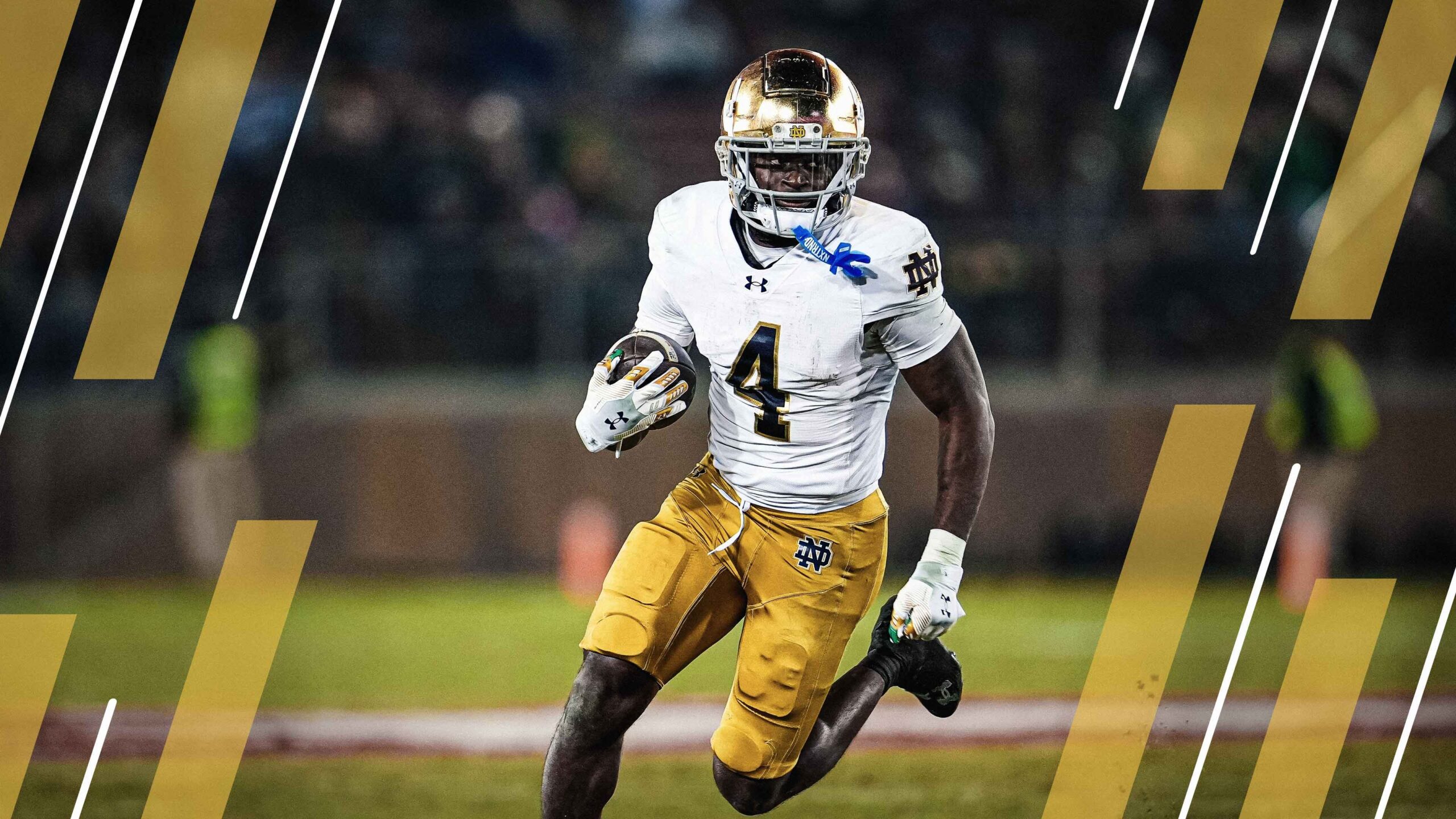
Singletary is unique because he is among the bigger running backs and one most experienced as a receiver in this class, which is a rare combination.
Two of the most successful receivers that were larger backs of the last decade are James Conner and Leonard Fournette. Conner is currently on the Cardinals roster, likely for one more season. Conner could serve as a mentor for Singletary. Fournette’s two best seasons in yards per reception were his first two seasons in the league. His offensive coordinator during those seasons was Nathaniel Hackett, who is currently the Cardinals' offensive coordinator.
Mike Washington Jr., Denver Broncos
He’s 6-foot-2 and 228 pounds, making him one of the biggest running backs in this draft class. The only running backs of that size or larger to see at least 1,000 snaps over the last eight seasons are Derrick Henry, Latavius Murray and Brian Robinson.
Most offensive play callers who have worked with those three backs don’t need a running back, with one exception. When Sean Payton was the New Orleans Saints‘ head coach, Murray shared the backfield with Alvin Kamara for two seasons. Last season, they drafted R.J. Harvey, who was viewed as very similar to Kamara.
The Broncos were looking to upgrade their backfield in free agency but ultimately ended up re-signing J.K. Dobbins. They may upgrade their backfield in the draft, and Washington gives them a type of runner they are missing.