Civil War
First Civil War mass grave exhumation in Campillos ends with 113 bodies now recoveredWorks push total estimate to 200 people and confirm a third phase will be needed to complete the recovery
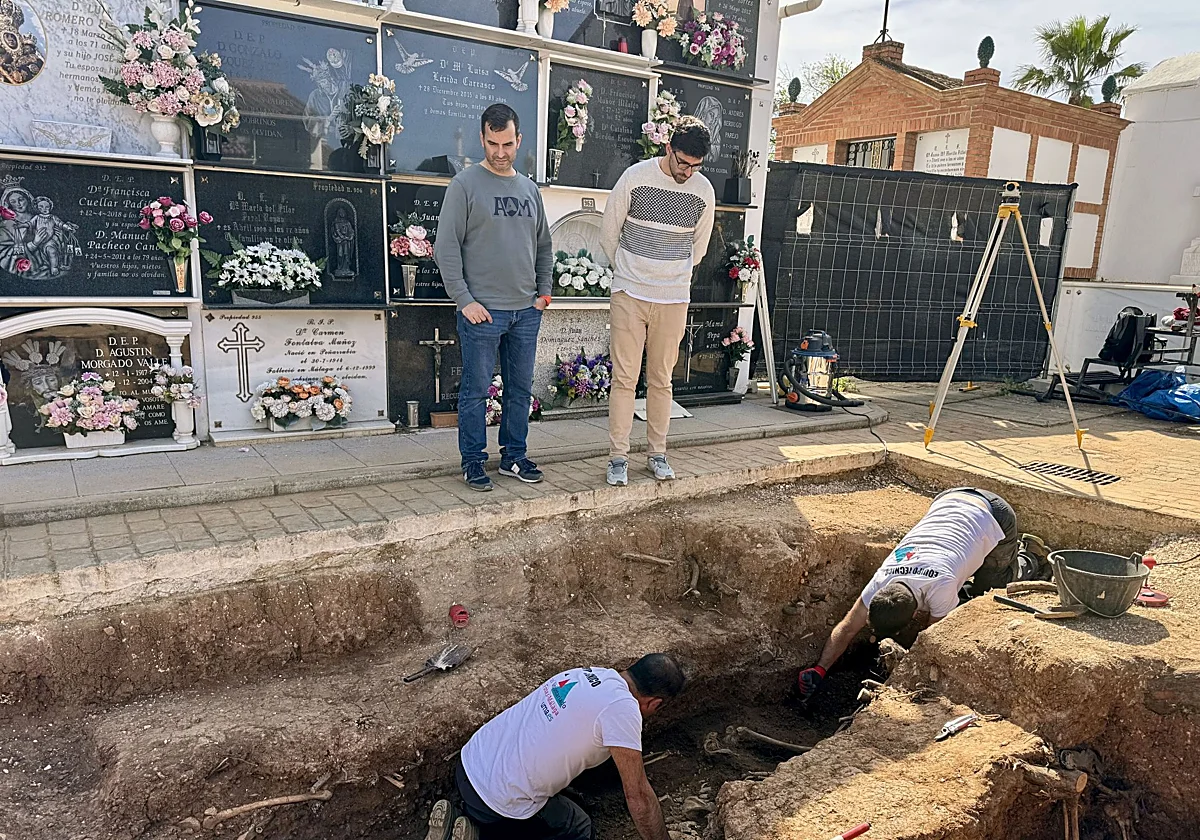
Añádenos en Google Exhumation work in one of the mass graves in the Campillos municipal cemetery. (SUR) 04/06/2026 a las 12:28h.The exhumation of the first of two mass graves at Campillos municipal cemetery has concluded, with a final count of 113 victims recovered.
A second ... phase of excavations recently finished, uncovering 40 additional bodies to complete the intervention launched last year.
The findings confirm the sheer scale of the Francoist repression site, which experts now estimate could hold around 200 victims across both graves.
The first phase, carried out in 2025, ended with the recovery of 73 bodies of people executed during the Spanish Civil War. That initial dig surprised technical teams due to the sheer volume of remains, the actual dimensions of the grave, and the high number of female victims, which significantly exceeded percentages usually found in similar exhumations.
Related story
History
Julio J. Portabales
The latest phase added 40 bodies to that initial toll. Of these newly recovered remains, 35 have been identified as male and three as female, while the sex of two individuals could not be conclusively determined.
40
more bodies discovered
With work on the first grave now complete, experts confirm that initial estimations fell short. Because the two graves are similar in size, the total forecast for the Campillos cemetery has risen to roughly 200 victims.
The second phase operated on a 40,000 euros budget. Since the funds were not entirely exhausted during recent months, the team will use the remaining balance to begin preliminary analysis and excavation on the second grave in the coming weeks.
A third phase
However, the size of the burial sites and the high volume of skeletal remains mean a third phase will be required to fully recover all victims from the second grave.
The Campillos project has become one of the most significant democratic memory interventions in Malaga province. The project aims to recover human remains, scientifically document historical events, facilitate future DNA identification, and offer closure to families after decades of waiting.
The works are part of a partnership agreement between the Andalusian regional government's Ministry of Culture and Sport and the University of Malaga. The initiative is also framed within the Spanish Secretary of State for Democratic Memory's National Exhumation Plan.
The project is coordinated by University of Malaga professors María José Berlanga Palomo and Encarnación Barranquero Texeira. University students have also participated in the digs, gaining hands-on training in forensic archaeology, documentation, and historical research.