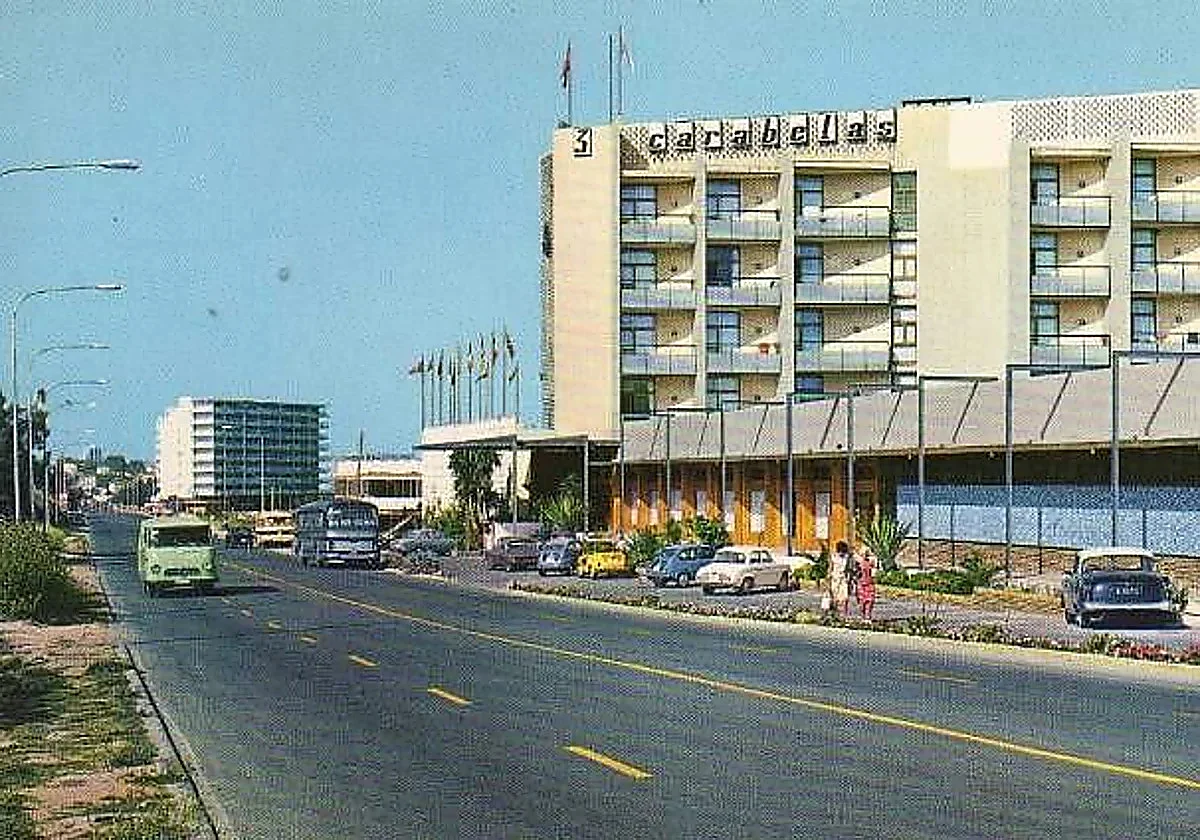
Alongside those projects stood the Tres Carabelas hotel. Today, only old photographs and written records tell its story, as the building was demolished nearly 20 years ago.
The hotel's disappearance left a huge void: a 12,688-square-metre block bordered by Calle Carlota Alessandri, Calle España, Calle Puerto Real and Calle Nerja.
When Lamela designed Tres Carabelas, he faced a "sunken plot, cut off from the beach, with a nearby road". He overcame those constraints with what the studio describes as "pioneering solutions in Spanish hotel architecture".
He designed the complex perpendicular to the road, using a fishbone structural layout to maximise terraces facing both the sea and the mountains.
The entrance sat on the second floor and separated guest and service access. Lamela also designed the landscaping alongside the pool, access areas and beach zone to create a unified atmosphere. In short, the project "marked a turning point in coastal hotel design".
Business owner José Meliá (key figure in Spain's hotel industry) promoted the project and brought it into his hotel group, giving the property his name.
The hotel opened in 1962 and closed in 2005. It became part of Torremolinos' golden era, alongside landmarks such as the Pez Espada hotel, which still stands today and enjoys protected status as a site of cultural interest. Tres Carabelas never received such protection.
Sculpture
The hotel also has a lesser-known story linked to another loss. In 1962, Antonio Lamela commissioned sculptor Pablo Serrano to create an abstract piece for the hotel. Made from construction leftovers, the sculpture was later removed and destroyed due to its controversial nature.
Serrano spent 20 years in legal dispute over the matter until his death in 1985, helping to pave the way for stronger protection of artists' rights. As a gesture of reconciliation, Lamela later commissioned another work from him in 1964, Calas Verdes, which now appears again in Madnum, a Colonial development in Madrid's Méndez Álvaro district.
Cruiser
After the hotel closed, developers proposed an ambitious replacement: the Cruiser hotel, which would have become Torremolinos' first five-star hotel, scheduled to open in 2010.
However, the Andalusian regional government challenged the building permit the town hall had issued, arguing it did not comply with planning regulations. Even before construction began in 2007, planners had already reduced the project's height from 24 to 15 storeys.
The project planned 439 luxury rooms, 594 parking spaces, a spa and a helipad, among other facilities. It never materialised. Works stopped in May 2009 and the site remains an enormous abandoned excavation.
The land is now set for a new chapter. Seville-based developer Grupo ABU has launched a 250-million-euro project to build 353 homes on the site, which are already on sale. The redevelopment required a change of land use approved in 2023 as part of a wider plan to regenerate the area, supported by the municipal council.
Access the dedicated Benalmádena and Torremolinos news feed