Zoom
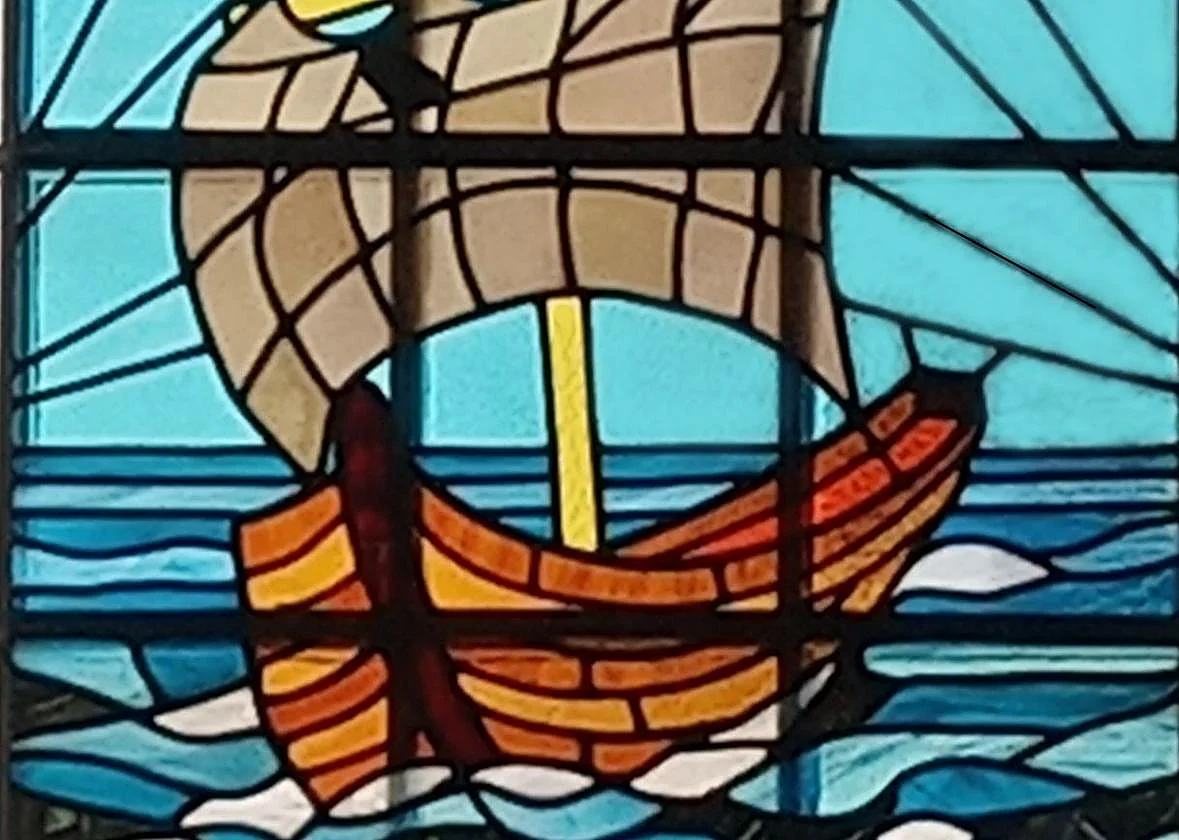
"This reflects the many international links that Gibraltar had in the past and continues to rejoice in today. Fittingly, this window is in the Lady Chapel," Reverend Tarrant said.
It is hoped that the third window will be ready in time for a dedication service on Sunday 26 April, the day before the 75th anniversary of the explosion. Throughout that weekend there will be a choral performance (Friday 24) and an exhibition in the cathedral about the windows and the explosion, which killed 13 people. Reverend Tarrant is appealing to any surviving eyewitnesses of the explosion "to share any memories or images" for inclusion in the exhibition.
Notable style
The Cathedral of the Holy Trinity, a cathedral of the Church of England Diocese of Europe, is particularly notable for its style inspired by Moorish architecture. Built between 1825 and 1832 to meet the needs of Anglican worshippers among the civil population of Gibraltar, the building, while still under construction, was used as a temporary emergency hospital during an outbreak of yellow fever.
Designed in 1740 by British architect Peter Harrison, the original plan did not include the Moorish arches: these were added when Colonel Pilkington modified the design more than 80 years later.
The cathedral suffered no significant damage during WWII, but the RFA Bedenham disaster caused substantial damage to the cathedral, lifting the roof and destroying all the windows.
The armament carrier arrived in Gibraltar on 24 April 1951, docking at the Gun Wharf. On the morning of 27 April, one of the depth charges that were being unloaded into a barge ignited. Although firefighters tackled the blaze from the quayside, a blast in the barge caused a fire which spread to the Bedenham, triggering a violent explosion in which the bow was blown out of the water and the rest of the ship sank. By the time the explosion occurred, most of the crew had already evacuated. Only the captain and the armament supply officer remained on board; both were thrown into the water by the blast but were later rescued safely.
John Mackintosh (1865–1940) was a Gibraltarian philanthropist who built his wealth by supplying coal to the British Navy. A member of Holy Trinity Cathedral, he was known for his strong sense of civic duty, supporting a wide range of causes, with a particular focus on improving life in Gibraltar. He was especially committed to helping the elderly, the sick and the poor, and left much of his fortune to charitable organisations which provide residential care for older residents.
Mackintosh drew up a will in 1938 that established a public trust to advance education on the Rock. He was passionate about strengthening ties between Gibraltar and the UK, and structured his educational provisions to reinforce these connections. In addition to supporting the cultural and educational development of young Gibraltarians, he also funded the construction of an extra wing for the former Colonial Hospital, further contributing to public welfare.
Honours and memorials include the John Mackintosh cultural centre, which opened in 1964, and a bust and a commemorative plaque displayed on the façade of the House of Assembly, now known as the Gibraltar Parliament. In recognition of his philanthropic contributions, he was also posthumously awarded the Gibraltar Medallion of Honour by Parliament.
"Everyone in Gibraltar knows the name of John Mackintosh, not just because of the places named after him, but because he gave so much to the local community," Reverend Tarrant said.