Zoom
Agriculture Granada's loquat harvest gets off to a slow start due to winter stormsThe rains and wind have damaged part of the crop and picking will continue until June
MJ Arrebola
Granada
Wednesday, 22 April 2026, 16:20
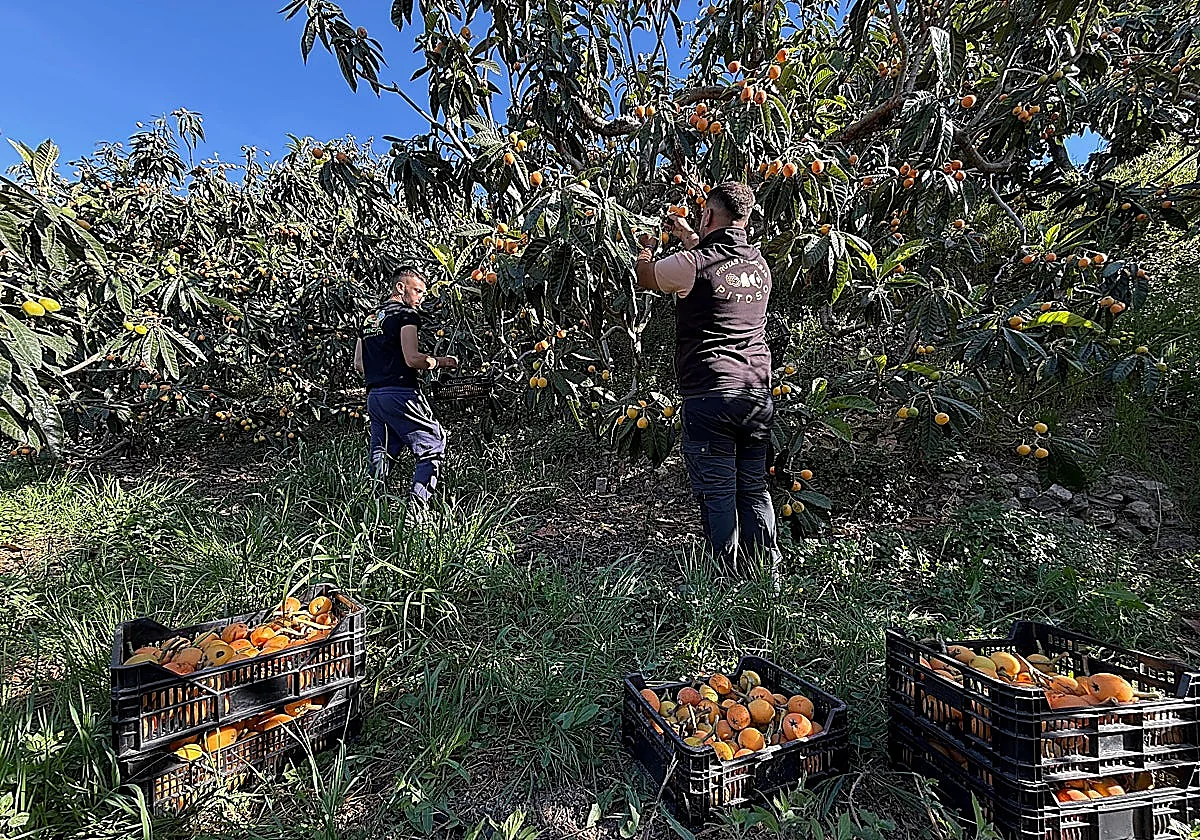
Granada province's Costa Tropical has started its loquat, or níspero, harvest later than usual this year due to the damage caused by the storms and heavy rain of January and February. Growers are also warning that the fruit is of lower quality due to the rain and wind and that harvesting normally begins in March.
The subtropical season on the coast is the same every year. The loquat is the first to be picked, from the first days of March. Mangoes follow, starting in August, followed by custard apples (cherimoya) at the end of the same month and avocado-picking starts in mid-September.
The growers explain that the loquat is a delicate fruit that has to be really looked after from day one and that it does not forgive the vagaries of the weather. Juan Antonio González has spent his whole life among the trees. He owns some five hectares spread between Salobreña, Itrabo and Molvízar and knows each tree like he knows his own family.
"In previous years, with the hot weather, we were even harvesting at the end of February. This year we are starting now", he says, explaining that the quality of the product is lower than in other years but it is just as juicy on the inside. Harvesting of this subtropical crop, which in hot years ends in May, is expected to last until June this year.
Sensitive fruit
The growers were expecting the delay in the harvest due to the low temperatures, but the damage to the crops is another story that has also caused them a lot of headaches. The storms that have hit the region in recent months have wreaked havoc on a fruit that, according to those who grow it, "is one of the most sensitive", says Pablo Béjar, a farmer with around two hectares.
The young man admits that he has never seen storms like this year. Neither he nor his father, who is now 68 years old and has been farming all his life. "There has been rain for many years, but with this hurricane-force wind... I don't remember anything like it". The problem has not only been the wind. The humidity that has been accumulating for weeks has favoured the appearance of stains on its skin, marks that, although they do not affect its flavour, make it a second-rate product and bring the price down.
Some farmers are already talking about losses. Béjar details that around 4,000 kilos have been lost between fruit that has fallen from the tree the fruit that has stains. At a price of around two euros per kilo, this translates into around 8,000 euros lost. Their harvest is normally around 40,000 kilos.
The low quality of the produce is also being felt in the stores. Olga Romero, sales and administration manager at Fruta El Portón in Molvízar, explains that the damage is being felt above all in terms of volume. And this is particularly noticeable in loquats grown in greenhouses. These crops, which usually grow ahead of open air crops, are now about twenty days behind. This year the fruit grown under plastic is still green and growers will have to wait until May to be able to harvest it.