Zoom
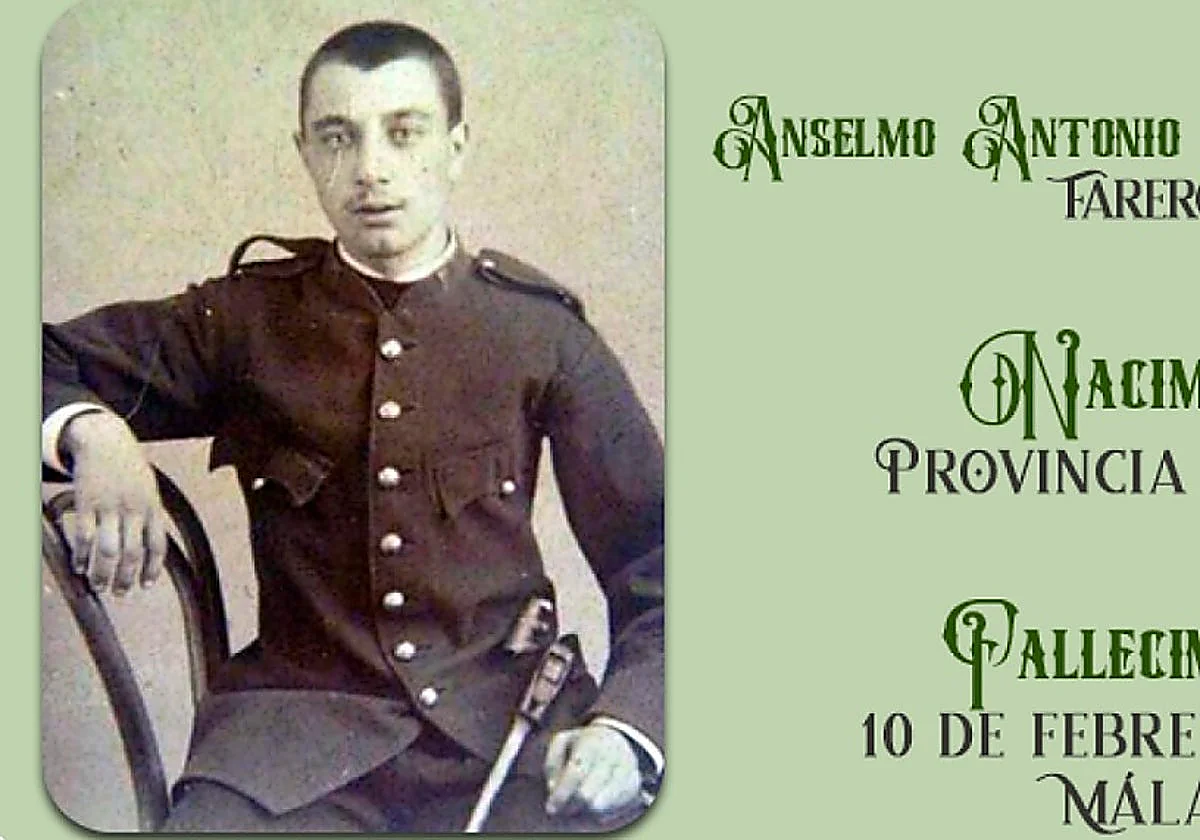
Photo of Anselmo Vilar, the supposed Torre del Mar lighthouse keeper SUR History Historians challenge Spanish Civil War legend of the 'hero' lighthouse keeperNew archival research suggests Anselmo Vilar was not at the Torre del Mar lighthouse during 'La Desbandá' and that the light was extinguished by order of the Republic
Eugenio Cabezas
Monday, 9 February 2026, 16:30
Historians José María Azuaga and Manuel Lloret have sparked a significant historical debate after concluding that Anselmo Vilar - long celebrated as a hero of the Spanish Civil War - was not actually the keeper of the Torre del Mar lighthouse.
According to local legend, Vilar became a saviour during La Desbandá, the tragic 1937 exodus where thousands of civilians fled Malaga for Almería under fire from Franco’s forces.
The narrative held that Vilar deliberately extinguished the lighthouse for two nights to confuse Italian and German warships, preventing them from targeting refugees on the coastal road. For this act of defiance, he was allegedly executed by Francoist troops between 9 and 10 February 1937.
Vilar's heroic deed has been honoured in recent years in Torre del Mar as Desbandá commemorative events take place in February throughout Malaga, Granada and Almería provinces. However, the legend has now been questioned following new archival research which shows that it was not he who turned off the Torre del Mar lighthouse in February 1937 and that, in fact, he was not even the keeper at the time.
Until now, the version included in Wikipedia and even recognised by the Spanish government in the Official State Bulletin (BOE), presented Anselmo Antonio Vilar García, a lighthouse keeper from Lugo who was allegedly shot in Vélez-Málaga between 9 and 10 February 1937, as the man who decided not to turn on the Torre del Mar lighthouse for two nights to hinder Franco's bombing of the Malaga-Almeria road.
This narrative, based on research by Vélez-Málaga journalist Jesús Hurtado in December 2017, credited him with saving the lives of thousands of civilians fleeing Malaga under fire from Spanish, Italian and German air forces.
Port authority archives
In recent years, Vélez-Málaga town hall and various organisations have paid tribute to him with public events, plaques and even the dedication of a square in Torre del Mar as “farero de La Desbandá” (lighthouse keeper of La Desbandá) in March 2023.
In 2024, historians José María Azuaga Rico and Manuel Lloret Corpas began a review of this story when they detected a lack of documents proving that Vilar had personally decided to switch off the light. In March of that year, they conveyed their doubts to the Secretary of State for Democratic Memory, warning of the risk of accepting accounts without archival support.
On 31 October 2025, after almost a year of negotiations and with the mediation of the Ombudsman, they gained access to the Malaga Port Authority's archives, specifically to folder 1085-07 “Torrox and Torre del Mar Lighthouse - Minutes”, where they reviewed 309 documents dated between 1911 and 1945.
This work served as the basis for the study 'Dudas sobre el apagado del faro de Torre del Mar por el farero Anselmo Vilar García', (doubts about switching off the Torre del Mar lighthouse by lighthouse keeper Anselmo Vilar García), published in the magazine Sociedad (no. 22, 2024/2025) by the Society of Friends of Culture of Vélez-Málaga.
The researchers' first conclusion is categorical: none of the 309 documents from the Republican period mention the name of Anselmo Vilar as the lighthouse keeper responsible for the Torre del Mar lighthouse. "There is no mention of anyone with that name performing the duties of lighthouse keeper at Torre del Mar; those duties were performed by lighthouse keepers from Torrox," they state in their conclusions, to which SUR has had access.
The documentation consulted identifies Miguel Pérez Ruiz, lighthouse keeper of Torrox, as the person responsible for the maintenance and surveillance of the automatic light of Torre del Mar from at least 1935. In several handwritten minutes, Pérez Ruiz claims payment for the monthly trips he had to make from Torrox to clean, service and refill the Torre del Mar lighthouse lantern, confirming that no permanent lighthouse keeper resided there.
Automated lighthouse
The documents also clarify how the lighthouse lantern worked technically: it was a Swedish-made A.G.A. installation, powered by acetylene dissolved in acetone and equipped with a ‘solar valve’, a mechanism that lit up at dusk and automatically switched off at dawn without human intervention. This system made the permanent presence of a lighthouse keeper unnecessary, limiting their task to visiting several days a month for maintenance, refilling and cleaning.
With regard to the shutdown during the war, the minutes state that the Torre del Mar lighthouse – like the rest of the lighthouses in the province loyal to the Republic – was shut down on the orders of the Republican authorities, not on the initiative of an individual.
A minute dated 1 September 1936 states that the lighthouse was turned off by the Torre del Mar liaison committee, after forcing the doors open on the orders of the civil governor and the Navy Command. Another, dated 25 October 1936, states that the Torrox and Torre del Mar lighthouses were switched on and then off "by telephone order of the Honourable Civil Governor of the province", at exact times noted by the lighthouse keeper.
The records consulted also document the looting of the lighthouse in February 1937, but they do so in terms that contradict the image of Vilar defending the facility alone. In an inventory report dated 18 February 1937, civil servant José Luis Enríquez notes that the Torre del Mar lighthouse, located away from the Málaga-Almería road, had been looted and that "some items had disappeared", without mentioning any lighthouse keeper on duty.
According to Azuaga and Lloret, at that time there was only a military guard stationed at the lighthouse, responsible for the telephone at the nearby airfield, as also documented in the minutes and historiography on the defence of the Malaga coast.
"It would have been difficult to arrest a lighthouse keeper as there were no lighthouse keepers in Torre del Mar; maintenance was carried out by the lighthouse keeper in Torrox," conclude the researchers, who insist that the facility was abandoned when the looting took place.
Official State Bulletin
Despite this evidence, the Official State Bulletin (BOE) of 7 February 2025 included the "Old Torre del Mar Lighthouse, La Barraca Lighthouse‘ in the Declaration of the Malaga-Almeria Road as a Place of Memory, accepting the version according to which the switching off of the lighthouse on 6 and 7 February 1937 "made it impossible for the rebel ships to bomb the coast, thus saving the lives of thousands of refugees". Azuaga and Lloret consider that this mention "lacks documentary support" and gives institutional veracity to a story that they describe as a "hoax" fuelled by confirmation bias.
Objections and documents were presented that supported doubts about the veracity of the story, but the Secretary of State for Democratic Memory ended up publishing the text we have just transcribed in the Official State Bulletin," Say the historians, who are calling for the reference to the Torre del Mar lighthouse to be withdrawn or revised. For them, true historical memory "consists of the search for truth," even if that truth contradicts deeply rooted beliefs.
In their letter, the researchers appeal directly to the associations most involved in recovering the facts of the Málaga-Almería road, such as the A.S.C. La Desbandá, to take the initiative and ask the Ministry of Territorial Policy and Democratic Memory to correct the official account. "Maintaining the reference to Torre del Mar only serves to give credence to something that lacks documentary support and is far removed from historiographical reality," they warn.
Oral testimonies
Azuaga and Lloret emphasise that their conclusions do not question the magnitude of the “La Desbandá” massacre or the suffering of the victims, but rather the specific story of the lighthouse being turned and the connection with Anselmo Vilar. "Those who do not accept the existence of the airfield or the military checkpoint should provide the evidence they have, thereby shedding light on the issue," they argue, opening up the debate in the memorialist and academic community.
Hurtado explained to SUR that his research on the alleged lighthouse keeper of Torre del Mar was based on oral testimonies from locals when he was working on the history of football in Vélez in the late 1990s. "I never managed to access the Port Authority's archives and I tried many times," said the journalist and researcher, who described the results of Azuaga and Lloret's work as "surprising". Hurtado added, "They have been luckier than me, but I still believe that the Torre del Mar lighthouse being switched off is what prevented the bombing in this area, which did take place in Torrox," he said.
Hurtado explained that the photograph of the alleged lighthouse keeper was provided to him by a local residents, now deceased, who told him that his father exchanged letters and correspondence with Vilar when he was in the war in Africa in the 1920s. "He may have been an assistant to the main lighthouse keeper, which is why he does not appear in the documents," explained the journalist and researcher, who insisted that his work was based "almost exclusively on oral sources, as it was impossible for me to access the archives of the Malaga Port Authority, who told me they had nothing," he insisted. "What has been declared a Place of Memory is the area around the Torre del Mar Lighthouse," he noted.
Monuments, plaques and urban place names linked to the ‘lighthouse keeper of La Desbandá’ could now be called into question if the historiographical consensus on the absence of documentary evidence is consolidated. The challenge for authorities and historical organisations will be to decide whether to correct the public narrative, maintaining the places of remembrance but adjusting the content to the new evidence, or whether to uphold the story of teh lighthouse keeper.
In any case, the archival work on the Torre del Mar lighthouse is already shaping up to be a case study on how democratic memory must dialogue with historical research, even when it forces us to revise established heroes and narratives.