Zoom
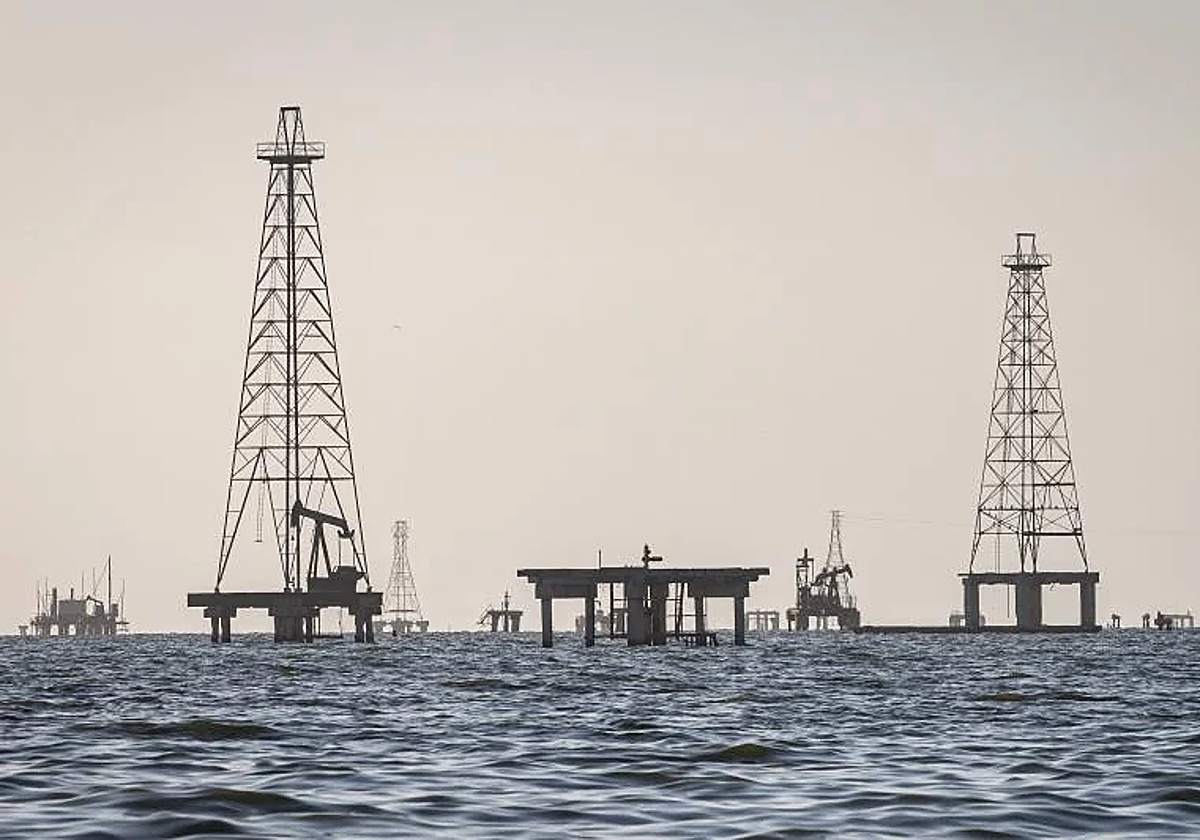
Offshore oil platform. EFE Economy International Energy Agency calls for release of strategic oil reserves to curb price surgeAmid Middle East conflict and the closure of the Strait of Hormuz, IEA members weigh a 400-million-barrel intervention to stabilize the global economy
José A. González
Wednesday, 11 March 2026, 12:15
The International Energy Agency (IEA) is trying to curb the rise in oil prices in the current turbulent energy market. The organisation has urged member countries to release their strategic oil reserves, in anticipation of an extension of the war in Iran.
The closure of the Strait of Hormuz prevents the passage of hydrocarbons through this strategic channel in the Middle East.
What is the IEA’s primary goal in releasing oil reserves?:
The goal is to increase global supply to force down prices, which surged past $100/barrel following strikes in the Middle East, thereby preventing a global energy shock and economic crisis.
Why is the Strait of Hormuz so important to the oil market?
It is a narrow waterway between the Persian Gulf and the Gulf of Oman through which approximately one-fifth of the world’s oil and liquefied natural gas (LNG) passes daily. Its closure effectively halts a massive portion of global energy exports.
How does Spain manage its oil reserves?
Spain uses a mix of state-controlled stocks managed by Core and mandatory reserves held by private energy companies. These include crude oil, gasoline, and kerosene stored in strategic tanks to ensure immediate availability.
According to IEA calculations, the organisation's members hold approximately 1.2 billion barrels in their reserves, in addition to another 600 million barrels in mandatory commercial inventories.
As The Wall Street Journal has reported, the organisation headed by Fatih Birol has asked representatives of the 32 member countries to release their reserves to counteract the significant disruption further aggravated by the sinking of several ships. There is also the suspicion that Iranian vessels might have laid mines in the channel, through which a fifth of the world's oil supply passes.
The member countries will debate this proposal on Wednesday. It would far exceed the 2022 release of reserves, when 182 million barrels of oil were released onto the market after Russia invaded Ukraine.
Mission: lower the price
With this measure, which officials say would offset 124 days of supply shortages, the IEA hopes to reduce the price of oil on international markets, which exceeded 100 dollars per barrel after the start of the conflict, reigniting fears of an energy shock that could trigger a new economic crisis. However, this proposal has not always been well received by international markets.
In 2022, the price of crude oil surged by 20 per cent. Back then, investors and analysts interpreted the IEA's decision as a sign that the oil crisis was more severe than anticipated.
Three decades earlier, the action had indeed had the desired effect. On the first day of George H.W. Bush's 1991 Operation Desert Storm, when the US attacked Iraq, prices fell by more than 20 per cent. At that time, the members of the IEA joined forces to release more oil from their reserves as part of a plan they had implemented prior to the invasion.
While awaiting the final decision, Brent crude is trading up by nearly two per cent, hovering around 90 dollars per barrel.
On Wednesday, the G7 nations (the US, Canada, Japan, France, Italy, Germany and the UK) expressed their support for the implementation of proactive measures to address the energy supply crisis triggered by the conflict in the Middle East, "including the use of strategic reserves".
Following the virtual meeting held on Tuesday, they stated that they were prepared to adopt "all necessary measures" in coordination with the IEA member countries.
The G7 stated that it is also closely monitoring developments in the energy market and coordinating actions with the IEA member countries and other international partners.
Spain's reserves until the summer
National Resilience: Spotlight on Spain
According to the Spanish Strategic Petroleum Reserves Corporation (Core), Spain’s energy security is stable but imports-dependent:
Petroleum Products: 92-day reserve.
Liquefied Petroleum Gas (LPG): 20-day reserve.
Comparative Autonomy: While Spain holds about 3 months of supply, other nations like the Netherlands (506 days) and Denmark (300+ days) maintain much higher strategic buffers.
Calculations by the Spanish strategic petroleum reserves corporation (Core) show that the country has a 92-day reserve of petroleum products and a 20-day reserve of liquefied petroleum gases (LPG).
The Spanish system combines Cores stocks and mandatory reserves of companies in the sector distributed through strategic warehouses and tanks that include crude oil, gasoline, diesel and kerosene to ensure their immediate availability if needed.
Currently, with these figures, Spain has secured its demand for at least three months, although the industry's supply chains are not designed to operate solely on reserves. Spain's figure, which is highly dependent on imports, is much lower than that of other countries. In Europe, the Netherlands has the largest oil reserves, with 506 days, according to the agency's data. Denmark has over 300 days and Finland and Hungary have over 200.
Of the Asian countries, Korea has 206 days of autonomy and Japan 195. China, the other major world power, could withstand 115 days, although the data comes from expert estimates, not official figures.