Zoom
Drug-trafficking Malaga-based 'tunnel boss' manages drug-trafficking network 19 metres underground in CeutaThe police have identified the main leaders of the organisation, which is believed to have smuggled tonnes of hashish through the tunnel over a decade
Juan Cano
Malaga
Wednesday, 1 April 2026, 10:27
The National Police discovered last Saturday a complex tunnel used for drug-traffiicking between North Africa and the city-region of Ceuta. The tunnel is far superior in technology and engineering when compared to the tunnel the Guardia Civil discovered in February 2025.
If the Ceuta drug tunnel were a rope, the police currently only have one end in their grasp. They still haven't reached the other side because the tunnel has flooded in recent storms. The police are currently pumping water out to navigate an infrastructure that they estimate has been operating for at least ten years.
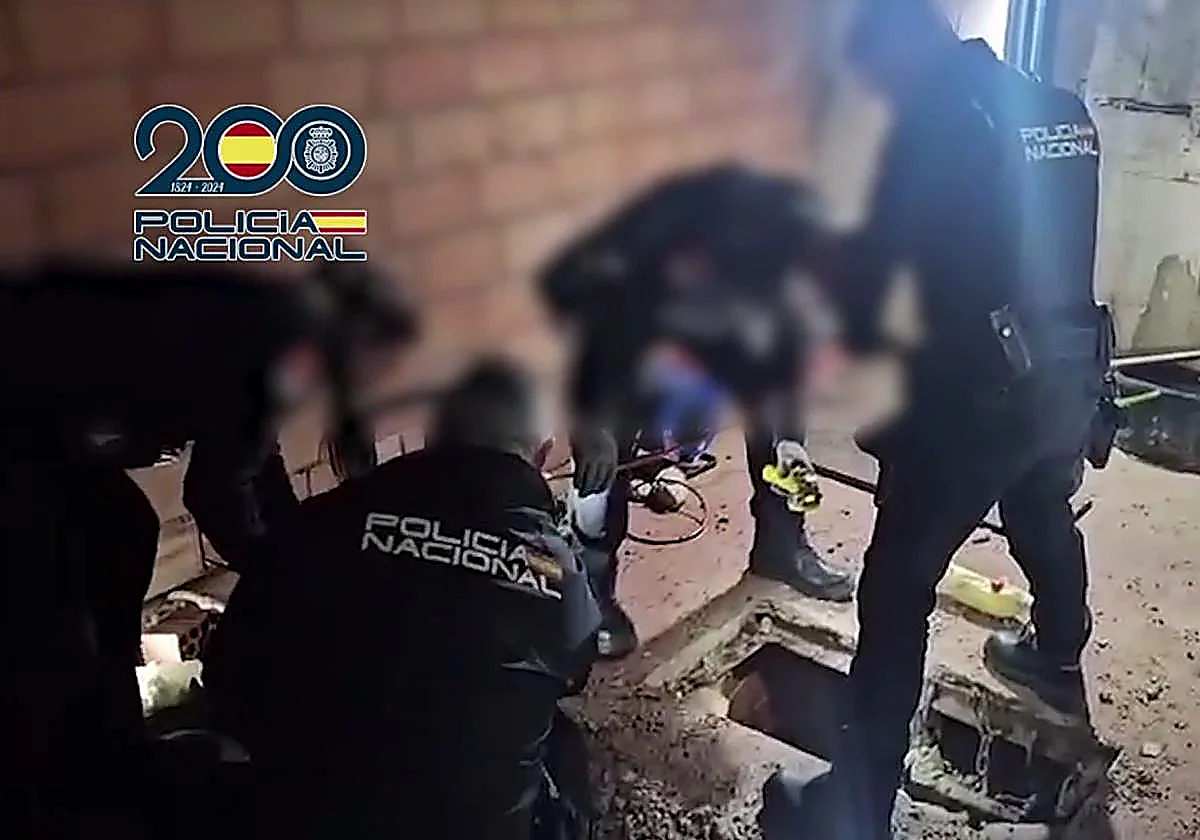
Only the final section of the drug tunnel and its exit through Ceuta are known, hidden by a complex camouflage system that was almost impossible to find. Investigators had to move a huge refrigeration unit located in a semi-abandoned warehouse in Tarajal in Ceuta, which revealed a small hatch leading to an adjacent building. It created a sort of "mining" labyrinth, according to the police.
In that second warehouse, also abandoned, the police found one of the entrances to the drug tunnel. To reach it, they first had to descend a shaft, like a lift, to a depth of 19 metres. At that level, they came upon the horizontal passage, 1.20 metres high and 80 centimetres wide (just big enough for one person crouching down), which leads to somewhere near the Moroccan border.
The entrance remains a mystery, as investigators have yet to locate it due to part of the infrastructure being flooded by groundwater, despite the drainage pumps installed by the organisation. They suspect the Moroccan entrance is located just across the Tarajal border crossing, in a complex of buildings in the town of Castillejos. From there, they believe "tonnes" of hashish have been smuggled for at least a decade.
The drug tunnel, unlike others discovered in recent years, was allegedly neither rented nor used by other organisations. According to the investigators, one network operated the infrastructure, with their leader based in the province of Malaga. In fact, eight of the 27 detainees resided in or had very close ties to the Costa del Sol.
At the top of the pyramid is a man who divided his time between Morocco, Algeciras and Estepona, where he owned a home and spent periods of time. He is of Moroccan origin and is currently considered one of the alleged hashish kingpins in the area, according to sources close to the investigation. Police have dubbed him "the tunnel boss". They haven't ruled out a connection to another tunnel recently discovered, given the similarity of the infrastructure.
Most of the detainees are Moroccan and Spanish, although some are of North African origin. There is also a Lithuanian man who lived in a luxury villa in Marbella and a Guardia Civil officer stationed in Algeciras who was not currently on active duty, although he had not yet retired. There are also several detainees from a Galician clan. According to the investigation, the offered their fishing boats to the organisation to smuggle hashish along other coasts, given the pressure on the Andalusian coast.
Once the drugs were smuggled into Ceuta through the drug tunnel, the organisation used various methods to transport the merchandise to the Spanish mainland and from there to different points in Europe. Investigators have detected shipments in trucks - they have intercepted one with 15,000 kilos of hashish in Almeria - as well as in speedboats and pleasure craft. In Malaga, they have intercepted 480 kilos of drugs inside a van.
Aside from the seized drugs, investigators were struck by the handling of large sums of cash. In total, they have intercepted 1.5 million euros in cash during various raids. The investigation remains open, as the police try to reach the other end of the tunnel.