Tourism
Malaga countryside tourism: eight reasons to visit Cartajima, the Serranía de Ronda's 'rooftop'Art in the streets, a path with sculptures, unique traditions and the interesting history of the Alto Genal Valley
Málaga
28/04/2026 a las 14:37h.The village of Cartajima might be far from the splendour it had at the beginning of the 19th century, but it shines with its own light and a lot of colour nowadays. Located in the heart of the Genal Valley, it is one of those villages in the Serranía de Ronda that surprises without making much noise. At an altitude of 851 metres, the area combines hiking trails, chestnut grove landscapes, unique traditions and a little-known heritage that make it an ideal destination for a different kind of trip.
From a path with sculptures in the middle of nature to colourful murals in the streets, Cartajima is the perfect destination for those looking for more than the usual attractions.
Senda Perdida (Lost Trail):
In 2026, Cartajima discovered one of those attractions that truly stand out: the Senda Perdida (Lost Trail). It's not your average footpath. Here, the easy, short walk, suitable for almost anyone, becomes a unique experience thanks to an unexpected element: art.
Related story
- Javier Almellones
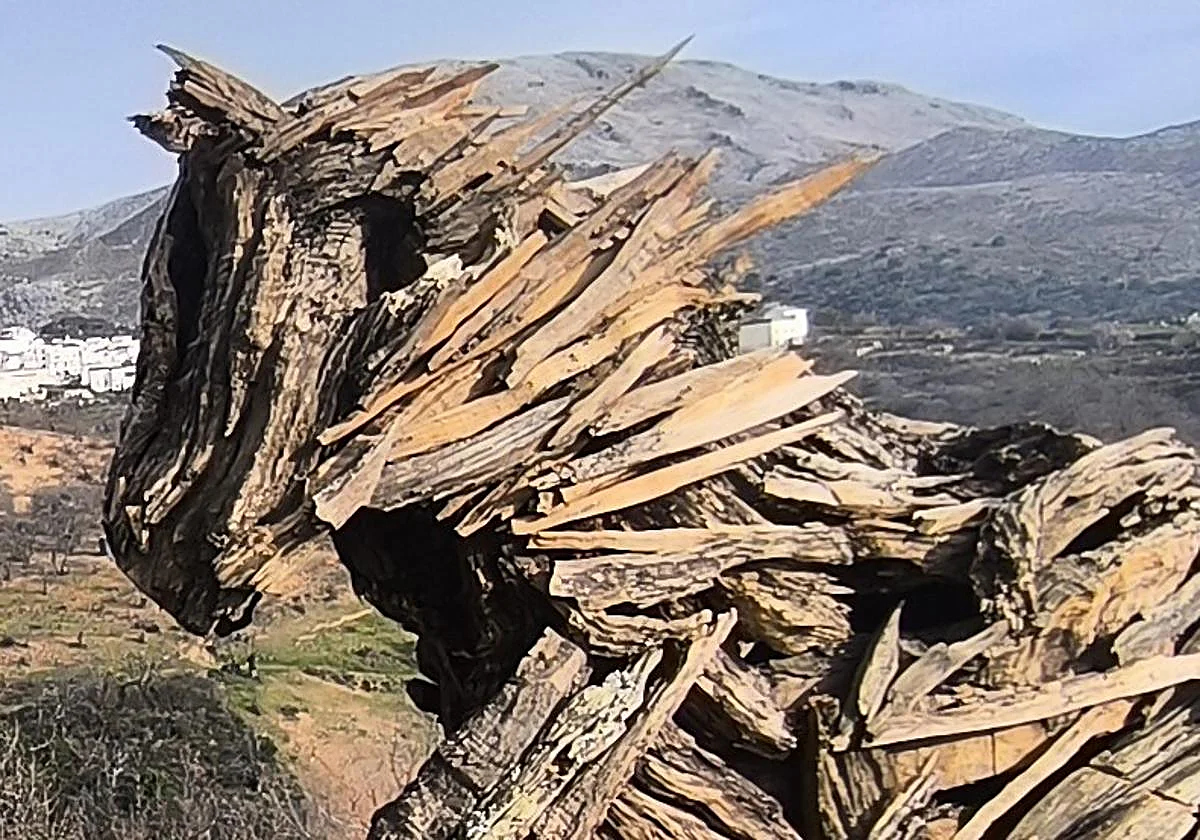
For just two kilometres (one way), the path overlooks the Alto Genal Valley, revealing large-scale sculptures created by artist Diego Guerrero, crafted from reclaimed chestnut wood. Eagles, mountain goats, foxes and deer emerge from the landscape. The result is an easy yet distinctive route that connects nature, creativity and family-friendly tourism in the Serranía de Ronda mountain range.
The village also offers other possible routes, including paths that link it to villages like Parauta, Pujerra and Júzcar, highly recommended in spring and autumn.
A stroll among murals that tell the story of the village's life
Beyond its stunning views, Cartajima reveals another of its great attractions within its streets: a mural route that invites visitors to explore the village centre at a leisurely pace. Under the 'Fachadas creativas' project, four young people from the municipality have transformed a dozen facades with scenes that link directly to the local identity: from chestnut trees and mushrooms to a grape press and everyday scenes depicting local traditions.
These murals do more than decorate. Each one tells part of the village's story, offering a glimpse into its landscape, food and way of life. You can follow the route on foot in a circular walk, spotting small details along the way, such as an old telephone box repurposed into something new. Altogether, it turns a simple stroll into a more cultural and reflective experience.
The highest point in the Serranía de Ronda
Cartajima stands out not just for what it offers, but for where it sits. At 851 metres above sea level, it is the highest village in the Serranía de Ronda and the third highest in Malaga province, behind Alfarnate and Alfarnatejo.
From this vantage point in the Alto Genal, at the foot of the karst landscape of Los Riscos, the village acts as a natural balcony over the valley. Surrounded by chestnut trees, it offers sweeping views towards places like Pujerra. The scenery changes dramatically with the seasons, especially in autumn during the 'Bosque de Cobre' (Copper Forest), when the trees turn deep shades of red and gold. Here, the colours linger slightly longer than elsewhere in the valley, extending the season for visitors.
Mosto: a homemade wine tradition
In Cartajima, mosto (a young, unfiltered wine) remains a living tradition. More than 20 households still produce it, each with their own method. Although the process has modernised, moving from old beam presses to newer equipment, the essence remains the same: small-scale, family production tied to local grape varieties.
The grape harvest coincides with the chestnut season, another key part of the local economy and culture. The whole process culminates in November with the village's traditional Mosto tasting, where locals compare their wines and keep the tradition alive.
Los Riscos: a hidden karst landscape
Just outside the village lies one of the Serranía de Ronda's most surprising landscapes: Los Riscos, which Cartajima shares with Júzcar. Shaped by centuries of erosion, this rocky terrain sometimes resembles the El Torcal de Antequera, though it feels wilder and is far less known.
One standout feature is the 'Águila de los Riscos' - a rock formation shaped like a bird of prey, officially recognised as a site of special interest in the province. Although access has become more limited in recent years due to private land restrictions, the area still draws attention for its geology, biodiversity and sense of being a hidden corner of the Genal Valley.
A unique Holy Week tradition
Easter in Cartajima centres on a tradition that breaks with convention: Las Cortesías. This celebration transforms Easter Sunday into a mix of religious symbolism and local custom.
In the early hours, residents build a small shelter or hut using branches and plants, where they place a figure of the Christ Child. One of the most striking moments comes with the symbolic "theft" of the figure, as it moves from the church to this makeshift setting. The event also features the burning of a Judas figure. The celebration ends when the Virgin meets the Child, marking one of the village's most distinctive traditions.
Fuente de los Peces: a glimpse into the past
Just outside the village centre, the Fuente de los Peces offers a direct link to everyday life in the past. Built during the Moorish period, it formed part of the traditional water supply system, with a cistern feeding both the fountain and a nearby trough.
For decades, locals went there to collect water. Even today, you can still see marks worn into the stone by clay jugs - a quiet reminder of its long use. The name itself refers to fish that once lived in the area.
Little Cadiz: a nod to its past prosperity
Cartajima hasn't always been a quiet village of around 235 residents. In the early 19th century, it played a much more prominent role in the Alto Genal, earning the nickname 'Cádiz el Chico' (Little Cadiz).
In 1814, Ferdinand VII granted it town status during a period of prosperity that shaped its layout and architecture. Some houses from that era still stand today. Earlier records, such as the Floridablanca census, show it once had nearly 1,500 inhabitants - a figure it has never reached again - along with services like a doctor and a notary, rare for the area at the time.
It even played a role in the Peninsular War, with figures like the guerrilla fighter Andrés García. This past helps explain why, in its day, people compared it to a major city.