Zoom
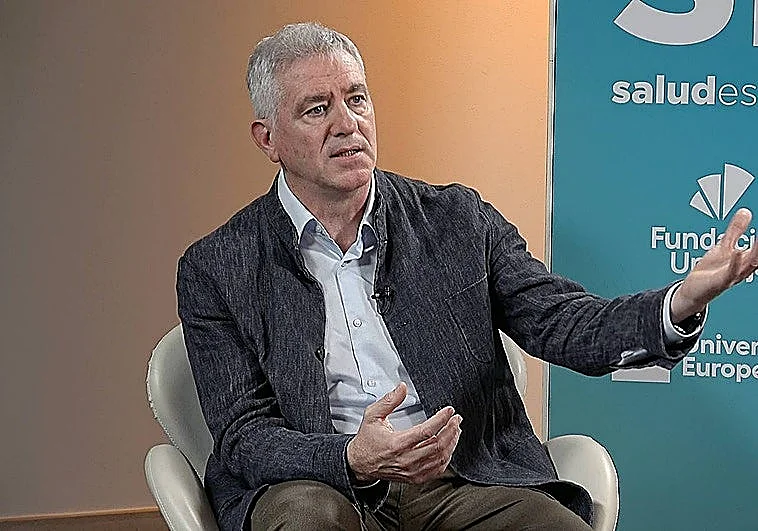
Ramón Medel during an interview with SUR. Pedro Quero Interview Malaga doctor promotes pioneering technique to help children with droopy eyelid conditionDr Ramón Medel highlights the rarely discussed fact that ptosis can lead to serious mental health issues due to bullying and related physical challenges
Ana Barreales
Thursday, 2 April 2026, 11:01
Ramón Medel is an oculoplastic surgeon at the Quirónsalud Málaga hospital. He is a world-renowned expert in the treatment of droopy eyelids, a condition also known as ptosis.
His pioneering technique not only restores visual function but also highlights a harsh reality: "Children with this condition who don't undergo surgery have an unhappy childhood and a terrible adolescence."
This advanced procedure, which he has been performing for over 20 years, achieves permanent, scar-free results, unlike traditional surgeries that often require multiple procedures. Families from all five continents travel to Malaga to entrust their children's vision to his care.
What is oculoplastic surgery and how does it differ from a traditional eye procedure?
It is a subspecialty within ophthalmology that focuses on conditions that affect the structures and organs around the eye, ranging from tumours to inflammations or other minor issues.
Patients from all over the world come to your clinic in Malaga.
We offer a fairly new discipline and I was fortunate enough to train in England and the US three years ago. We first settled in Barcelona, where we founded an advanced school for other doctors, and then moved to Malaga. Because I feel deeply Andalusian, I wanted to return to my homeland and the airport's connectivity has been key to making this project a reality: in the last year and a half, we've had patients from 94 countries. They feel welcome here and the city is perfect for them.
One of the people who crossed half the world to come to Malaga was Alana Blanchard - the most media-savvy surfer in the world. How do you manage the pressure of her putting her son's vision in your hands?
When you're a parent, you know that your children's happiness comes first and any problem they have affects you. For me, it's an honour to see patients, regardless of their status, although we're aware that not everyone can afford to travel to Malaga. Alana is a very high-profile figure, but it means just as much to me when the grandchildren of professors from Australia or the children of specialists from such prestigious centres as the Bascom Palmer Eye Institute in the US come to see us. The fact that leading experts place their trust in us is both a responsibility and a source of pride.
What is a droopy eyelid and when should we be concerned?
Ptosis isn't just a cosmetic issue. It's a functional problem because it reduces the field of vision. Furthermore, the congenital cases we operate on in children are more serious because they affect the eyes, which are our defining feature. This has a significant psychological impact and, from the age of four and a half or five, can lead to bullying and very serious mental problems, which make children unhappy. We can change their reality with a surgery.
Can it cause developmental delays in language?
Even in walking, yes. Sometimes we operate on ten-month-old babies because the ptosis will affect them as soon as they start taking their first steps.
When is it considered a problem?
Although it may seem minor, those who have it do suffer because of it. I always ask adults about their cervical spine, because they often walk in a strained position to compensate for their lack of vision, causing a secondary ailment to the eyelid problem.
What are the differences between the cases of children and adults?
In children, it directly affects their happiness. I've operated on about 5,000 cases of ptosis, 2,000 of them using our special technique, and the pattern among those who didn't have the surgery young is the same: they had an unhappy childhood and a terrible adolescence. This is a rarely discussed fact: the suicide rate is high among teenagers with ptosis. They become introverted, cover their faces with their hair, dress differently and suffer from associated mental health issues.
You are a pioneer in a technique called frontal flap, what does it consist of?
With standard procedures, a child would often undergo up to six surgeries for a mediocre result. This means multiple anesthesias, enormous anxiety for the family. As a surgeon, I wasn't happy about it. After much study, we discovered a way to achieve a much more successful surgery: we use another forehead muscle to lift the eyelid. This way, with a single intervention at a young age, the result lasts a lifetime. Our repeat surgery procedures rate is very low, barely 4.5 per cent.
Why do older techniques require multiple surgeries?
In cases of severe ptosis, incisions were made on the forehead to connect to the eyelid using sutures, but in most cases these would come loose after a short time and the height had to be readjusted every year or two. In addition to the repeat surgeries, these materials could become infected and required incisions on the forehead that were sometimes unsightly. We use a more stable technique with an incision that leaves no scar. We have patients who had the surgery at ten months of age and are now 20 years old and looking great, without a scar and with just one surgery.
You also operate on tumours and perform reconstructions after accidents. Is it possible to recover not only function, but also symmetry and beauty?
Of course, in oculoplastic surgery in the past, large incisions were made because the only concern was removing tumours and lesions. I'm obsessed with not leaving scars, even when I perform blepharoplasty. We can remove very large tumours behind the eye through incisions that are virtually invisible.
What is the main mistake when choosing an eyelid surgery?
The best advice is that anyone having surgery should look for a top specialist, someone who performs a high number of surgeries performed and has the necessary experience to resolve any complications that may arise.
What signs should we be aware of in our eyelids or tear ducts that would indicate to us that we should get checked?
A sudden drooping eyelid, for example, it can be a sign that there is a more serious underlying problem.