Zoom
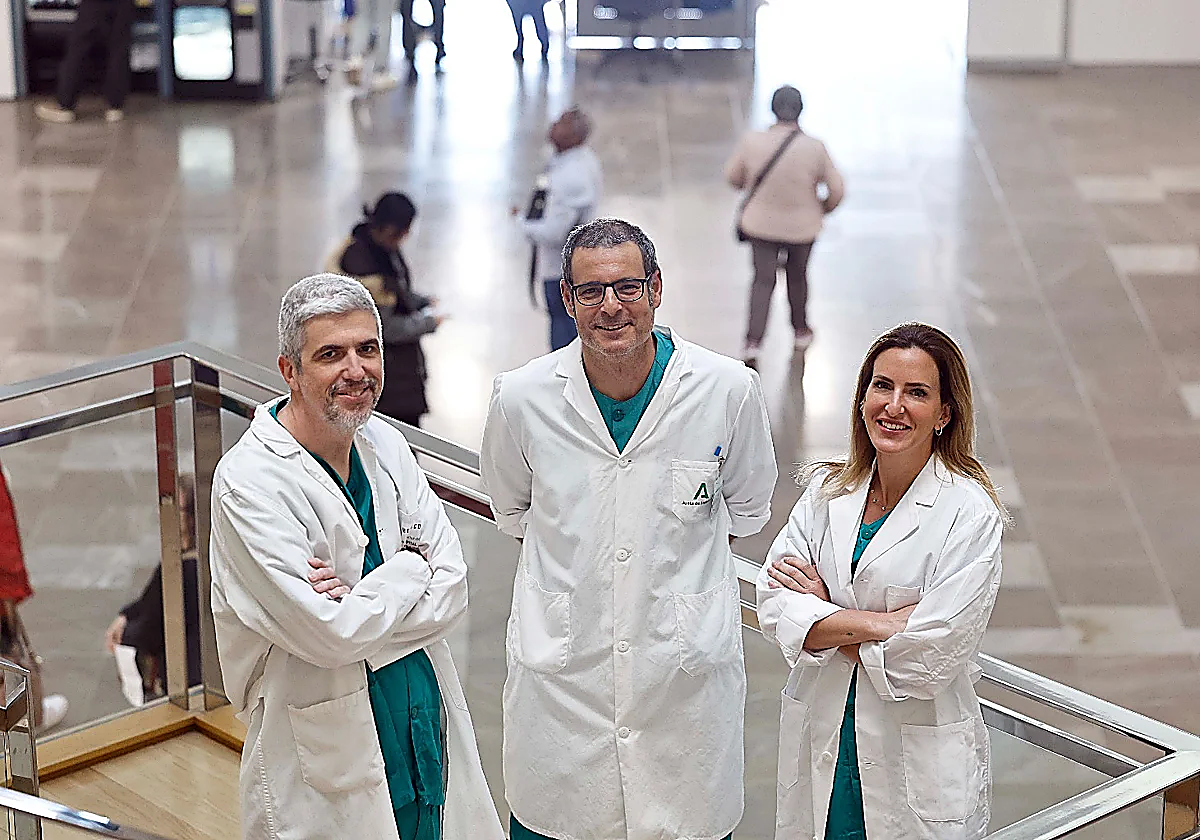
From left to right, Malaga doctors José Luis Guerrero, Alfredo Malo and Aída Raigón. Salvador Salas Health Malaga doctors lead paradigm shift in anaesthesia and call for end of opioid-based drugsAnaesthesiologists from Hospital El Clínico are investigating the use of opioid-free anaesthesia to reduce side effects and postoperative complications
José Antonio Sau
Friday, 24 April 2026, 11:55
A group of anaesthesiologists at Hospital Clínico in Malaga are raising awareness about the importance of the type of anaesthesia doctors use in operating theatres. "It matters what anaesthetic you use," Dr Alfredo Malo tells SUR.
Like fellow anaesthesiologists José Luis Guerrero and Aída Raigón, he is part of a group at the biomedical research institute of Malaga (IBIMA BIONAND) that studies the use of opioid-free anaesthesia in surgical procedures. Together with other members, they have published more than 50 articles highlighting the benefits of this practice: the reduction of side effects and postoperative complications, among many others, some of which are key in the fields of cancer and bariatric surgery.
They are part of the COST European network and the European group on oncoanaesthesia. Their two main lines of research are opioid-free anaesthesia and anaesthesia and cancer.
Their research adapts to a wider range of practices at the anaesthesiology and resuscitation department, including cardiac surgery. There's a paradigm shift: from opioid-based drugs to medications that don't contain opioids.
Fentanyl
"In the 1960s, the fentanyl molecule, a very potent opioid, was synthesised. This molecule was a major breakthrough because, previously, anaesthesia relied on the use of gases with very high concentrations that caused many problems, including haemodynamic instability - people basically didn't wake up from the anaesthesia," Dr José Luis Guerrero says. Fentanyl made it possible to reduce these gas concentrations and increase safety, helping to improve pain control. "It was a revolution."
However, "in the 1990s, it became clear that opioid use was problematic and opioid-free anaesthesia began to be developed, also known as multimodal anaesthesia. Later, in this century, the idea of completely eliminating opioids from anaesthesia began to take hold. Combinations of drugs are used in very small doses, so the side effects of each individual drug tend to be less severe, but when combined under optimal anaesthetic conditions, there is better control of postoperative pain," Dr Guerrero states.
By removing opioids, doctors reduce respiratory depression, postoperative vomiting neurosis, agitation and delirium and urinary retention.
Relapses
Dr Aida Raigón conducts her research in the field of cancer. She says that cancer patients "often die from a recurrence of the primary tumour that was surgically removed".
A decade ago, she began analysing the factors that contribute to these recurrences. "It turns out that when the tumour is manipulated during surgery, tumour cells escape into the bloodstream and can then travel from the blood to other peripheral tissues, causing another tumour in the longer term," she states. "It is precisely at that moment of tumour manipulation that we anaesthetists are administering a series of drugs: a concern arises as to what effect these have on the body, particularly on the immune system, whilst surgery is taking place."
She began to study commonly used drugs and their effect on the inflammatory response and the immune system - "our body's natural first line of defence for eliminating a cell when it becomes cancerous" - and their relationship with the use of opioids. A trial is due to begin shortly "in breast cancer surgery patients, with the aim of seeing whether using local-regional, opioid-free anaesthesia can also benefit these patients by reducing cancer recurrence and making the surgery more definitive". This, however, is a hypothesis still under investigation.
Dr Alfredo Malo tries to avoid the use of opioids in all types of procedures. "In obese patients, because they have a greater amount of fat, the opioids accumulate." The side effects are much worse for them. Initially, these drugs were rarely used, but now pharmacies prepare about 150 syringes per month (one per surgery). Currently, a trial is under way at Hospital Clínico in bariatric surgery. Dr Malo has also studied the effects of these medications in cardiac surgery.
Related story