Zoom
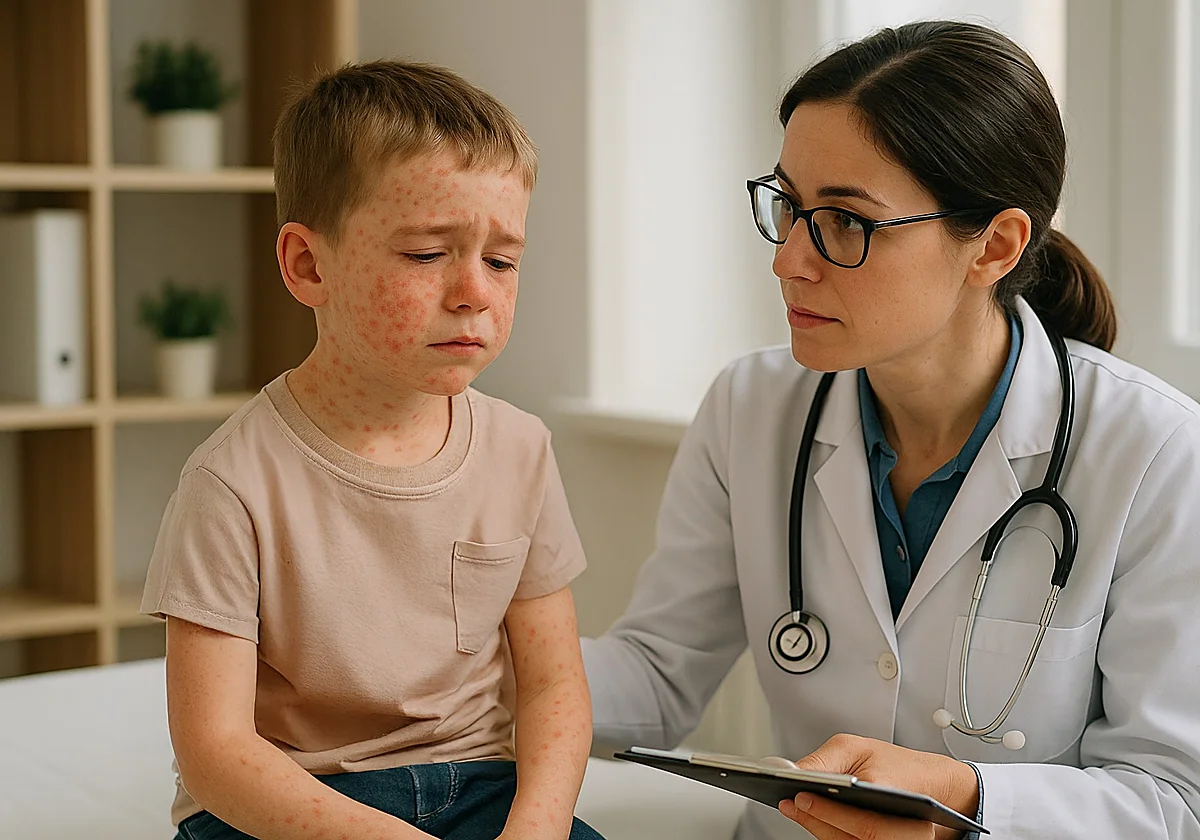
A doctor attending to a child with measles. SUR Health Malaga health: 33,000 toddlers to receive measles vaccine in outbreak prevention campaignAround 11,000 of these children will receive the first dose and 22,000 two- and three-year-olds will receive the booster
Thursday, 26 February 2026, 12:20
The Andalusian health service (Sas) is organising a wide vaccination campaign in Malaga to prevent the spread of measles. A total of 33,000 toddlers will receive either the first dose or the booster of the MMR (measles, mumps and rubella) vaccine in 2026.
With that said, 11,000 babies at the age of 12 months will receive the first dose in Malaga in 2026. This leaves 22,000 toddlers between the ages of two and three to get the booster.
In 2025, Malaga was the province in Andalucía with the highest number of measles cases (52 out of 95). The increase in cases in the region has been gradual but relentless in the last five years: one case in 2020, none in 2021 and 2022, three in 2023, 28 in 2024 and the record 95 in 2025.
Doctors detect many of the cases in children that come from other countries where vaccination is not as strong. In comparison, Andalucía has a good rate of vaccination (97.7%).
What concerns paediatricians is that the rate drops when it comes to the second dose, with many parents forgetting about it if not reminded. Doctors strongly urge parents to complete the full vaccination cycle, as this is the only way to prevent breakouts.
Measles is one of the most contagious viruses. It can sometimes go almost unnoticed, but healthcare professionals do not rule out severe cases. In 2025, 28% of detected cases ended up needing hospitalisation due to complications.
To fight the spread, the regional ministry of health has brought the booster dose of the vaccine forward. Children receive the first dose when they are a year old and the second when they are two, instead of three.
To control outbreaks, the renewed protocol recommends advancing the second dose even more, from 15 months of age in all children who live in outbreak areas.
The measure aims to protect not only children in vaccination age, but also newborn babies that cannot receive the vaccine and people with a compromised immune system or those for whom the vaccine does not work for some reason.