Zoom
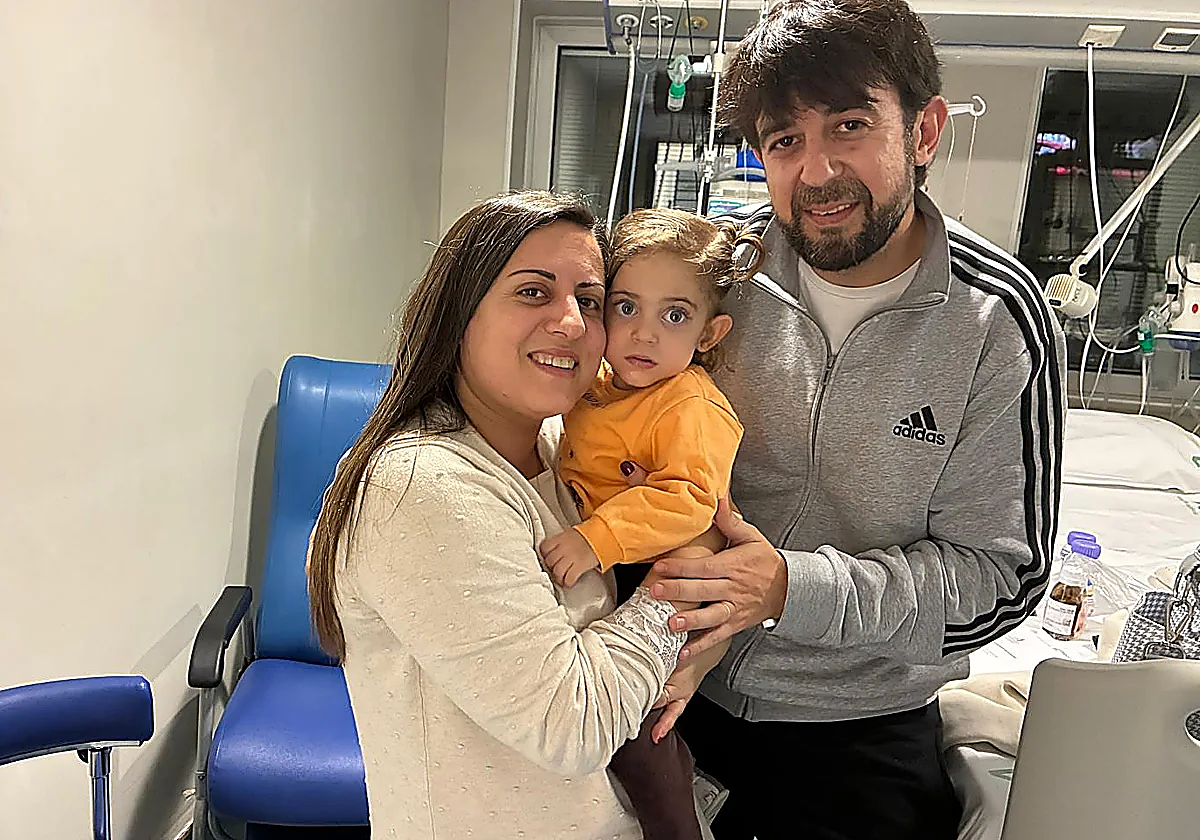
Marta Sánchez and Manuel Nieto holding their daughter Marta in Hospital Materno in Malaga. SUR Health Malaga hospital saves little girl with 'ruptured lung'Two-year-old Marta can now breathe on her own thanks to the urgent transfer in which multidisciplinary teams from Malaga and Badajoz collaborated
José Antonio Sau
Monday, 9 March 2026, 11:40
The recovery of two-year-old Marta Nieto has joined the success stories of Hospital Materno Infantil's Ecmo transfers. In November 2025, a team from Malaga travelled to Badajoz and transferred the little girl to the Costa del Sol capital's hospital, where doctors treated her after a severe case of bronchopneumonia that led to a ruptured pleura (known as pneumothorax) and a respiratory failure.
In one month, Marta went from being on the verge of dying to breathing on her own again.
What is Ecmo?
Ecmo is an advanced life support system that temporarily replaces the function of the heart and/or the lungs when they stop working. It is the last resort for children with a heart or respiratory failure that do not respond to conventional treatments.
It is a very complex procedure that requires multidisciplinary teams, advanced technical infrastructure and an immediate response. Only 14 hospitals in the country offer this service. The Materno in Malaga is one of the three that can transport children.
Each transfer involves the deployment of a team of paediatric cardiovascular surgeons, intensive care specialists, perfusionists, nurses and 061 personnel. The Materno hospital covers transfers for Andalucía, Badajoz, Murcia, Alicante, Ceuta, Melilla and the Canary Islands.
What happened to Marta?
Marta was a premature baby, born at six months. "When she was born, she had a haemorrhage in her head and she caught four bacteria in the ICU. She was born and she died, they revived her," her mother Marta Sánchez says.
This was Marta's fifth hospital admission in the two years since her birth. "This latest blow has been devastating. You break down, but you have to have hope," the mother says.
"Every time she catches a cold, it affects her lungs. This last time it led to severe pneumonia. Once she was connected to the machine, all they told us during the first few weeks was that we had to be patient and wait," Marta says.
She and her husband Manuel Nieto didn't know if their daughter would live. In November, when they saw that little Marta had trouble with a cold she had caught, they took her to the village health centre. "Four hours later, there was nothing they could do for her," the mother says.
"They transferred us to Badajoz. Once there, she began to deteriorate. She needed a lot of oxygen and, at one point, her little lung collapsed," Marta tells SUR.
The transfer and the treatment in Malaga
That was when the hospital requested urgent assistance from Hospital Materno to connect the girl to life support. "It was the only way she could survive, because she had gone into cardiac arrest in Badajoz," Marta says. The child's parents even said goodbye to her, preparing for the worst.
Head of the Materno paediatric critical care and emergency unit José Camacho narrates the journey: "Our colleagues in Badajoz alerted us because she was in respiratory failure due to severe bronchopneumonia and they had exhausted all possibilities. The problem with children with severe bronchopneumonia is that we end up putting them on ventilators, which are machines that heal, but at the same time are very aggressive and can cause the lung to rupture. In Marta's case, all ventilator measures had been exhausted, she was already at maximum capacity and, despite this, she was unable to oxygenate."
Dr Camacho explains that Ecmo "is a support system that acts as an artificial heart and lung". When they arrived in Badajoz, they "placed two large cannulas in the main vessels of the body and drew blood from the girl, passed it through an oxygenator, oxygenated it and returned it, thereby relieving the lungs and heart of their workload".
The girl spent a week connected to the machine, completely asleep. After that, they put her on a ventilator, gradually removing the support from that moment onwards. During the first few days without the support, Marta suffered from withdrawal symptoms, but she slowly recovered.
"This girl left the hospital without oxygen support, perfectly healthy from both a neurological and respiratory point of view," Dr Camacho says.
"This has been a medical miracle," the mother says, expressing her eternal gratitude to the doctors who treated her daughter in Badajoz and the medical team in Malaga.
Hospital Materno's success stories
Since 2017, the Materno hospital has carried out 21 transfers, with a survival rate of 82 per cent, according to data from the regional government.
After Marta, the hospital performed another transfer. On 31 December, they received a call from Almeria and "the team spent New Year's Eve intubating the child".
"The truth is that it doesn't matter what day it is, nothing matters, because in the end that child came to Malaga and is now back at home," Dr Carmacho states.