Zoom
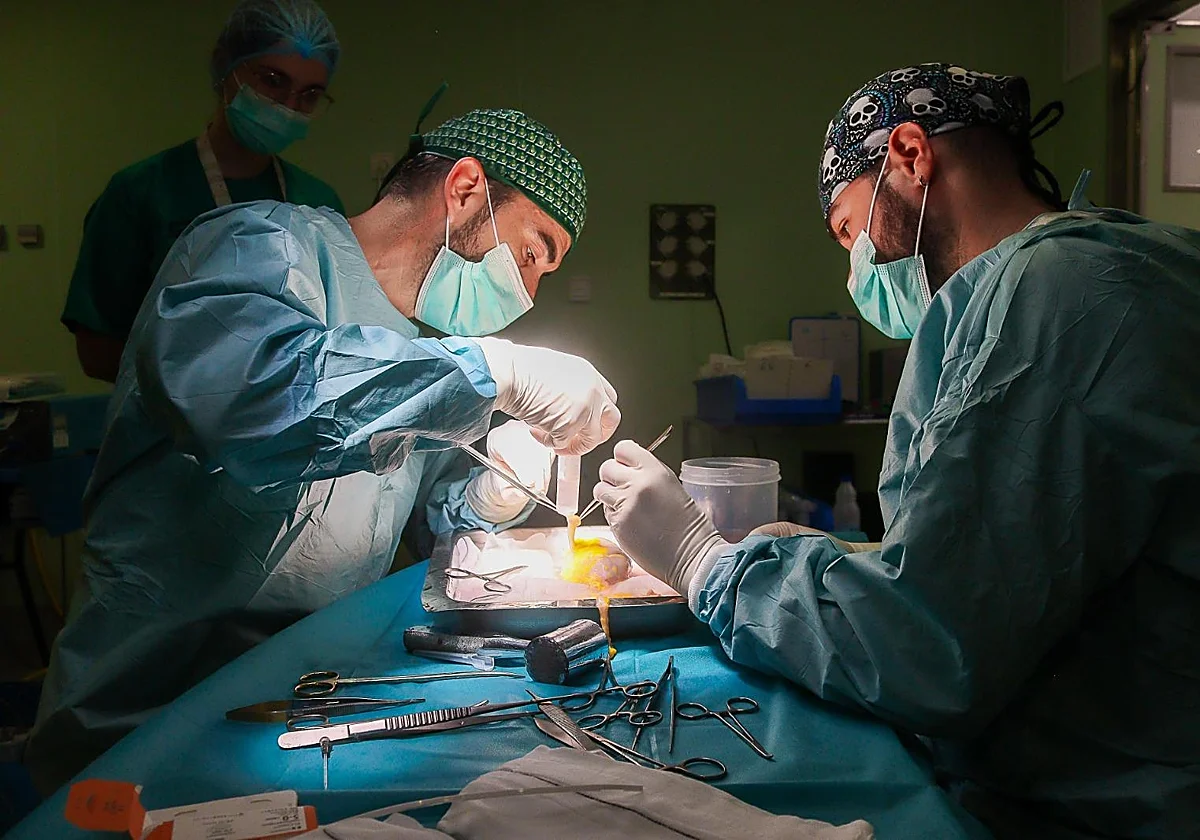
Doctors performing a kidney transplant at Hospital Regional in Malaga. SUR Health Malaga hospital second in Spain in kidney transplants in 2025Hospital Regional in Malaga performed 206 transplants, second only to the 207 at Hospital Universitario de Bellvitge in Barcelona
Monday, 23 February 2026, 14:29
Hospital Regional in Malaga city became the second hospital in Spain with the largest number of kidney transplants in 2025: 206, compared to Hospital Universitario de Bellvitge's 207 in Barcelona. Although this is a position lower than in 2024, when it was first in the country, with 242 transplants, the hospital maintains good figures and success rates.
The hospital has consolidated its position as one of the reference centres for organ transplants in both Andalucía and Spain. The 206 kidney transplants have made it the most active centre in the region and the second most active in the country. This represents the second highest number of kidney transplants in the hospital's history, consolidating the upward trajectory begun in 2023.
Also in 2025, the hospital performed 67 liver transplants, which is the second best figure in the centre's history, and 11 pancreas transplants, making it second in Spain behind only Hospital 12 de Octubre in Madrid.
Of the 206 patients in 2025, 18 per cent received a transplant as a first option, "without the need to start dialysis treatment". There were also 21 hyperimmunised transplants, 13 living donor transplants and 11 combined pancreas-kidney and one combined liver-kidney transplant, highly complex surgeries.
In 2025, Hospital Regional also set another record by performing 13 kidney and three liver transplants in six days - an exceptional feat, given the technical and organisational complexity of the surgery.
The hospital's transplant coordinator, Miguel Lebrón, told SUR that "it is not easy to put a patient with a kidney disease on a waiting list, because a great many tests have to be carried out". "We have a lot of contact with dialysis centres, which care for patients with terminal renal pathologies," Dr Lebrón said.
18 per cent of patients received a transplant as a first option at Hospital Regional in 2025
There are 350 people on the waiting list in Andalucía and 73 in Malaga province.
One hundred people take part in a transplant
Dr Lebrón said that a surgery of this magnitude involves around 100 people, part of whom must sometimes go to a health centre in another province, depending on where the patient is. Urologists and ICU professionals are those who choose the donor.
"We make a first assessment when we already have an organ donor," Dr Lebrón explained.
Zoom
Miguel Lebrón, transplant coordinator at Hospital Regional Universitario in Malaga. SURThese teams, responsible for declaring a donor suitable, assess every bit of information, including the size of the organ. "Then we have to see if the recipient is from here, we have to send the organ or the team has to come depending on which organ it is," Dr Lebrón said.
There are three transplant programmes in Malaga: kidney, pancreas and liver. "We do everything according to protocol: we never forget to call everyone who needs to be called and to get everyone involved to agree. If we have a donor first thing in the morning, the donation must take place first thing in the afternoon," he said.
The hospital in Malaga performs kidney, liver and pancreas transplants on patients from the province and from Almeria, Ceuta and Melilla.
The hospital in Malaga attends to patients from the province, as well as from the provinces of Almeria, Ceuta and Melilla. The first kidney transplant was carried out in 1979 and the number of transplants has now reached 2,863. Hospital Regional has also carried out more than 1,300 liver and 149 pancreas transplants.
"We must always thank the donors and their families. Without them, there is no transplant. These are people who, at such a difficult time, say 'yes' to donation: it is the beginning of everything," Dr Lebrón said.
In total, the hospital performed 284 transplants in 2025 (206 kidney, 57 liver and 11 pancreas transplants). The historical record, however, was in 2024: 337 transplants, almost one per day.
By centres, the Reina Sofía in Cordoba leads the ranking for 2025, with 306 transplants, of which 108 were kidney, 98 lung, 66 liver, 27 heart and seven pancreas transplants. Next is Hospital Regional (284), followed by Hospital Virgen del Rocío in Seville (267 transplants, 169 kidney, 77 liver and 21 heart), Hospital Puerta del Mar in Cadiz (141 kidney transplants) and Hospital Virgen de las Nieves in Granada (115 transplants, 79 kidney and 36 liver).
Four hospitals in the region, including Hospital Clínico, are in the top ten centres without a transplant programme with the highest deceased donation activity.
According to the Ministry of Health's report on donation and transplants, four hospitals in the region (Torrecárdenas, Virgen de la Victoria, Virgen Macarena and Juan Ramón Jiménez) are among the top ten hospitals without transplant programmes with the highest level of deceased organ donation activity.
Donation records in Andalucía
Andalucía continues breaking records in the field of donation and transplants. A total of 875 organ (471) and tissue (404) donors were registered in 2025, "the highest figure in the entire historical series", as regional minister of health Antonio Sanz reported a few weeks ago.
The region has once again hit the highest absolute number of organ donors in Spain (471), according to the annual report on donation and transplants. Andalusian donation rates stand at 54.4 donors per million population, almost three points above the national average of 51.9. "This is the highest rate among the three most populated regions in the country and is around ten points higher than Madrid (41.2) or Catalonia (45.5)," Sanz said.