Zoom
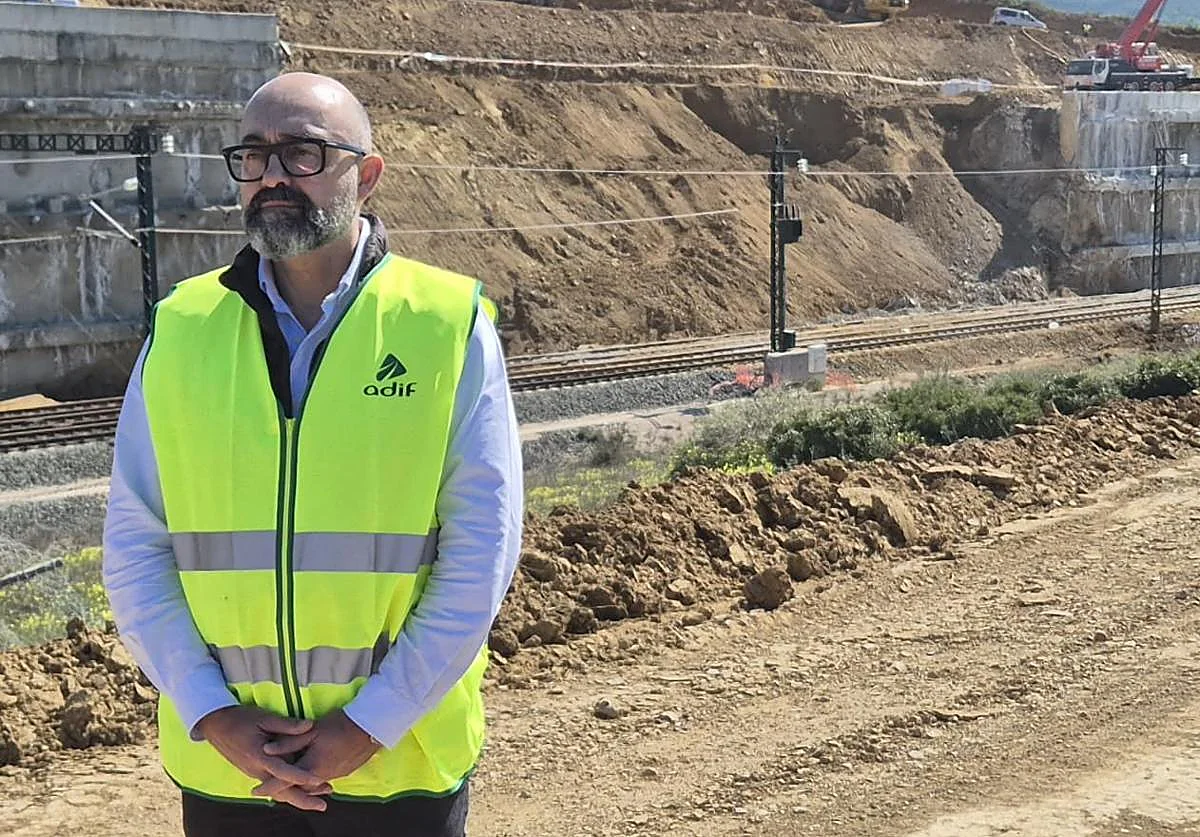
The president of Adif at the slope collapse site in Álora. Salvador Salas Rail transport Malaga-Madrid AVE travel alert: Adif confirms high-speed line closed until after Easter 2026Slope stabilisation work in Álora continues to block high-speed rail access, forcing private operators Iryo and Ouigo to cancel tickets just days before the Easter travel rush
Málaga
Monday, 16 March 2026, 14:02 | Updated 14:19h.
Key details for travellers
Deadline Missed: The original March 23 reopening target has been scrapped.
The Problem: Hydrostatic pressure from record rainfall caused a 300-metre wall collapse.
The Alternative: Passengers must continue using the transfer system at Antequera-Santa Ana, which adds significant travel time.
Timeline: Single-track service (reduced speed) post-Easter; Double-track by June; Full repairs by December 2026.
The Malaga-Madrid high-speed rail will not reopen until after Easter. According to president of the state rail infrastructure company (Adif) Pedro Marco de la Peña, the recovery work in Álora cannot meet the deadline of 23 March due to insufficient "security guarantees".
"It is necessary to find a long-term solution," Marco said from the accident site on Monday. He explained that the walls that remain standing in the area "do not offer the necessary safety factor to maintain any kind of circulation".
The closure of the line until after Easter aggravates the concerns that experts in the hospitality field have already expressed.
Chronology of events
Marco highlighted that these are force majeure circumstances, resulting from the extraordinary succession of storms and the enormous amount of water accumulated.
The landslide in Álora occurred on 4 February as a result of the heavy rain that ravaged Andalucía at the time. The storm caused the collapse of a 300-metre-long pile wall designed to support a high-voltage pylon located next to the railway platform. "We could not have foreseen the rupture," Marco said.
Previous reviews
Marco said that the infrastructure had undergone a check-up in December 2025. It showed no apparent deformations or anomalies. The wall's drainage systems, designed to release the water accumulated at the back of the wall, also worked correctly according to previous checks.
However, subsequent analyses suggest that these drainage systems were not sufficient to prevent the hydrostatic thrust of the rain-saturated ground, which led to the collapse of the central part of the structure.
After the collapse, work could not begin immediately for safety reasons. For almost two weeks the terrain remained unstable and covered with mud, which prevented the use of heavy machinery without putting the workers at risk. During this time, Adif focused on planning the work and coordinating with Red Eléctrica de España the solution for the foundations of the affected electricity tower.
Technical breakdown: why the delay?
Work began at the end of February, with the initial forecast of reopening at least one of the tracks by the end of March.
However, once workers excavated the area and checked the structure, they concluded that the walls do not meet the required safety standards. The solutions they are currently studying include demolishing a large part of the remaining structures to eliminate the problem at its source.
Trains will initially run at a lower speed
When the line reopens, trains will initially run on a single track with speed restrictions at the 500-metre stretch in Álora.
The double track could reopen in June, while the complete repair of the infrastructure will last until the end of the year. The landslide has also damaged the track apparatus - the system of turnouts and crossings - which will take between five and seven months to replace.
In the meantime, high-speed trains will continue to operate by transfer at Antequera-Santa Ana station - a solution that has considerably increased journey times between Malaga and Madrid since the beginning of the incident.
Road alternatives
Marco said that rail operators, among them state operator Renfe, are working on alternatives to improve the service during this period. The insufficiency of personnel and resources, however, has made a quick solution difficult.
"Our objective is to guarantee the safety of workers and passengers. Only when we have the appropriate safety guarantees will the trains start running again," Marco said.
The quantified losses due to added delays amount to tens of millions of euros for the hospitality sector. The matter has also entered politics, with the Andalusian regional minister of economy Carolina España warning that they would take the central government to court if the high-speed line does not reopen by Easter.