Health
Malaga neurologist on treating ALS patients: 'It has taught me that the human capacity for adaptation is enormous'Hospital Regional neurologist Virginia Reyes highlights the significant progress in ALS research and treatment in recent decades
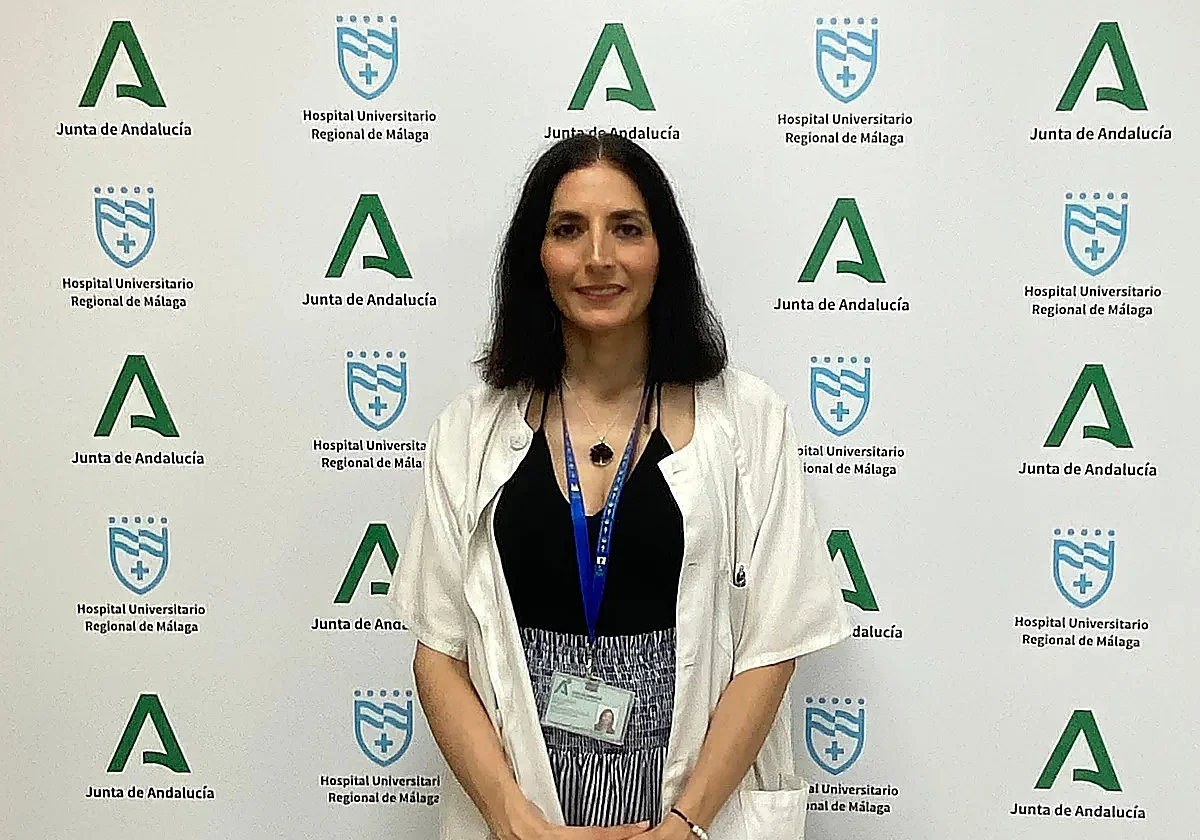
Añádenos en Google Malaga Hospital Regional neurologist and ALS specialist Virginia Reyes. (SUR)José Antonio Sau
20/06/2026 a las 13:39h.Virginia Reyes Garrido is a neurologist at Malaga's Hospital Regional and member of the multiple sclerosis reference unit (CSUR). Since 2017, she has been head of the multidisciplinary unit for patients with motor neuron diseases, including ALS.
She conducts her research at the Ibima Bionand platform. On ALS Awareness Day, 21 June, she informed SUR and our readers about the disease and the progress made in recent decades.
ALS remains an incurable disease. What scientific advances make you more optimistic today than you were ten years ago?
-Over the last decade, significant advances have been made in research and numerous clinical trials have been conducted, allowing us to identify different types of ALS and move towards more personalised treatments.
This improved understanding is already having an impact: one example is Tofersen, a recently approved treatment for a small group of patients with a genetic form of ALS associated with the SOD1 gene. It is not a cure and only benefits a minority of patients, but it represents a very important step. Other very promising treatments are still under development.
Are we closer to achieving treatments that significantly slow the progression of the disease?
-I think we are closer, but we must be cautious. We cannot forget that finding a treatment that halts the progression of ALS in all patients remains a huge challenge for neurology, but I do think we are closer today because we better understand why the results of past clinical trials were not as expected.
Currently, we are greatly improving the design of clinical trials, selecting more homogeneous patient groups and developing biomarkers, such as neurofilaments, that help us measure earlier whether a treatment is working.
What are the initial symptoms that often go unnoticed and delay diagnosis?
-In most cases, it begins with progressive weakness in a hand, arm or leg. In other patients, the first symptoms affect speech or swallowing, such as a slurred voice, difficulty pronouncing certain words or choking. The problem is that these initial symptoms can resemble those of other, much more common illnesses, which leads some patients to go through several consultations, specialists and various tests before finally seeing a neurologist and receiving a diagnosis.
What lines of research are currently the most promising in the fight against ALS?
-We are moving away from the idea of a single treatment that works for all patients. We still don't have a treatment capable of significantly slowing the disease in all patients, but today research is much more focused, more precise, which gives us more hope than a decade ago.
After years of treating ALS patients, what have they taught you about life, illness and the human capacity to adapt to adversity?
-As a healthcare worker, caring for patients with progressive and serious illnesses like ALS has taught me, above all, that the human capacity for adaptation is enormous.
It has also reminded me of something very important: a person does not lose their identity simply because they are ill. It has taught me the importance of living and enjoying the present, of being grateful for the little things and of relying on those around us.
I have also learnt the immense value of being able to count on others and the extraordinary generosity of caregivers and families, who often sustain daily life with admirable strength.