Hospitality
Malaga opens sixth five-star hotel with Áurea Palacio de la TintaThe Hotusa group has invested 55 million euros to transform the historic building into a 141-room hotel with seven suites
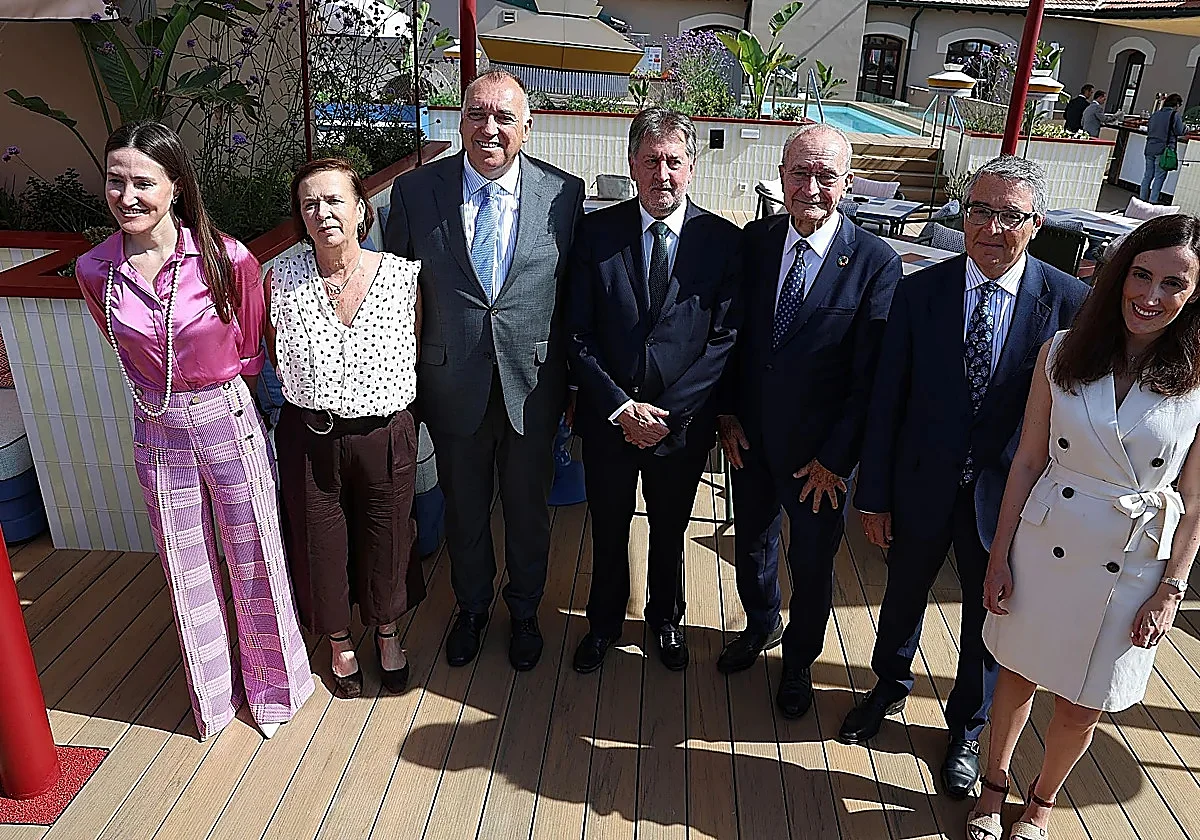
Añádenos en Google Hotusa chairman López Seijas with regional and local authorities at the Áurea Palacio de la Tinta hotel in Malaga. (Migue Fernández)Pilar Martínez
12/06/2026 a las 15:20h.The opening of Malaga city's sixth five-star hotel, the Áurea Palacio de la Tinta, has generated considerable excitement among residents and sparked strong demand, particularly from international visitors. Guests and officials alike agree that the hotel delivers a genuine "wow factor".
Andalusian regional tourism minister Arturo Bernal also shared the impression during a recent tour of the property, alongside Hotusa chairman Amancio López Seijas, Mayor Francisco de la Torre and Turismo Costa del Sol president Francisco Salado.
Following the visit, López Seijas highlighted Malaga's transformation, describing it as "a legendary success story". He pointed to the group's 55-million-euro investment in the project, which has transformed the historic building into a hotel featuring interior design that reflects both its heritage and the philosophy behind the Áurea brand.
"The design is in keeping with the history of a building dating from 1908 and reflects the spirit of the Áurea collection: distinctive, character-led hotels that restore buildings of great historical value and return them to the city as spaces capable of generating economic activity, attracting visitors and strengthening the destination's international profile," he said.
The Hotusa chairman said he was delighted with the project, which he said is performing "very well", with particularly strong demand from overseas markets. He praised Malaga's excellent air connectivity with several of the group's key international markets.
Recalling his early years working with some of the city's few hotels, López Seijas said Malaga remained firmly on the group's radar. "Opportunities are now scarce, but if one arises, we'll be there," he said.
After three years of restoration work, the first people invited to see the finished hotel were residents of La Malagueta and former employees who had worked in the building during its previous incarnations.
Meanwhile, a steady stream of guests checked in at reception, many expressing admiration for a building in which none of the 141 rooms are identical, as a result of preserving the original structure.
The hotel includes seven suites, each featuring a central lounge decorated with murals paying tribute to Malaga-born artist Pablo Picasso. The suites also contain two bedrooms and strikingly designed bathrooms.
Pastel tones, wood finishes and marble details define the interiors. During the tour, officials repeatedly remarked on how much usable space the building had yielded following its transformation.
The crowning feature occupies the fourth floor: a spacious terrace with a swimming pool, piano bar and restaurant. The restaurant features vaulted timber ceilings and porthole-style windows, alongside sweeping views towards Gibralfaro and the Alcazaba fortress.
Another standout feature lies on the ground floor: what is believed to be Malaga's first documented lift. Originally installed when the building first opened, it has now been carefully restored and has become one of the hotel's most photographed attractions. A wooden bench at the rear of the cabin sets it apart from modern lifts.
Related story
Guide to: Malaga
Erin Fisher
The hotel has echoed this design in the panoramic lift serving the building's four floors. From there, visitors can admire a spectacular stained-glass feature that forms the visual centrepiece and architectural backbone of the property.
The restoration has also brought back the building's central patio, planted with orange trees. The space now serves as an events venue and provides access to five meeting rooms offering a combined 240 square metres of flexible conference space.
The building originally served as the headquarters of the Andalusian railway confederation. Designed by engineer Julio Aublin Cala, it is a notable example of eclectic architecture with strong French influences and covers some 10,500 square metres.
The new hotel also includes a spa with an indoor pool, sauna, Turkish bath and treatment rooms, alongside a gym.
Throughout the redevelopment, developers preserved the building's most significant heritage features, including its facade, central courtyard and grand staircase.
Bernal praised the transformation and described the project as an example of excellence that aligns with Andalucía's strategy of promoting "high-quality, sustainable tourism".
"It is a great day and an opportunity to recognise the enormous effort that has gone into this project. Hotusa now operates 49 hotels across Andalucía and remains the largest hotel group in the region," he said. Mayor De la Torre likewise welcomed the opening of the hotel, which first received guests on 22 May.
"It is a source of satisfaction because Malaga wants to grow in excellence, not simply in numbers," he said, also praising the "deep respect towards the building's history" throughout its conversion.
Salado said the project reflected the province's commitment to positioning itself as a leading destination for high-quality tourism. He noted that the number of five-star hotel rooms in the province has risen by 30 per cent over the past five years.
"This hotel shows how an abandoned building can be brought back to life while respecting its architecture, preserving its history and incorporating a tribute to Picasso. This is the direction we want to follow," he said.
The story behind Palacio de la Tinta
The building was originally constructed to house the central offices of the Andalusian railway confederation. Over the years it also accommodated various departments of the regional government's agriculture ministry and later the southern river basin authority (its final occupant).
The property stood empty from 2019, when the Andalusian regional government put it up for auction. Hotusa acquired it for 21 million euros.
Its distinctive name, Palacio de la Tinta (Palace of Ink), dates back to its railway headquarters days, when large quantities of ink had to be delivered daily for the manual issuing of train tickets.