Health
Malaga patients with severe endometriosis report waiting more than one year for surgeryIn response to the complaint, Hospital Regional told SUR that it schedules surgeries according to "clinical criteria, complexity and specialists' availability"
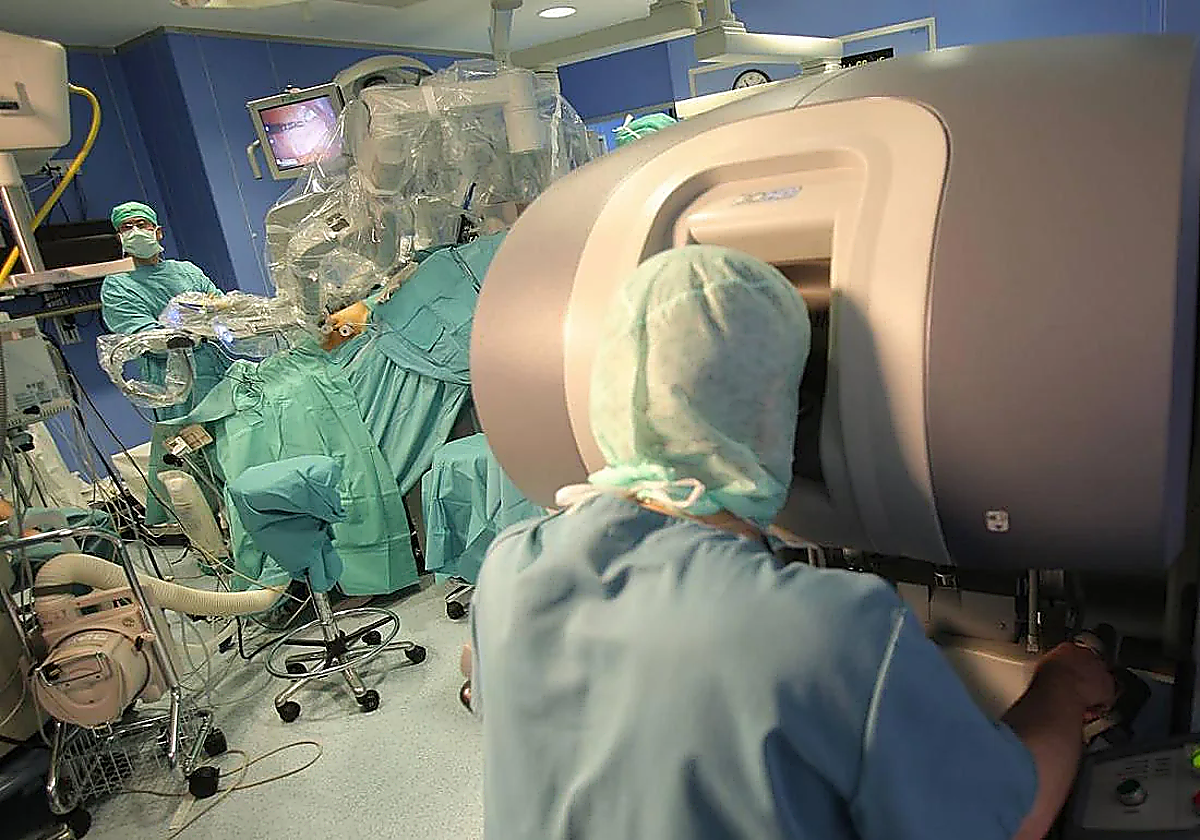
Añádenos en Google Archive photo of a Da Vinci robot operating on a patient. (SUR)José Antonio Sau
05/06/2026 a las 14:54h.The Andalusian Endosur FEM association for endometriosis and women's health has filed a complaint with the Spanish Ombudsman, stating that patients at the endometriosis unit of Hospital Materno Infantil in Malaga must wait more than a year for surgery for severe cases, while international guidelines recommend a waiting period of three to six months.
Endosur FEM says that until 2022-23 the unit was "exemplary" and had "surgeons specialising in endometriosis from all specialties, interventional radiologists and integrated multidisciplinary teams (digestive surgery, urology, specialized neurology)". In addition, the Malaga hospital was a reference centre for eastern Andalucía at the end of the last decade.
Here, SUR outlines the findings in various public complaints from both UGT and CSIF unions over the last few months.
One in ten women in Andalucía have endometriosis
Endosur FEM represents Andalusian women diagnosed with endometriosis (one in ten, according to medical estimates), of whom 30 per cent suffer from high severity cases requiring "urgent specialised care".
Endometriosis is a chronic disease in which tissue similar to the endometrium grows outside the uterus, frequently affecting the ovaries, fallopian tubes and neighbouring organs such as the intestines or bladder. It can cause chronic pelvic pain, adhesions and complications that, in severe cases, require highly complex, specialised surgery.
According to the association, highly complex surgeries have significantly dropped since 2022. There are approximately 30 women on the official surgical waiting list at the Materno Infantil hospital for severe endometriosis procedures.
Endosur FEM states that these types of interventions require multidisciplinary teams and full operating days. "These 30 women are not just names: they represent, at a minimum, 30 entire Tuesdays in the operating theatre. If surgery is only performed one day a week, we are talking about more than half a year of uninterrupted operating room time just to clear the current waiting list," Endosur FEM says.
In response to these complaints, Hospital Regional told SUR that "the number of patients on the waiting list for complex surgery is below 30 and surgical activity remains at levels similar to previous years". Furthermore, it said that "the scheduling of complex endometriosis surgeries is according to clinical criteria, complexity and the coordinated availability of the various specialists involved".
Endosur FEM states that operating rooms have dropped to one day per week and that "simple hysterectomies (surgical intervention in which the uterus is removed) for fibroids with low complexity" have priority over severe cases.
Endosur states that the protocols require check-ups every six months but "take a year and a half, while the disease progresses", and denounces that "gynaecological consultations are by telephone", without in-person "clinical examination".
Endosur FEM highlights that the hysteroscopies consultation (a test that allows viewing the inside of the uterus by inserting a small camera called a hysteroscope through the vagina and cervix) has remained closed "for months", generating a long waiting list.
The association has requested an external and independent audit of the unit to investigate "surgical activity" and waiting lists. It also demands the hiring of "multidisciplinary staff and at least two weekly operating rooms exclusively to absorb the backlog of complex surgeries".
Endosur FEM has proposed the urgent activation of the Seville unit and the end of "telephone consultations in gynaecology and face-to-face appointments every six months, with physical examination".
The hospital's response
Hospital Regional told SUR that "the care of endometriosis is a healthcare priority" and that "the endometriosis unit maintains a consolidated healthcare, diagnostic and surgical activity".
The hospital has "a multidisciplinary committee for complex cases, made up of professionals from different specialties, including gynaecology, urology, general surgery, digestive system and radiology". "This team participates both in the assessment of cases and in surgical interventions when clinical complexity requires it," the hospital said.
According to the hospital, initial endometriosis consultations happen in person. Teleconsultations are only a complementary tool when clinically appropriate and they never replace in-person assessments for patients requiring physical examinations or diagnostic tests.
Regarding check-ups, "the responsible physician establishes the frequency based on the clinical situation of each patient and the tests necessary for their follow-up".
On the other hand, the hysteroscopy unit has not closed, but has been moved to a more suitable location within the hospital. "This change has not resulted in the suspension of services nor has it created a backlog of patients," the hospital said.