Environment
Malaga province water company launches wet wipes campaignOver the past year, Axaragua has carried out 400 interventions on the sewerage network and wastewater pumping stations in the Axarquía due to blockages caused by wet wipes
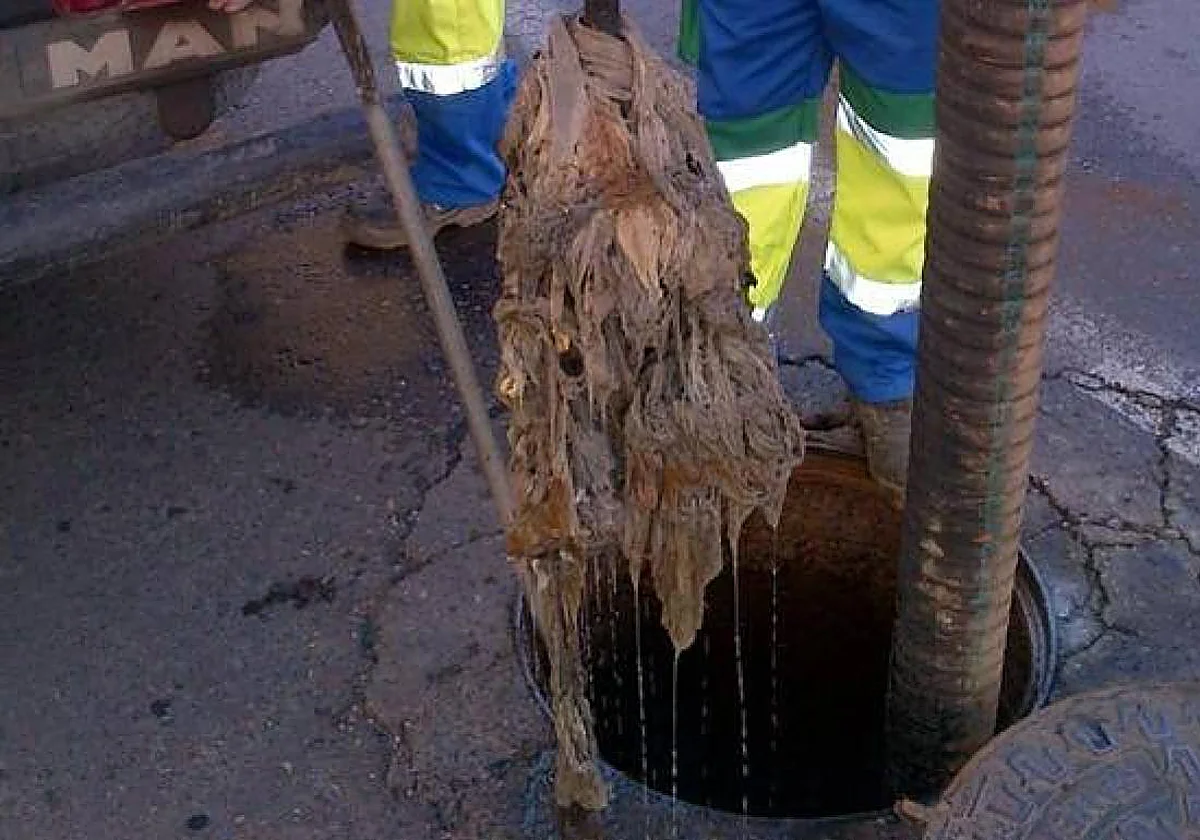
Añádenos en Google Wet wipes being removed from a drain in Malaga. (SUR)Jennie Rhodes
08/07/2026 a las 09:50h.Axaragua, the public water and sanitation company in the Axarquía area of Malaga province, has launched a new campaign aimed at raising awareness of the damage that items such as wet wipes do when flushed down the toilet.
Chairperson Jorge Martín and CEO Daniel Cívico launched the 'Las toallitas, a la papelera’ (wipes in the bin) campaign on Tuesday 7 July, through which they hope to curb “the significant volume” of wipes and other waste that are flushed down the toilet inappropriately every year, according to a report drawn up by Axaragua.
Over the past year, Axaragua has carried out 400 interventions on the sewerage network and wastewater pumping stations due to blockages caused by wet wipes. This has required more than 4,000 hours of staff time, as well as additional consumption of electricity and materials to repair the faults and clean the facilities.
Axaragua, which is part of the Mancomunidad association of town halls in the Axarquía, will be launching the campaign through local radio, television and social media channels to raise public awareness that this type of waste must not be flushed down the toilet.
In addition, waste bins will be provided to Rincón de la Victoria, Vélez-Málaga, Algarrobo, Torrox and Benamocarra town halls - for which Axaragua provides the wastewater treatment service - so that they can distribute them to the public or place them in public facilities and buildings.
“It is completely unacceptable that there are still people who use the toilet as a bin. Flushing wet wipes and other waste down the toilet comes at an extremely high material, economic and environmental cost,” said the president of Axaragua, convinced of the need “to eradicate this bad practice, which is carried out by individuals but affects the whole community”.
400 tonnes
Martín explained that every year “Axaragua removes 400 tonnes of wet wipes and other waste that are improperly flushed down the toilet”. “The annual cost of removing and managing this waste is 400,000 euros, which translates into 4,000 hours of staff time and additional consumption of electricity and materials caused by breakdowns and the cleaning of facilities."
He went on to say that "in fact, a large proportion of the faults experienced by sewage treatment works are linked to waste that should never have ended up in the toilet. Therefore, every euro spent on removing wipes and repairing faults is a resource that cannot be invested in improving infrastructure or the service provided to the public".
“During this journey, they easily become caught on roots, cracks or irregularities in the pipes and mix with fats, oils and other waste, forming large build-ups that end up blocking the pipes,” Martín stated. “When they reach the sewage pumping stations, they jam and block the treatment plant’s pumps; these wipes must be removed mechanically to prevent breakdowns in pumps, screens and other equipment. All of this entails a significant drain on financial, material and energy resources,” he added.
On the environmental cost, he stressed that the “increased energy consumption in the treatment process, higher carbon emissions associated with repairs, transport and waste management – which also increases – and, of course, a “greater risk of river and sea pollution when sewerage systems become overwhelmed and overflow”.
Cívico referred to the synthetic materials in wet wipes, which “take up to 100 years to degrade, unlike toilet paper, which dissolves on contact with water”. It has also issued a warning about wet wipes marketed as “biodegradable” or “flushable”, which “must never be flushed down the toilet either, as they still do not break down quickly enough for a sewerage system to cope with them”.
According to Axaragua’s recommendations, the following items must not be flushed down the toilet: cotton buds; sanitary towels and tampons; nappies; face masks; cotton wool and make-up remover pads; dental floss; cleansing wipes, disinfectant or baby wipes; cat litter; cigarette ends; food waste; cooking oils and fats; and medicines.