Zoom
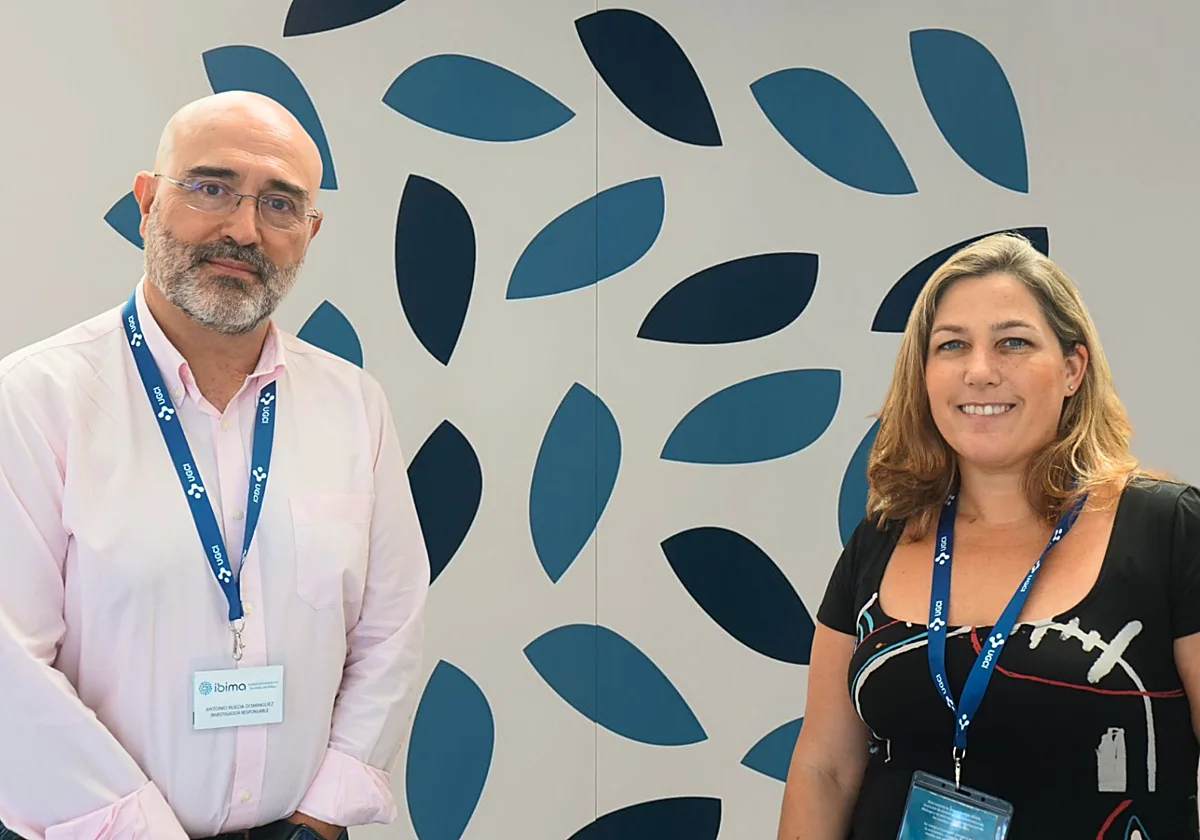
Doctors Antonio Rueda and Isabel Barragán. SUR Health Malaga researchers predict survival in lung cancer patients undergoing immunotherapyThe research identifies three molecular profiles of the tumour, which makes it possible to predict how it will develop and which patients can benefit from a longer survival prognosis
Friday, 27 February 2026, 14:05
A group of Malaga-based researchers have developed a method to personalise immunotherapy in the treatment of non-small cell lung cancer and predict which patients are most likely to benefit from immunotherapy through a simple blood test, known as liquid biopsy.
This is an important step towards more precise and less aggressive cancer medicine. At the head of the Malaga team are Dr Isabel Barragán and Dr Antonio Rueda Domínguez.
The study has been published in the prestigious Journal for ImmunoTherapy of Cancer.
Classification of patients
In the case of lung tumours, immunotherapy helps the immune system recognise and accept tumour cells. Some tumours hide, blocking the body's defences, but the drugs remove that blockage so that the lymphocytes can start working again.
The method combines different types of biological information, a so-called multi-omic approach. It first helps classify patients with non-small cell lung cancer and anticipate their response to treatment.
Oncologists sometimes apply immunotherapy alone, while other times they combine it with chemotherapy. All of this has managed to control the disease in some patients for longer than was possible years ago.
Immunotherapy has improved the prognosis for many patients, although it does not work in all cases: 20-45 per cent of patients do not benefit.
Immunotherapy has improved the prognosis of many patients, although it does not work in all cases: 20-45 per cent of patients do not benefit.
One of the problems is that there are no sufficiently accurate tools to know in advance who will respond. Current markers have limitations and, in many cases, require invasive biopsies.
To overcome this challenge, the researchers from Malaga have analysed blood samples from 79 patients with metastatic lung cancer, combining different types of biological information. This approach makes it possible to reduce uncertainty, avoid aggressive procedures and move towards more personalised treatments.
The study has identified three molecular profiles - "biological" identities that can anticipate how the disease will develop from the early stages of treatment. The research uses artificial intelligence to integrate different biological layers of the tumour analysed in blood.
Patients with better prognosis
One of the profiles identifies patients with the best prognosis. They can exceed 40 months of survival, while the other two profiles have more aggressive tumours and a poorer response to immunotherapy.
This model not only helps to know which patients will respond best, but also to understand how the tumour changes with treatment. Thanks to liquid biopsy, doctors can follow the development of the tumour in real time and make faster and more accurate decisions, without resorting to repeated surgeries and biopsies.