Health
Malaga's Hospital Regional to become one of 14 reference cancer centres in SpainThe aim of this public certification is to create a model that will allow the entire population to access the most advanced cancer treatments
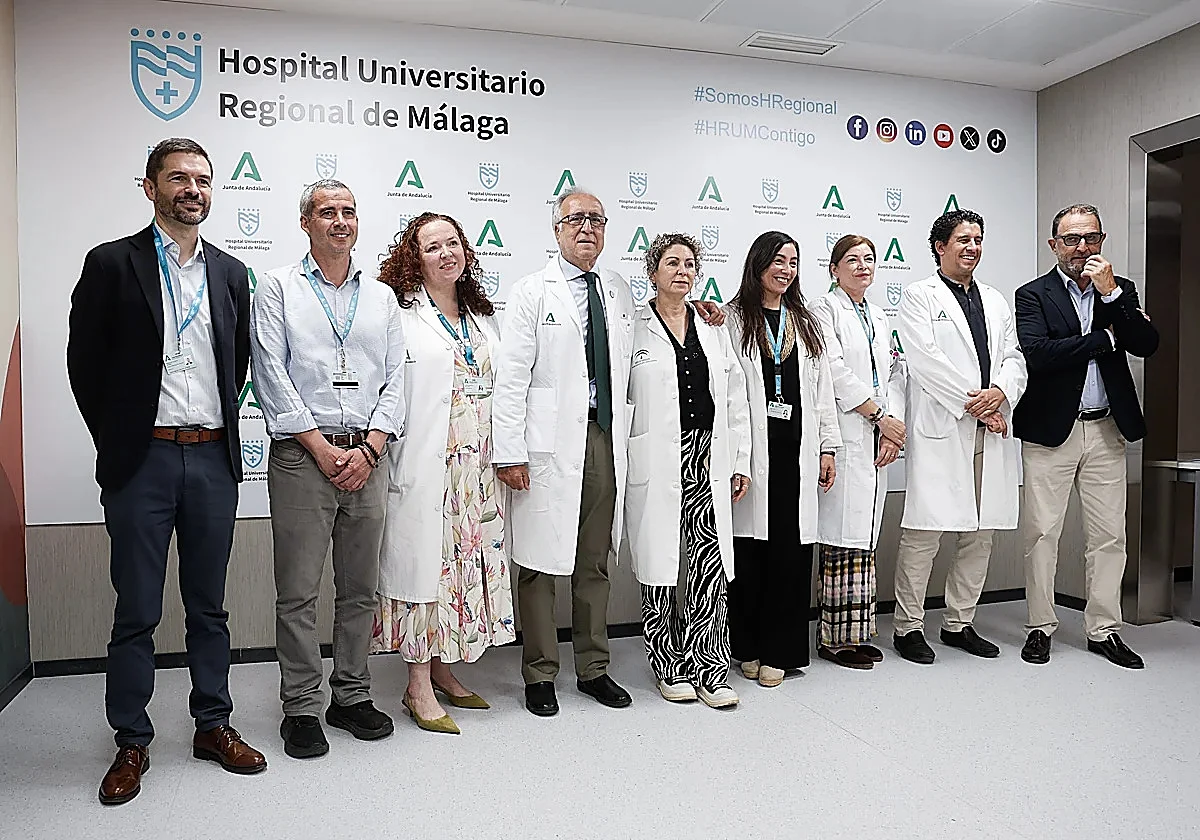
Añádenos en Google Representatives of Malaga's Hospital Regional at the presentation of the comprehensive cancer centre. (SUR)José Antonio Sau
09/06/2026 a las 17:21h.Malaga's Hospital Regional is among the 14 Spanish hospitals the EU has chosen to become comprehensive cancer centres.
The aim is to create a holistic model encompassing the care of cancer patients, prevention, research and teaching. Certification would position the former Carlos Haya hospital as one of the most important hospitals in this field in Spain.
As head of the oncology service Álvaro Montesa said during the presentation of the initiative, "the idea is to integrate primary care, the university, Ibima and the hospital so that everything centres around the patient".
Until now, "each institution was independent and it was the patient who had to go from one institution to another", Dr Montesa explained.
"Ultimately, it's simply about coordinating everything, from care and training to innovation, research and resident participation, because it's crucial that patients are integrated into these centres so that cancer care is significantly better for them. We're not talking about a physical centre, but rather a new organisational system," Montesa said.
Coordination
Research is also expected to receive a major boost.
"We already have clinical research, which is carried out mainly within the hospital and through Ibima. But there is also translational research, which focuses on taking discoveries made in laboratories or animal studies and turning them into treatments that can benefit patients. That work is developed through collaboration between Ibima, the university and the hospital," Montesa said.
He highlighted that only 14 centres across Spain have been selected for the programme.
"This will give patients access to new treatments. We will be among the first centres in Europe to obtain this certification. It will make us a reference centre for cancer research projects, allowing patients access to the latest therapeutic innovations and clinical trials," he said, adding that the certification process is expected to take between two and three years.
Prevention will also play a key role. "Not only should the process become faster, but there will also be clearly established pathways that everyone across the healthcare system understands. This will make patient referrals more efficient and ensure access not only to quicker tests and medical attention, but also to the latest technology, treatments and clinical trials," Montesa said.
The Andalusian regional government's health and consumer affairs delegate in Malaga, Carlos Bautista, said: "We are very proud of this project in Malaga. We have the expertise needed to create this 'liquid hospital' model and bring together a range of highly important partners."