Zoom
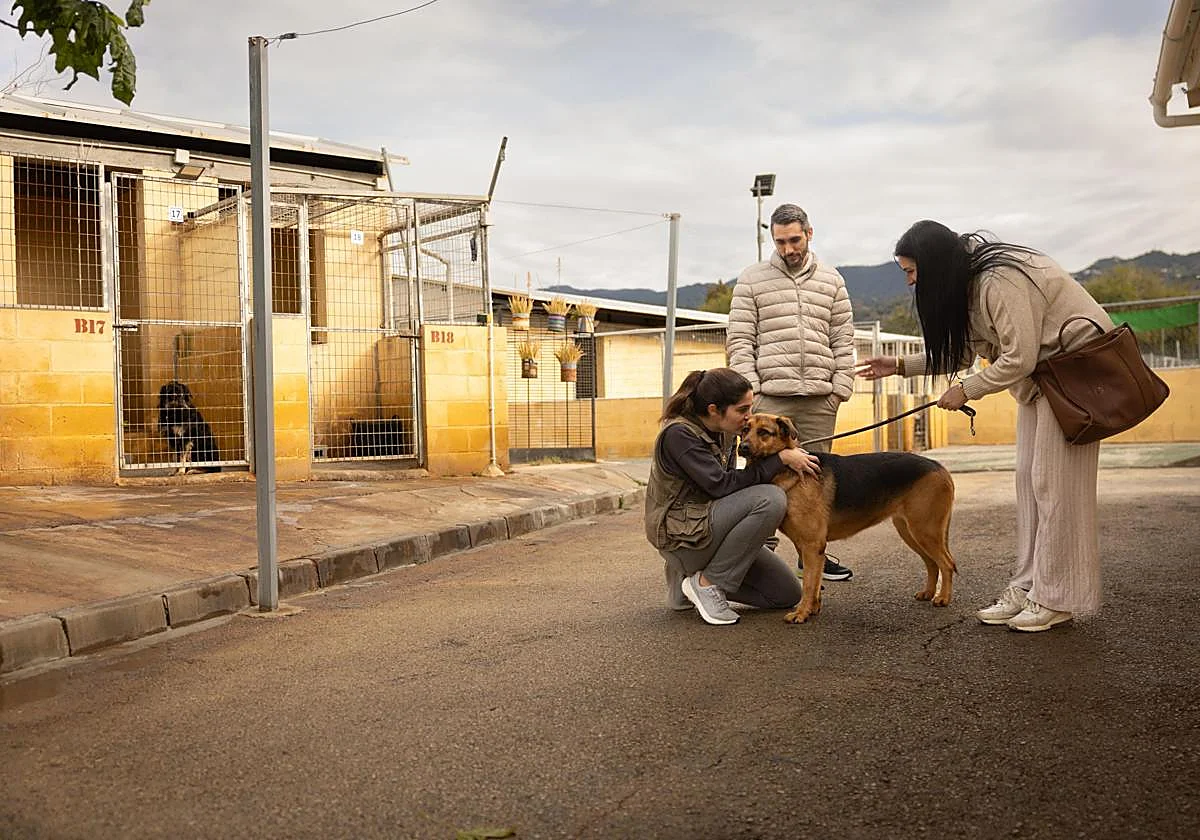
A dog with a new family, receiving some cuddles from a volunteer at the shelter. Salas Animal welfare Malaga's oldest animal shelter celebrates 150 years of defending abandoned and mistreated animalsSome 15,000 dogs and cats have passed through La Protectora over the last decade, of which around 90% have found new homes
Malaga
Tuesday, 20 January 2026, 11:19
When it was founded in 1876, its first name was La Liga Protectora de Animales y Plantas (animals and plants protection league). In the early days, the main task of its members, among whom were prominent figures from Malaga's high society, was to provide the most basic care for equines: horses, donkeys and mules used for transporting people and goods in the city, animals that suffered some of the worst hardships.
Thus, the association took charge of maintaining the city's drinking fountains, such as the Olletas and Reding fountains, among others. Also, at the national level, under the auspices of this association, a school subject on animal protection was created. In 1966, the organisation was restructured and changed its name and statutes, giving rise to the current Sociedad Protectora de Animales y Plantas, but most people know it as La Protectora. In 1969, it was declared an 'entity of public utility' by the Spanish government and has been an 'official collaborating entity' of Malaga city council since 2002.
As one of Spain's oldest NGOs, the shelter is celebrating its 150th anniversary this year. To mark the occasion, the Prote, as it is affectionately known by its 1,100 members and 250 volunteers, has published a book on its history and organised events throughout the year to raise awareness of its work. Furthermore, numerous social and community organisations are urging city hall to award the Prote with two of its highest distinctions: the City Medal and the appointed title of Favourite Daughter.
However, in this story the real players are the animals. While it all began with horses and donkeys, now it's dogs and cats that inhabit the kennels and pounds at the shelter, located in the area of La Virreina. "An Eastern proverb says that one must always move forward, even if slowly.... In our case, it's much slower than I would have liked, but it's true that we are making progress", is the opening comment from Carmen Manzano, president of the Prote.
It is true that the situation has improved over the years, both in the number of animals abandoned and the number adopted. Also in the facilities and resources available, with the move from Los Asperones to its current location. "But when we're talking about animals, everything is very slow: it's not just about the abandonment of dogs and cats, but also the legal cases, the end of horse-drawn carriages, the ban on their use at the annual fair and in circuses. We intervene in many situations in collaboration with the city council and the police...", she says.
Improving data
The statistics, especially over the last decade, bear witness to this progress. Since 2015, the organisation has cared for nearly 15,000 homeless animals. Of these, almost 90% have found new homes. Furthermore, there has been a clear downward trend in abandonments, having fallen by more than half during this period: from nearly 2,000 cases to just over 900. Meanwhile, adoptions have remained relatively constant, in relation to the number of animals admitted at any given time.
More reasons for optimism: the shelter, together with its network of foster homes (people who voluntarily care for the most vulnerable animals in their homes, especially nursing puppies and kittens), currently manages around 320 dogs and 190 cats (although this number fluctuates daily). Therefore, this represents approximately 500 animals, a far cry from the 900 that were handled at certain times a few years ago.
As for the figures for 2025, in the last 12 months 594 dogs were admitted and 577 were adopted. Although the majority went to families in Malaga and other parts of Spain, 10% flew to European countries, such as Sweden and the Netherlands.
The same is true of the felines: of the 192 cats admitted, the vast majority (173) found a home. Interestingly, a ferret was also taken in last year.
The sad reality is that, even now in the 21st century, animal abandonment and mistreatment remain deeply ingrained problems in Malaga society. So too are the whimsical notions of animals being seen as just pets, even gifts, rather than as family members. Above all, the refusal of some owners to neuter their animals results in dozens of unwanted litters every year, many of which end up abandoned in boxes at the gates of this shelter.
During a recent visit, SUR observed that the shelter at La Virreina houses highly sought-after and popular dog breeds, such as the border collie, Belgian shepherd and shar pei. Puppies of these breeds command high prices, but some owners frequently abandon them due to a lack of awareness of their hyperactive or territorial nature. All the dogs receive not only food and veterinary care there, but also daily walks, affection and training to correct any behavioural issues.
Furthermore, although the situation has improved, the reality is that the shelter's capacity is constantly breached: "We are above our designated limit as an animal facility, which is 180 animals, and at the shelter we have around 400, plus another 100 in foster homes, mostly nursing puppies", states the shelter's president.
Sick animals
Another issue is that, although abandonment is decreasing in terms of the number of animals admitted, the problem is that the animals that arrive are increasingly in worse health: "They come in very sick and with serious injuries, because some people are unwilling or unable to spend the money it costs to treat them. At the Protectora we have very high vet bills and that's even with the discounts given to us."
At this point, Manzano points out that IVA sales tax on veterinary services remains as high as on other products, even though it is an essential healthcare service. In an attempt to save on the high daily expenses, this year the NGO has decided to install solar panels at the shelter, aiming to reduce its hefty electricity bill. Another challenge that the Malaga shelter and others throughout Spain have set for themselves is to change Spain's new animal protection law, which Manzano openly describes as "a disaster", as "it has led to more abandonment, less protection and more legal obstacles".
"The road ahead is long because this is continues to be a concern for only a few, and not for all of society nor all politicians. It's true that Malaga City Council has always shown its commitment to animals, but the Junta supports hunting groups more than animal shelters because the former bring in more votes...", concludes this champion for animals.