Zoom
Traditional mantecados, the shortbread-style treat that's synonymous with Antequera. SUR Food and drink Malaga's traditional Christmas sweet treats that survive despite changing trendsPestiños, borrachuelos and roscos fritos are just some of the traditional recipes from the province that refuse to disappear despite competition from the likes of panettones and yule logs
Malaga
Friday, 19 December 2025, 09:09
Christmas isn't Christmas without something sweet to eat and Malaga's traditional pastries manage to resist whatever the latest fashion trend is for a sweet treat. Pestiños (a honey-glazed fried pastry), borrachuelos (a 'drunk' version of pestiños because they're soaked in anis) and roscos fritos (fried ring-doughnuts) are just a few of the recipes that refuse to disappear in the face of competition from panettones and yule logs. Christmas is also told through sweets and, in Malaga, for generations, that story was written amid pans bubbling over the fire, ovens fired up for days on end and recipes passed down verbally and memorised. Today, while shop windows fill with Italian panettone, turrón (Spanish nougat) with increasingly imaginative flavours and yule logs that are a feast for the eyes, another way of appreciating this time of year still survives - a more understated sweet Christmas that is closely linked to the religious calendar and home cooking, a tradition that seems to outlive the trends.
For decades, Christmas sweet treats in Malaga were not bought: they were made. It was not a question of trend or presentation, but of custom. Pestiños, borrachuelos, roscos fritos, alfajores (a crumbly, sandwich biscuit), hojaldrinas (a biscuit made with puff pastry), roscos de vino (a baked, wine-flavoured, ring-shaped biscuit), mantecados (similar to shortbread) and polvorones (a powdery biscuit) were all part of a collective ritual that began weeks before Christmas Eve and would fill pantries with large metal biscuit tins and then adorn family tables.
Zoom Homemade pestiños. SURToday, that custom has faded, displaced by an ever-increasing array of store-bought sweets and a pace of life that leaves little room for slow cooking. Among the recipes that best represent that other sweeter Christmas are pestiños, one of the oldest sweets in the Andalusian recipe book and historically closely linked to wintertime. In Malaga province, the most renowned pestiños are those made at the monastery of the Immaculate Conception in the white village of Cañete la Real, where the nuns religiously follow a traditional recipe that has transcended the local area, becoming a benchmark product both within and beyond regional borders. Delicate, aromatic and fried in olive oil, they remain one of the clearest symbols of a Christmas confectionery that has barely changed over time.
Very similar in concept, although much easier to find today, are borrachuelos, probably the most popular Christmas sweet in Malaga. Both share a fried dough base and humble origins, but borrachuelos - usually filled with angel hair (cabello de ángel) and flavoured with wine and anis - have managed to maintain a stronger presence thanks to the efforts of confectioners and artisan bakeries. Even so, making them at home in large quantities - as they were intended to last for several days - is much less common today than it was decades ago.
Even more precarious is the situation for the fried doughnuts known as roscos fritos, a simple, almost austere recipe that is deeply rooted in domestic memory. Closely associated with grandmothers' kitchens and subsistence economies, they have barely survived outside the family sphere. Their problem is that they lack the visual appeal of other sweets, nor do they fit well in today's kind of shop window displays, but they are part of that confectionery heritage that is quietly fading away.
Zoom Roscos fritos, a classic Christmas pastry in Malaga province. SURAlongside them are other traditional Christmas sweets that have been losing their prominence. This is the case for alfajores, heirs to the Andalusian tradition based on honey, almonds and spices, also for roscos de vino, for decades an essential treat in any home at Christmas and for polvorones, nowadays almost exclusively store-bought rather than home-made.
Within this group of traditional sweets, the mantecado holds a unique place in Malaga province because of its close historical ties to Antequera. For over a century, Antequera has been one of the main production centres for this sweet treat, maintaining a deeply-rooted tradition of craftsmanship and industrial tradition.
Various research studies and historical references point to Antequera as one of the possible places of origin of the mantecado, a question that is still the subject of debate as it shares the limelight with other historical sites in Andalucía for that claim to fame. Beyond this discussion, what is undeniable is that the Antequera mantecado has become one of the great symbols of Christmas in Malaga, even when its homemade production has practically faded into memory.
Other sweets
Not all of Malaga's traditional recipes are strictly Christmas-related, but they are certainly deeply seasonal. With the arrival of the cold weather and the holiday celebrations, other sweets that were historically consumed in winter make their return to many tables. This is the case with various traditional cakes. Most are made with similar ingredients - flour, sugar, extra virgin olive oil, sesame seeds, matalahúva (star anise), almonds or sweet wine - and closely linked to specific towns in the province. Notable examples include the torta cartameña (Cártama cake), the tortas de aceite (olive oil cakes) or Algarrobo cakes, with numerous variations in La Axarquía area, the biscuits or tortas de Ardales from the town of Ardales and the roscos carreros (doughnuts) from Alfarnate. All these are humble sweets with a long tradition, some with clear Andalusian roots. Although nowadays they are enjoyed all year round, many of these treats return to our food cupboards at Christmastime, extending the traditional sweet landscape beyond whatever happens to be in fashion right now. Some are disappearing, such as the 'pan de cortijo', a farmhouse bread made by Rosario Ginés in Cuevas de San Marcos until her retirement.
In this transition between ancient traditions and adaptation to new consumer habits, turrón sits somewhere in the middle. Although not part of the historical core of Malaga's confectionery tradition, its presence in today's Christmas festivities is unquestionable and it has also found its own niche in the province. Alongside the classic flavours of Jijona, Alicante and yema (egg yolk), Malaga's confectioners and bakeries have opted for artisan creations in recent years, with some incorporating local products. Long-established names such as Mira in Malaga and Daver in Ronda and more creative ventures that have emerged in the Axarquía area, such as those of Pastelería Ramos in La Caleta de Vélez, demonstrate how turrón has become an essential part of Malaga's Christmas landscape as a complementary treat that coexists with the traditional sweets without displacing them.
Convent confectionery
If there is one area that has sustained Malaga's confectionery traditions regardless of fads and trends, it is that of convent confectionery. Religious communities in towns such as Antequera, Archidona, Coín, Ronda and Malaga city itself keep alive the tradition of handcrafted sweets made in limited quantities, especially during Advent and Christmas. This quiet work has now received symbolic recognition this year: for the first time, the Repsol Guide on food and drink has included convent bakeries in its Christmas selection of Soletes (its sun awards for food excellence), with distinction awards for the monastery of Jesús María del Socorro in Archidona and the Carmelite convent museum in Antequera.
In addition, a provincial meeting of convent confectionery was held in Ronda during the 6-8 December long weekend, organised by La Carta Malacitana, which once again shone the spotlight on these traditional sweets and their historical importance. Beyond the occasional showcase, these initiatives are a reminder that a large part of Malaga's Christmas confectionery has its origins in convents and survives today thanks to small-scale production, independent of whatever is trending.
Zoom An assortment of mantecados. SURWhere to buy
Although home-baking of such sweets has been vanishing, many of these traditional sweets still have clearly-indicated places to go buy them in the province. Within the convent setting, the sweets from the Monasterio de la Purísima Concepción in Cañete la Real, the Monasterio de Jesús María del Socorro in Archidona and the Museo Conventual de las Carmelitas Descalzas in Antequera, among others, are still especially sought-after locations at Christmas. Production at these places is limited and closely tied to the Advent calendar.
Alongside these, many historic confectioners and bakeries affiliated with the Sabor a Málaga ('taste of Malaga') promotional brand continue to make mantecados, polvorones, roscos de vino, borrachuelos and alfajores following traditional recipes. This is the case with long-established businesses such as Sancho Melero, La Antequerana and Torcadul in Antequera, Doblado Torres in Cuevas Bajas, Hijos de Cordobilla in Cómpeta, Framancha in Monda, Daver in Ronda and Hermanos Montañez in Malaga city, shops that today function as the main custodians of Malaga's Christmas confectionery outside the home-baking sphere.
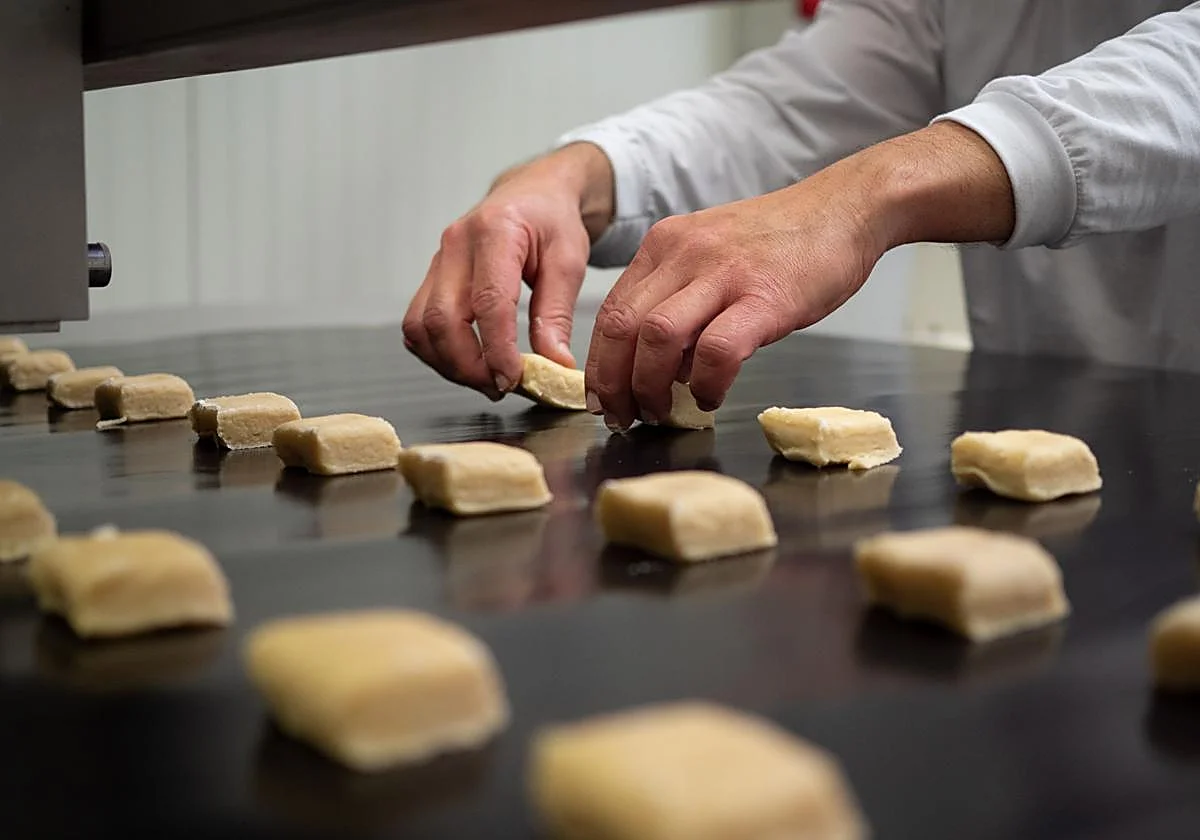
Zoom Mantecados on the production line in a bakery in Antequera. SURThe decline in popularity of these traditional recipes is not so much due to a disappearance of culinary identity as to a profound shift in habits. Cooking for days on end, getting organised as a family and dedicating loads of time to lengthy preparations are no longer part of daily life in many homes. In response, the new style of Christmas sweet treats is all about innovation, aesthetics and convenience.
Panettones, yule logs and differently-flavoured nougats have found their niche and their market, without completely displacing traditional sweets, but rather relegating them to a secondary role. The result is a more diverse Christmas platter of sweet treats, although one that is definitely more dependent on market trends and less tied to those recipes that were handed down by word of mouth from generation to generation.