Zoom
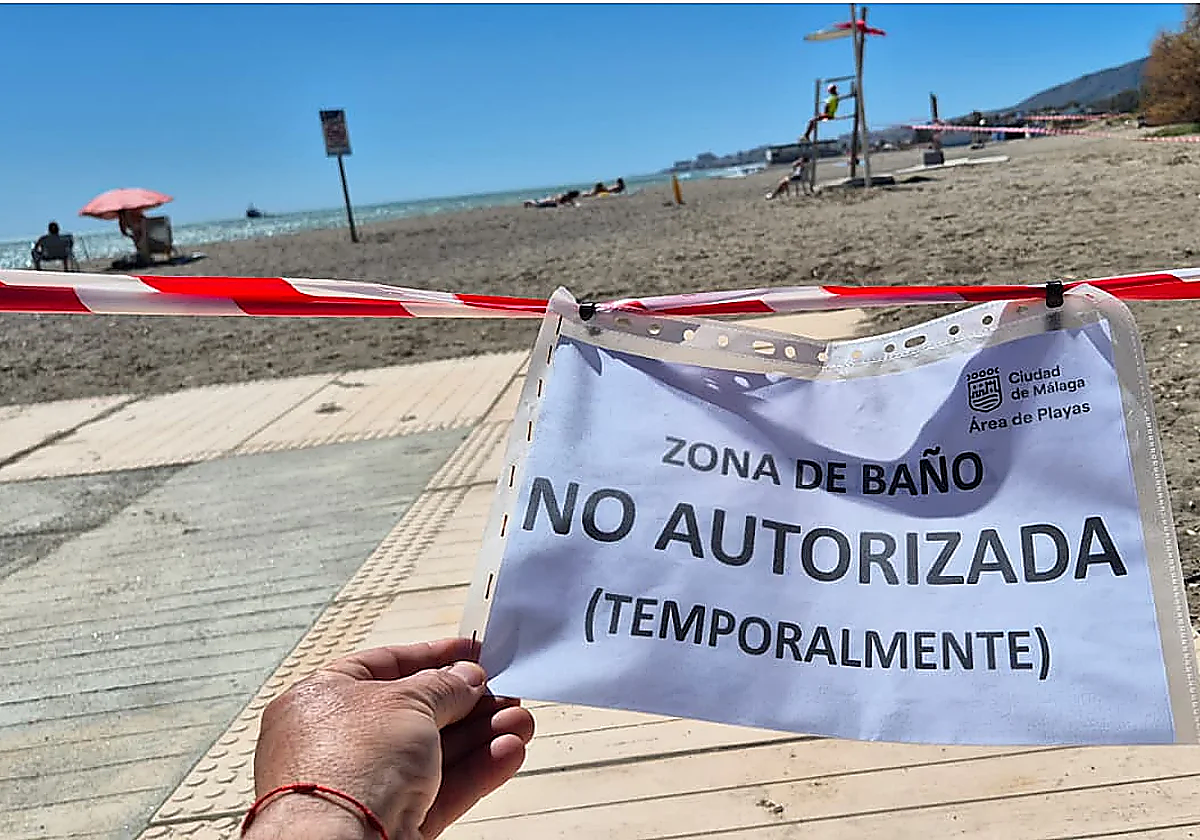
The presence of bacteria has prevented swimming in the Arraijanal area in Malaga for a week. Salvador Salas Environment Malaga's western coast faces erosion and bacteriaThe impact of recent weather phenomena and erosion have led to damage in the Guadalmar area of the city's coastline
Chus Heredia
Thursday, 2 April 2026, 12:51
Malaga's westernmost coast, stretching between the mouth of the Guadalhorce river and Torremolinos, is highly susceptible to erosion, suffering the onslaught of both the sea and the river. The projections are not encouraging: the sea is advancing.
It has always been this way. In fact, the disappearance of the Phoenician settlement of Cerro del Villar may have been caused by a kind of river tsunami, according to credible theories. In recent decades, urban development and the regulation of the river with dams and reservoirs have left their mark on coastal erosion.
One must also take into consideration the critical state of sanitation throughout the Guadalmar area. In Arraijanal, which hopes to one day become the marine-terrestrial park promised decades ago, authorities have banned swimming for a week now.
Malaga city council implemented this measure in the area next to the golf course after receiving a warning from the regional ministry of health recommending regarding the presence of Escherichia coli - a faecal bacteria.
Why is there bacterial contamination?
Behind this bacterial contamination is the rupture of two sewer pipes caused by the flooding of the Guadalhorce river following the heavy rains of the last weekend of December. The floodwaters eroded one of the supports of the pipes that cross the riverbed. A section of approximately 50 metres fell into the river and work has been under way to repair it ever since.
The city council has marked off the area of the beach and advised against swimming. There are no other areas where authorities have detected bacterial contamination, neither in Malaga nor Torremolinos. Continuous testing confirms this.
Municipal water company Emasa shut down the Guadalmar and Campo de Golf pumping stations to prevent wastewater from the Churriana and Torremolinos districts from flowing directly into the river. To minimise the impact, the wastewater is being discharged offshore through an outfall pipe that is 475 metres long.
Fight agains the elements
The city council is working at full speed on a solution, with visible work under way to excavate the beaches and riverbanks. The local government team has made the decision to prioritise the construction of a section of the reclaimed water network for irrigating facilities in the western part of the city and in Torremolinos. The ordeal for beachgoers should not extend beyond April, given the project's timeline.
Breakwater
The sanitation system in this area is a victim of the aforementioned 'perfect storm'. In addition to the obsolete facilities, there are environmental constraints. Emasa has a multi-million-euro project under way to create a new network, including new pumping stations.
Furthermore, engineers have already had to protect the current station with a breakwater because the sea practically surrounds it. The risk of spills is ever-present and the old facilities await the new ones before permanent dismantling.
To make matters worse, the area around the river mouth (a protected natural area under the jurisdiction of the Andalusian regional government) has a thick cover of reeds, branches and debris from the recent storms. Technical sources have told SUR that this debris is typically left in place for a period of time as an environmental decision, in order to minimise the impact on wildlife.
In the final stretch of the Guadalhorce river, work remains to be done to widen the spans of the Azucarera bridge (MA-21) to prevent flooding - an issue currently undergoing environmental review and falling under the jurisdiction of the central government. Additionally, the city council will create a large floodable park and improve the drainage and stormwater runoff points in near industrial parks. The regional government made a significant investment several years ago in restoring the river mouth.
The former hydrographic confederation of Southern Spain once channeled the final stretch of the river and created the additional branch to improve drainage capacity. It seems the elements resist taming in the western part of Malaga province.