Water welfare
Malaga scientists link sudden recharge of aquifers to the small earthquakes in Serranía de Ronda this past winterPreliminary results from a hydrogeological report analyse the cause-effect relationship between the two phenomenons
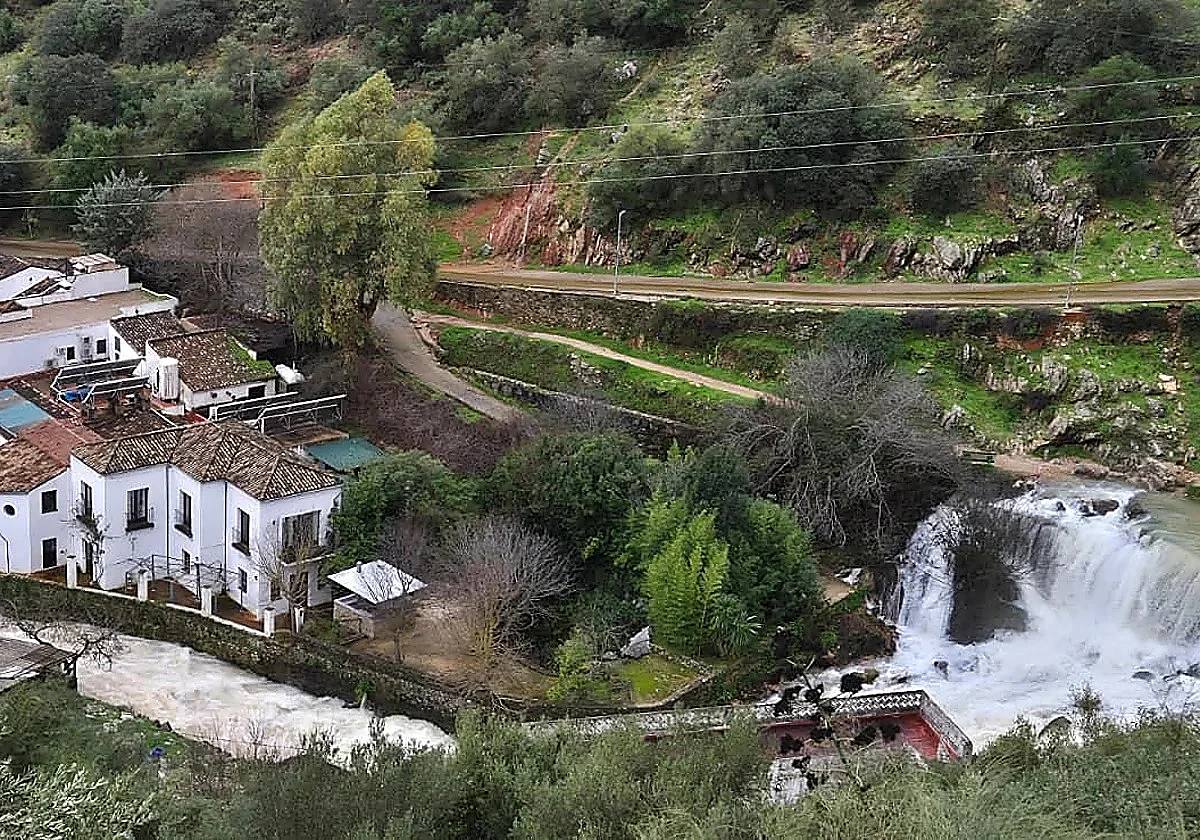
Añádenos en Google The Guadiaro river flooding during the Montejaque dam's reservoir. (Salvador Salas)Chus Heredia
15/06/2026 a las 12:00h.Malaga scientists are currently reviewing the results of a study, according to which the saturation of aquifers in the Serranía de Ronda this past winter may have caused the small earthquakes in the area.
Such tremors happened in Benaoján, Sierra de Líbar and Grazalema, the residents of which had to be evacuated due to the storms.
Hydrogeologists have been extensively studying the network of underground karst conduits since then. Among them is Professor of Hydrogeology at Malaga University Bartolomé Andreo, whose team played a key role in a recent conference addressing floodings caused by aquifers.
The event brought together hydrogeology researchers, public administrators, environmental experts and technicians from across Spain in Malaga. SUR moderated the round table.
Hydrogeology coordinator Sergio Martos presented a preliminary version of a report he co-authored with five other scientists. He explained the effect of water pressure on the fractures in the ground. The larger the fault, the greater the impact.
Climate change context
The findings are relevant in a context of climate change and an increase in large-scale torrential rains.
"Southern Spain experienced an exceptional and sustained rainfall in early 2026, with accumulated precipitation locally exceeding three times the seasonal average. This hydrological anomaly led to a rapid and pronounced rise in groundwater levels within a regional carbonate aquifer and coincided with a sequence of shallow earthquakes," the report states.
"Here we demonstrate that extreme aquifer recharge can generate pore pressure disturbances sufficient to trigger seismicity within a confined karst system," it warns.
The tremors occurred at two distinct levels: a shallower and more immediate one, and a deeper one that appeared with a delay.
Stress modelling indicates that modest pore-pressure perturbations of approximately 0.4-0.7 MPa, comparable to decades of tectonic loading in the region, are sufficient to trigger slip on optimally oriented faults.
Related story
Storm Leonardo
the unique event at the Montejaque reservoir (watch video). Its siphons activated and safely released water, while the Hundidero-Gato cave system performed its natural buffering function, regulating and moderating flows towards Benaoján, Jimera and Cortes de la Frontera.
"The seismicity is dominated by shallow events occurring at depths of less than four kilometres. The sequence is characterised by the absence of a mainshock (...) Such spatial dispersion is difficult to reconcile with a purely tectonic origin and instead points to aquifer-scale pore-pressure redistribution within a connected fracture network. The deeper earthquakes occurring within the underlying basement indicate a different type of response, possibly triggered mechanically. Within this framework, the temporal relationship between rainfall, groundwater response and seismicity becomes a key diagnostic indicator," the report concludes.