Health
Malaga traumatology experts advocate sitting up after surgery to facilitate recovery and prevent complicationsHospital Regional has launched the ¡VAMOS! project to promote early ambulation of surgery patients and prevent pneumonia or thrombosis
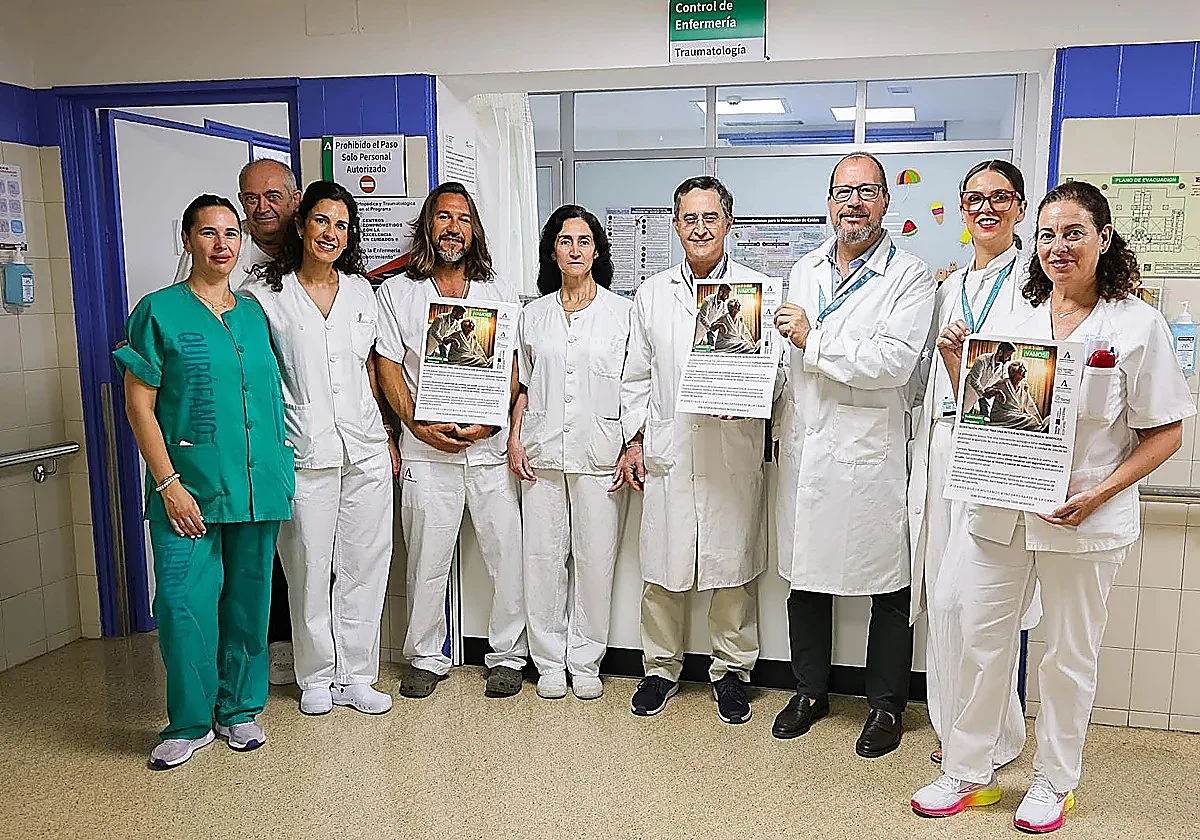
Añádenos en Google The traumatology unit of Hospital Regional in Malaga. (SUR)José Antonio Sau
16/07/2026 a las 11:14h."Sitting up as soon as possible is a more beneficial part of recovery than staying in bed," Malaga traumatologist Francisco Aguiar says.
His words summarise the goal of Hospital Regional's ¡VAMOS! project, which encourages sitting up in bed the day after surgery or as soon as possible, as part of the recovery process.
The initiative aims to combat iatrogenic dependence, that is, the loss of autonomy resulting from healthcare.
Misconceptions
"It involves both professionals and patients, as well as the caregivers of patients hospitalised in our traumatology department," Dr Aguiar explains.
For him, sitting up and embracing ambulation as soon as possible after a surgery "isn't groundbreaking", but it is true that there are certain misconceptions surrounding the practice.
The hospital staff have placed signs around the traumatology unit, reading: "Ask us to help you get out of bed."
"Doctors and patients do not question enough the belief that bed rest is necessary and beneficial after surgery. Sometimes it is, but in 90 per cent of cases, regaining the autonomy one had before the surgery is more important," Dr Aguiar says.
He points out that staying in bed for too long increases the risk of pneumonia, thrombosis, pressure ulcers, loss of muscle mass and autonomy, on top of impacting the patient's self-esteem.
"The message shouldn't be: 'You need to stay in bed for as long as possible to recover,' but rather, try to get out of bed as soon as you have the slightest opportunity, because that's what will actually facilitate a faster recovery. Move as soon as possible," Dr Aguiar states.
The real ambulation that doctors talk about means walking as soon as possible. The first step is sitting up in bed. "Once that happens, it's much easier to encourage the patient to stand up and walk. It's going to be much more difficult the more days they're bedridden."
Another essential tip is trunk control "with the back muscles". Spending two or three days in bed causes weakness in the muscles, which interferes with a person's ability to get up.
The aim is to encourage patients to sit for themselves (under professional supervision) and their family and caregivers to leave behind "fear, ignorance and misconceptions".
Sitting up in bed the day after surgery also "drastically reduces the fear of suffering another fall and reduces the social isolation that sometimes accompanies hospital admissions". The only precaution requires that the patient is "accompanied at all times during this process to ensure their safety".
The orthopaedic surgery and traumatology unit highlights the importance of a multidisciplinary approach. "The entire healthcare team (orderlies, doctors, nurses, nursing assistants and physiotherapists) works together in the patient's care and ambulation," Dr Aguiar states.