Animals
Man films his first documentary after visit to Los Barrios dog shelterPaul Murphy felt he had to tell the story of what he had seen there
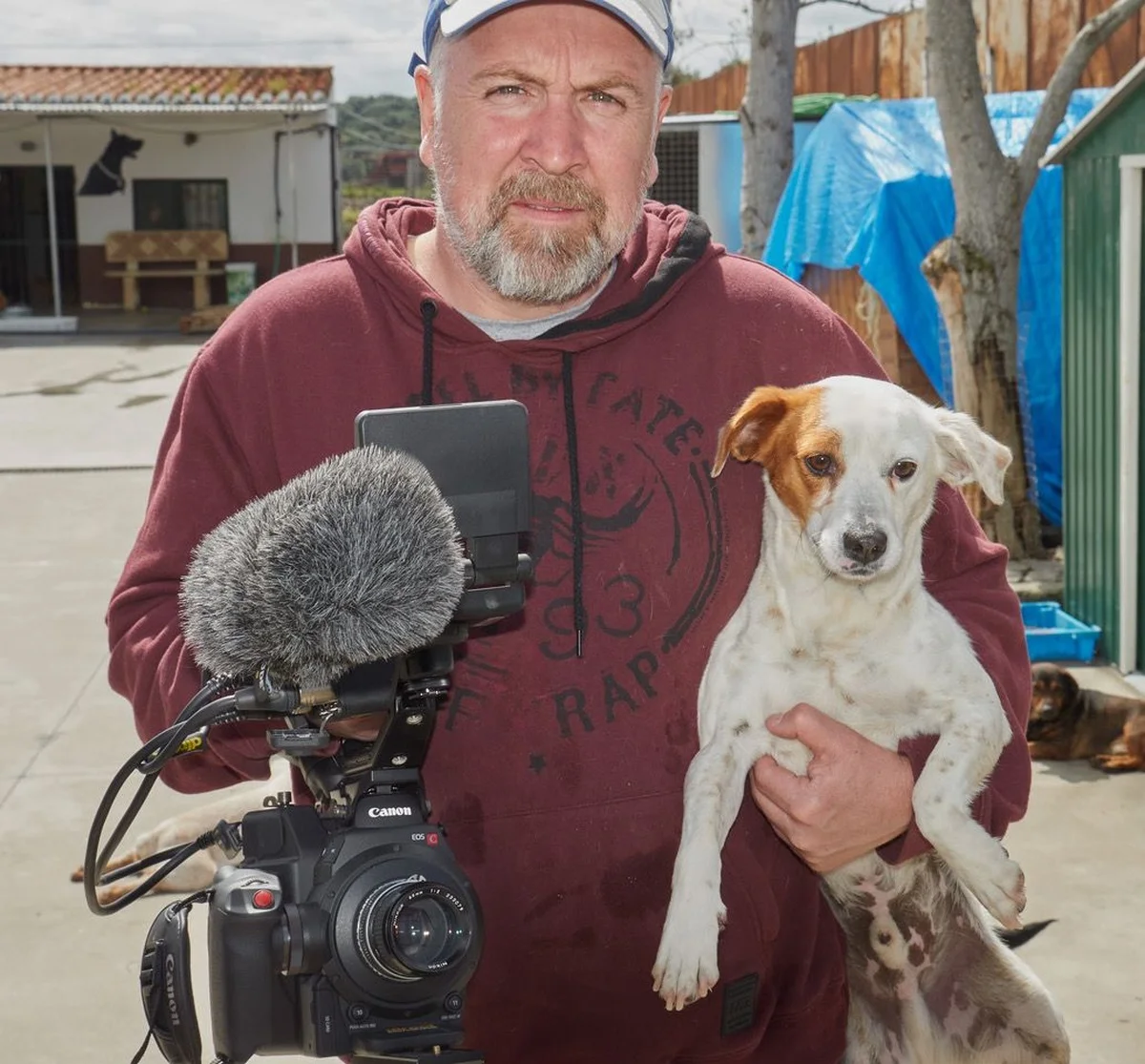
Añádenos en Google Paul Murphy at Los Barrios dog shelter. (SUR)Daniela Craft Márquez
14/07/2026 a las 12:06h.Paul Murphy had never made a documentary before. He hadn't planned to make one this time either.
For most of his thirties, Murphy worked as a photographer, shooting celebrities and cars. Looking for a companion for their dog, he and his partner Helen went online and spotted a picture of a rescue named Goku. He says they chose him because "he looked miserable", and later realised he was living in SOS Canya dog shelter in Los Barrios, Cadiz, 1500 miles away from their home in London. They decided to go through with the adoption despite the distance.
Not long afterwards, the shelter appealed for help with another dog, Ryan, who was seriously ill. Murphy agreed to take care of him. He drove from London to Los Barrios with his friend Chris to collect him, bringing a camera along on a whim to get some photos for the shelter's website.
What he found instead was difficult to ignore. Long before the shelter came into view, he could hear it. Dogs barked relentlessly behind the gates; their heads pressed through the fencing. "I turned to Chris and told him we had to tell someone about this," he explains.
At first, he filmed simply to document what he was seeing. But as he spent more time at the shelter, a story began to emerge. "As things progressed, when I met the people and saw what was happening, the story started to take shape," he says.
Over the next two years, Murphy returned to Los Barrios four more times. Along the way, he taught himself editing, sound design and subtitling, eventually translating the finished film into seven languages himself. The task was far from easy. Murphy had no funding for the film, and didn't speak Spanish, so he turned to translation tools to communicate with volunteers. Nevertheless, he was determined to make it work. "I wanted the film to be of a professional standard," he says.
During his visits, he saw the same stories repeating themselves. Dogs arrived at the shelter after spending years chained outside. Others were abandoned once they were no longer considered useful. Some were simply dumped and never claimed. Murphy wanted to show people what was happening behind the shelter gates rather than leave it as a reality witnessed only by the volunteers on the ground.
The result is 'Perros', a 90-minute documentary following the volunteers at the Canya SOS shelter in Los Barrios. The rescue centre houses around 300 dogs and takes in animals from across the seven municipalities of the Campo de Gibraltar. The film opens with a dedication: "For those who have loved a dog, and for those yet to experience the wonder."
(SUR)Murphy's documentary focuses on the unglamorous realities of rescue work: vaccinating new arrivals, cleaning kennels after heavy rain and caring for hundreds of animals day after day. As one volunteer puts it, they do it "with heart and not out of obligation".
The numbers behind the film
In 2025, Spain's shelters took in 285,720 animals (169,268 dogs and 116,452 cats) according to the Affinity Foundation's latest annual report, 'Él nunca lo haría', published this month. The report describes the figures as evidence of "stagnation rather than real improvement," despite a 2023 national law that made animal abandonment a serious offence punishable by fines of up to 50,000 euros. Even so, Spain continues to have one of the highest rates of animal abandonment in Europe.
The most common reasons shelters cite for abandonment are unwanted litters (15%), owners losing interest in the animal (14%), moving house (12%), the end of the hunting season (11%) and behavioural problems (10%). Summer remains the peak period for abandonment.
Andalucía sits at the sharp end of the national picture. The region records more abandoned hunting dogs than anywhere else in Spain, accounting for more than 5,500 of the roughly 12,300 cases registered nationwide in a recent year.
None of this would surprise the volunteers featured in Murphy's film. They estimate that between 80 and 100 dogs are abandoned in the area around Los Barrios every month.
Murphy recalls one day during filming when a single volunteer vaccinated 12 new arrivals. Dogs kept coming through the gates, many surrendered by owners who simply dropped them off and drove away without looking back. Some had spent their entire lives in family homes before suddenly finding themselves abandoned, unable to understand why they had been left behind.
Of the roughly 80 to 100 dogs volunteers in the film say arrive each month, only half of them are eventually adopted. "The numbers don't add up," one volunteer says in the film.
And Murphy explains that SOS Canya shelter is not a standalone case. "This is just one dog shelter in one part of Spain, but you drive 15 miles down the road and there's another one. The country is full of them", he says.
More attention on the issue
But it is not all bad news. Animal welfare and adoption has received growing attention in Spain in recent years. Public broadcaster RTVE launched its own version of the British format 'The Dog House' last July and is now preparing for a second season, presented by singer Chenoa. The programme follows the matchmaking process between rescue dogs and prospective owners. Elsewhere, Protectora Animales Uskar, a sheltar in Huéscar, Granada, has built an audience of over 120,000 followers on Instagram.
'Perros' has also found an audience within that growing interest. Murphy says the film's website received around 8,000 visits in its first week, with most traffic coming from Spain, followed by Portugal, Germany and the UK.
He also believes conditions on the ground are improving, even if intake numbers remain stubbornly high. "I came back from a trip and they had two gates," he says. "It sounds like a small thing, but it meant that they had a proper lock and the dogs couldn't escape." He adds: "I think the situation is changing, and there's a sense of hope."
Murphy says he made the film not only to improve the lives of rescue dogs but also because he felt that the animals faced genuine risks. The shelter sits between two rivers that flood almost every year, and dogs have drowned in their cages during past storms.
Partly because of that threat, volunteers have purchased a plot of higher, flood-safe land nearby. The challenge now is raising the money needed to build a new shelter there.
Ultimately, Murphy says his goal is simple: to draw attention to a problem that many people never see. Whether that means donating, adopting a dog or simply sharing the story, he believes awareness is the first step.