Zoom
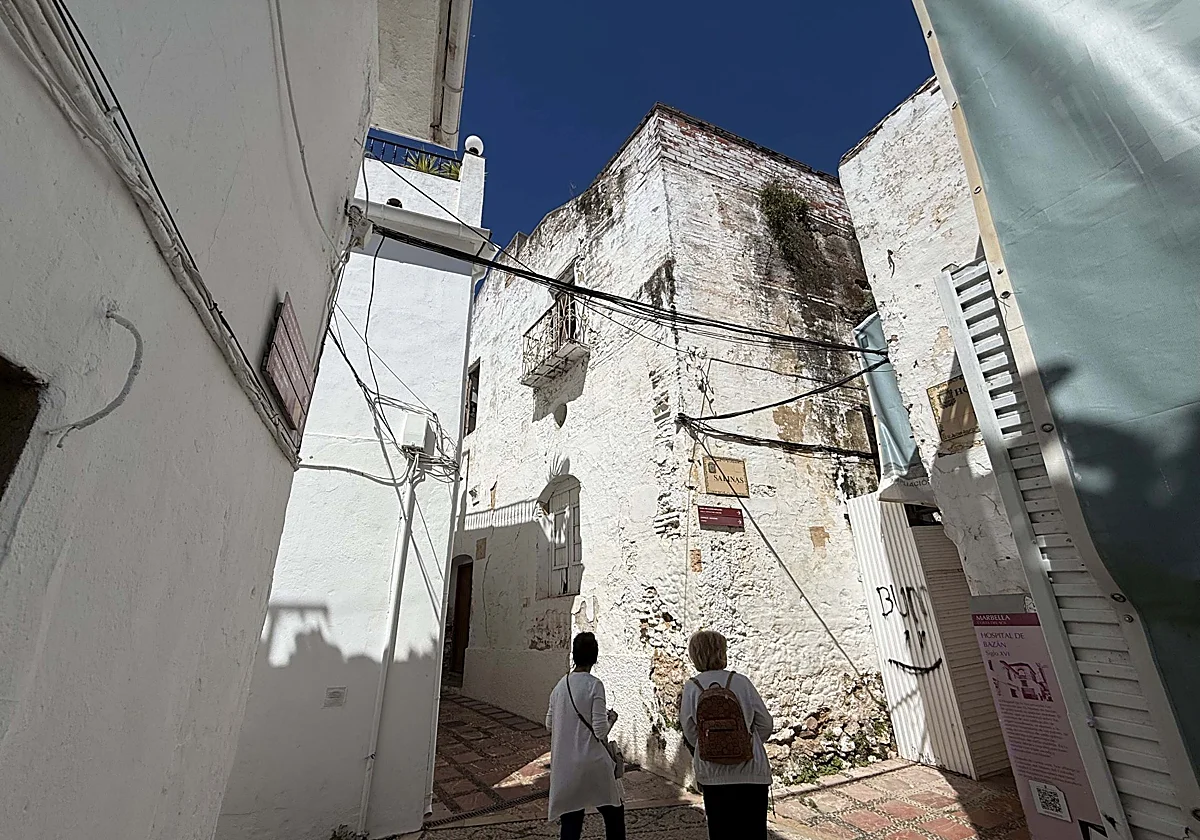
The convent was shored up in April 2025 because of cracks. Josele Marbella seeks European funding to restore the Trinidad conventThe council is willing to modify the project to refurbish the deteriorated 16th-century building, which has been propped up for the past year
Marbella
Thursday, 16 April 2026, 16:28
The recovery of Marbella’s heritage has some major highlights, such as the Royal Hospital of Mercy and the Bazán Hospital (contemporary Spanish print museum). However, if there is one downside, it is that of the convent of the Holy Trinity, a 16th-century building that has been deteriorating and has been propped up for the past year.
In April 2013, the council announced the creation of the Marbella museum of modern architecture. In 2018, the basic project for the restoration and rehabilitation of the cloister and the chapel of the building was approved, at a cost of 1.8 million euro.
None of these projects were carried out and in April 2025 the deterioration of the building led the council to shore up the building due to the appearance of cracks. At the time, the municipal authority was even open to developing a project with private financing, but today everything seems to be based on public financing, to the point that the council is willing to adapt the use of the building to the requirements of the financial instrument.
In a statement to SUR, the municipal government spokesperson, Félix Romero, said that although the council “continues working on the Andalusian regional government’s funding route”, it is also exploring the possibility of accessing European funds, “which are more substantial”.
Municipal technicians are looking into which funding line the restoration of the convent could “fit into”, so it is not ruled out that studies may be required, administrative files may need to be “expanded”, and even “modifications” may be made to the initially proposed project.
In other words: “If we secure the funding and that requires giving it a different use, then we will do so, because the main priority is to recover that jewel for Marbella,” Romero said.
For the council, therefore, “the most important thing” is not the future use of the building, “but above all the building itself”. “That is the stage we are at: clearly defining another funding route, what requirements they may impose on us, and what demands and conditions they may impose in order to achieve it - and how that might affect the project we already have in place,” explained the spokesperson.
From the Catholic Monarchs to the Ochoa Cinema
The origin of the convent of the Holy Trinity is linked to the repopulation of Marbella set in motion in 1488 by the Catholic Monarchs. Construction began at the end of that century, but was not completed until the early years of the 16th century. Located in Calle Viento, the Trinitarian convent underwent extensions and came to occupy the entire block up to the current Plaza de la Iglesia. It is estimated that its site has been reduced to a third of the surface area it once had due to the modifications made during the 20th century.
The building preserves an arcaded courtyard, "a cloister with interesting columns", as described by the town hall, and the Gothic-style chapel of Santa Catalina.
The last members of the religious order left the convent in 1837 as a result of the Mendizábal confiscation. After that, it was put up for “judicial sale” and passed through several private owners until January 1926, when it was bought by Rafael Ochoa Alcázar to establish the Ochoa Cinema.