Zoom
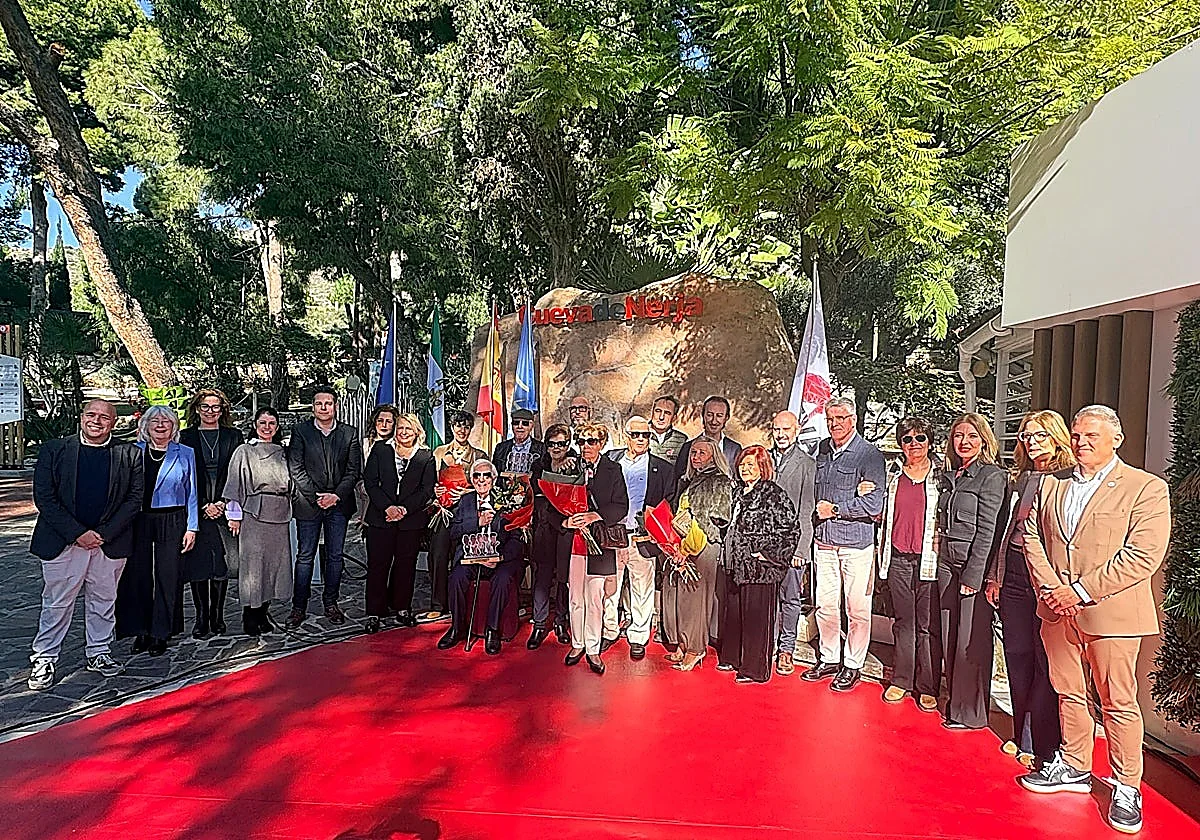
The discoverers along with representatives from local authorities during the 67th anniversary event E. Cabezas Nerja Cave Nerja Cave celebrates 67 years since its discoveryThree of the five discoverers spoke to SUR during the anniversary event on Monday 12 January: "We ran out when we found two skeletons"
Eugenio Cabezas
Monday, 12 January 2026, 18:47
The Nerja Cave, one of the best-known tourist attractions on the eastern Costa del Sol, celebrated the 67th anniversary of its discovery with an emotional tribute to its five discoverers, on Monday 12 January.
Those discovers were five young boys from Maro, who in 1959 changed the history of tourism in the Axarquía and in Spain forever. The event, organised by the Nerja Cave Foundation on Plaza de los Descubridores, brought together three of them - brothers Miguel and Manuel Muñoz and José Torres, as well as María López, widow of fellow discoverer José Luis Barbero. Only Francisco Navas, the oldest member of the expedition, was absent for health reasons.
The president of the Nerja Cave Foundation and representative of the central government in Malaga, Javier Salas, opened the event by highlighting how "intrepid" those five lads were, aged between 13 and 20 at the time.
Salas recalled that, thanks to the rapid work done to the cave to open it up to the public, tourist visits began in 1960: "an event that transformed the history of tourism not only in Nerja, but also in Malaga and throughout Spain," Salas said.
Skeletons
Vice-president of the foundation and mayor of Nerja, José Alberto Armijo, thanked the discoverers and their families for "an achievement that has marked the present and future of the municipality".
The discoverers shared memories that remain vivid more than six decades later: "The first impression was something that couldn't be explained, that's the main thing, because none of us had ever seen anything like it," Miguel Muñoz told SUR, before admitting that the next feeling was panic: "We were scared and we ran away, at least I did. I don't know how scared the others were, but I do remember how scared I was."
José Torres recalled the moment they arrived at what is now known as the Ghost Room: "We saw some skeletons on the floor. When we stepped on them, bones crunched. We looked and saw some skeletons. Then we said, 'Those are people who came in before us and died here, let's go,' and we all ran out."
Manuel Muñoz recounted how they were chasing bats when they reached the Waterfall Room, the first large chamber they saw in the cave. "We completely forgot about the bats because we began to feel something strange that none of us could explain," he said.
Lack of awareness
The discoverers acknowledged their complete lack of awareness at the time. "Nowadays, a seven-year-old child knows what a prehistoric cave is and what stalactites and stalagmites are. We knew absolutely nothing. One of us was already 20 years old and the youngest was 13," explained Manuel Muñoz.
"What did I know about stalactites? They were just drips hanging from the ceiling," another of them said. "I told the village teacher the next day: we found a bigger, beautiful cave with drips hanging from the ceiling," he added, recalling how, years later, he learned that those ‘drips’ were actually complex formations of stalactites and stalagmites.
A few days later, as Muñoz said, they returned accompanied by the village teacher, who began to explain what it all was. Later, in April 1959, local photographer José Padial took photos of the cave, which were published in SUR later that month, making the cave known to the world.
Images from the anniversary event E. CabezasOn 12 January 1959, those five boys from Maro – José Luis Barbero, Francisco Navas, brothers Manuel and Miguel Muñoz, and José Torres – had gathered in the area, attracted by a narrow opening where they saw bats entering, which they loved to chase.
From that opening, they entered the cave and explored several spaces until they reached what is now known as the Ballet Room and the Ghost Room, from where they decided to return to the surface, unaware that they had just discovered one of the great prehistoric caves of the Mediterranean.
Years later, the cave has been recognised as a Site of Cultural Interest and has established itself as a major tourist and cultural attraction, with the foundation responsible for its conservation and promotion. Pending the finalisation of visitor figures for 2025, in 2024 it exceeded half a million and by March 2025 it had reached 20 million visitors since its opening to the public on 12 June 1960.
The 67th anniversary event, held before a large audience, was also attended by several patrons of the foundation, its manager José María Domínguez, employees and representatives of the town hall, associations and business people from the area. They all agreed on the same message: Nerja and La Axarquía would not be what they are today without the curiosity of those five boys who one day decided to chase some bats.