Zoom
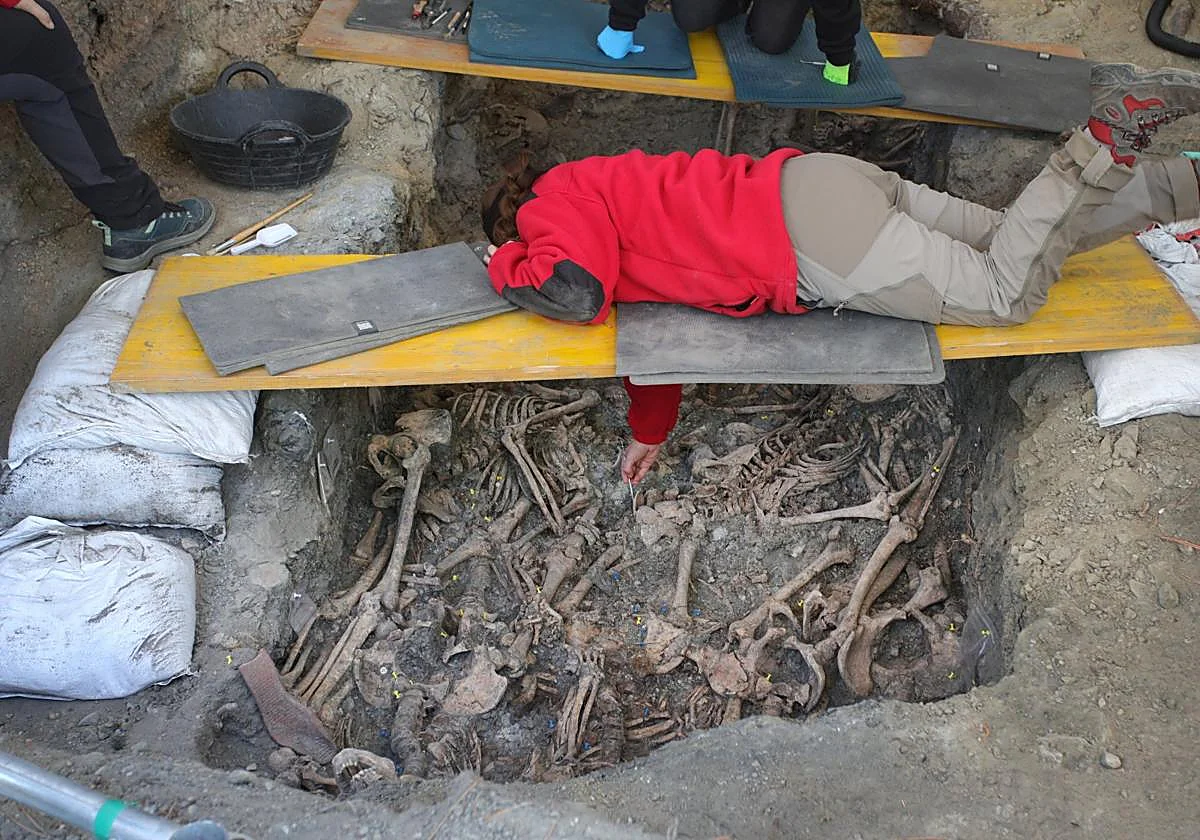
A multidisciplinary team works on the mass graves of Barranco de Víznar (Granada). EFE History New Democratic Memory Plan for Andalucía allocates 2.5 million euros to exhume more mass graves by 2027The plan calls for inter-administrative cooperation to address the high number of mass graves that still remain to be unearthed in Andalucía
Monday, 12 January 2026, 17:24
The Junta de Andalucía has unveiled its second Democratic Memory Plan, pledging over €2.5 million between 2026 and 2027 to locate, exhume, and identify victims of the Spanish Civil War and the Franco dictatorship.
The regional government’s initiative prioritises the genetic identification of remains and the institutional recognition of victims, aiming to settle what officials describe as an "outstanding debt" to society and grieving families.
The plan, recently approved by the Junta's governing council of regional ministers, will allocate more than 200,000 euros to the search for and identification of new graves and sites where the victims of the war and dictatorship are buried.
Furthermore, the plan will allocate 445,881 euros to the location and exhumation of victims in each of the next two years, while 710,000 euros will be allocated to the genetic identification of remains in each of those years. The regional government is committed to strengthening inter-administrative cooperation to address the high number of mass graves still awaiting exhumation across the region.
As regional minister for culture, Patricia del Pozo stressed that "the new plan aims to set out the policy of democratic memory in the democratic values of harmony, coexistence, pluralism, equality, a culture of peace and defence of human rights".
She further noted that "the Junta's priority is exhumations and genetic identifications to resolve the huge. outstanding debt we have as a society, which is to recover the bodies and return them to their families so they can be given a dignified burial".
Del Pozo pointed out that, in the year just gone, progress has been made in the genetic identification of victims of the Civil War and the dictatorship with an extraordinary contribution of 500,000 euros. She added that "the budget for genetic testing has thus reached 1.16 million euros, seven times the amount allocated for this purpose in 2018".
The Junta has managed to exhume 2,840 remains of victims since 2019, in addition to analysing DNA samples from 4,146 victims and 2,700 relatives. Between 2022 and 2025, the regional ministry in charge of this matter managed to analyse a total of 2,388 samples taken from exhumed victims and 2,668 DNA samples from relatives.
This figure is significantly higher than the total number of samples analysed between 2015 and 2018, when samples from only 472 victims and 433 relatives were analysed, which is why she highlighted the effort and progress made by Juanma Moreno's regional government in this area.
In 2025 alone, a total of 752 samples from exhumed victims and 968 DNA samples from family members were analysed. Patricia del Pozo's regional ministry has dedicated more than four million euros to carrying out these DNA sample analyses since 2019, compared to the 300,000 euros provided for this purpose by central government during the same period, slightly less than 7% of the total investment.
The new plan aims to facilitate understanding of the events and circumstances that took place during that period of Spanish history, ensuring the preservation of documents and promoting research and dissemination for their study and scientific understanding.
The plan also seeks to establish a guiding framework for the development of public policies on democratic memory in Andalucía, contributing to the optimisation of cooperation and coordination between the different governing bodies of Andalucía in terms of democratic memory. Finally, it aims to promote the participation of Andalusian citizens in the development, promotion and awareness-raising of all actions related to democratic memory.