- Matthew Stafford owns the best “full-season” mark: Stafford’s 58 big-time throws led the NFL outright, and his 2.23 ratio came on a 9.8-yard average depth of target — the most aggressive throw profile of any quarterback in the top 10.
- Introducing the NEW PFF Pro subscription: PFF Pro includes everything in PFF+, plus an upgraded Premium Stats Pro experience, higher base access to Guru AI, revamped player and team pages, enhanced data and visualizations, an improved interface and programmatic data access for modeling. Click here to subscribe.
Touchdown-to-interception ratio is one of football’s most commonly cited quarterback statistics. It’s also a horrible way to evaluate quarterback play.
Both sides of the touchdown-to-interception equation are significantly influenced by factors outside the quarterback’s control, meaning the ratio can reward or punish a player for outcomes that don’t accurately reflect how well he actually played.
The interception side is especially noisy. From 2016 through 2025, just 49.09% of turnover-worthy throws — passes PFF charted as legitimately deserving of a turnover — actually resulted in interceptions. Over that same span, 1,441 interceptions came on throws that weren’t deemed turnover-worthy at all, accounting for roughly one-third of all interceptions. So, then, about half of the throws that deserved to be intercepted weren’t, while roughly one-third of the interceptions that did occur came on throws that didn’t deserve to be picked off at all.
The touchdown side has its problems, too, as touchdown totals are influenced by things like how often an offense reaches the red zone, the game scripts a quarterback plays in and whether his offense throws or runs once it gets close to the goal line. The TD-INT ratio, therefore, combines two statistics that don’t cleanly isolate quarterback performance and presents the result as though they do.
If the goal is to measure how effectively a quarterback balances playmaking with ball security, touchdown-to-interception ratio simply isn’t built to do the job. What is built to do the job is big-time throw-to-turnover-worthy play ratio, one of more than 50 new metrics included in Premium Stats Pro for 2026.
Here are the top 10 passers from the 2025 season in this metric. For more information about big-time throws and turnover-worthy plays, click here.
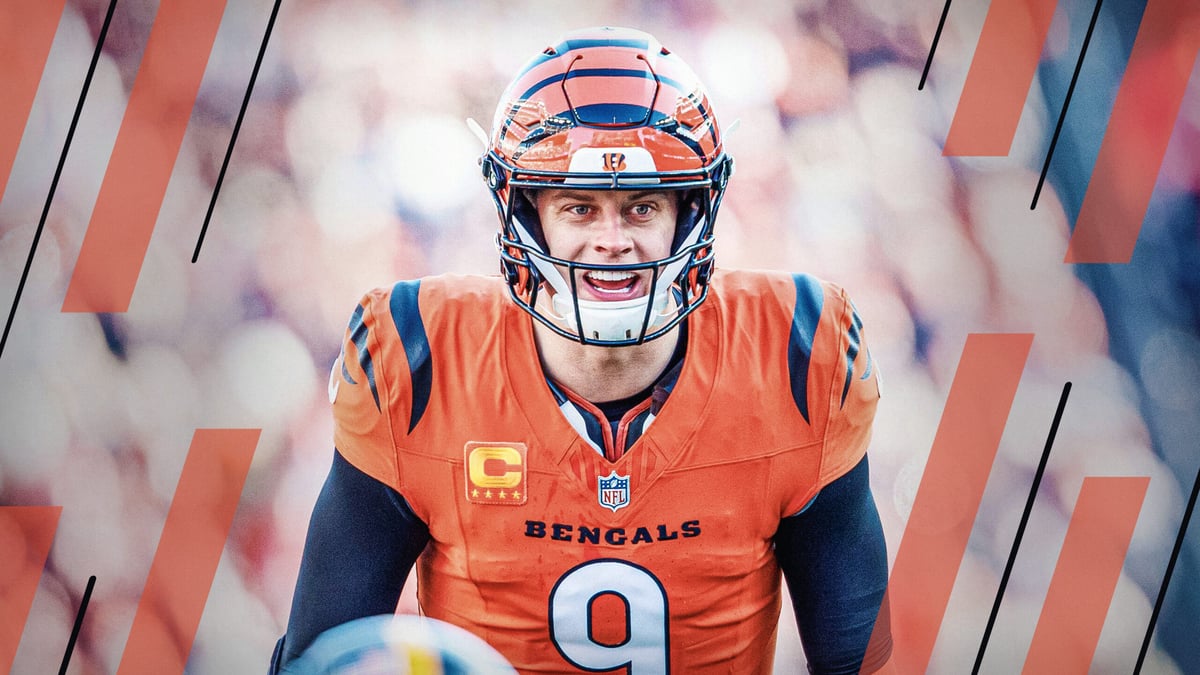
1. Joe Burrow, Cincinnati Bengals (9.00)
Burrow produced 18 big-time throws and just two turnover-worthy plays, and no other quarterback in football finished within four full points of his 9.00 ratio. His 0.7% turnover-worthy play rate was the lowest in the league by a wide margin, and the lowest by any quarterback in the PFF era. Burrow was not being careful, either — his 6.6% big-time throw rate ranked fourth in football, and his 91.3 passing grade ranked second.
The former No. 1 overall pick dropped back just 288 times last season, so the sample size is small, but few quarterbacks have ever protected the football at that level.
2. Matthew Stafford, Los Angeles Rams (2.23)
Stafford produced the most impressive full-season mark in the dataset, pairing an NFL-leading 58 big-time throws with 26 turnover-worthy plays. His 58 big-time throws were 24 more than the next-closest quarterback and the most ever recorded in a single season, while his 7.7% big-time throw rate also led the league.
3. Jalen Hurts, Philadelphia Eagles (2.08)
Hurts earned his place in the top 10 largely by taking exceptional care of the football. His 4.8% big-time throw rate sat right around league average, and his 76.7 passing grade was the fourth-lowest among this group, but his 2.0% turnover-worthy play rate tied for fourth-lowest in football. He finished with 25 big-time throws against just 12 turnover-worthy plays across 489 attempts.
What makes that ball security more impressive is how Hurts achieved it. His 9.2-yard average depth of target was the third-deepest among quarterbacks in the top 10, meaning he kept his turnover-worthy play total down without relying on a conservative, underneath passing attack.
4. Jordan Love, Green Bay Packers (2.00)
Love backed up his 2.00 ratio with one of the strongest all-around passing seasons in the group, earning an 88.7 passing grade while producing 0.24 EPA per play, the highest mark among quarterbacks in the top 10. His 5.9% big-time throw rate also ranked fifth in the NFL.
5. Josh Allen, Buffalo Bills (1.81)
Allen is a perfect example of why touchdown-to-interception ratio can be misleading. He threw 12 interceptions last year, and he finished 18th in TD-INT ratio, but he also suffered from poor interception luck.
The rest of his numbers tell a much different story. Allen produced 29 big-time throws against 16 turnover-worthy plays, giving him the fifth-best ratio in the NFL. He also earned an 84.2 passing grade and averaged 0.18 EPA per play.
6. Kirk Cousins, Atlanta Falcons (1.80)
Cousins made this list largely because of how well he protected the football. His 1.7% turnover-worthy play rate ranked third-lowest in the NFL, but he produced just nine big-time throws in 10 games. His 3.2% big-time throw rate was the lowest among this group by a wide margin.
7. Aaron Rodgers, Pittsburgh Steelers (1.69)
Rodgers followed a similar formula to Cousins, but with much more volume. He produced 27 big-time throws against 16 turnover-worthy plays across 531 attempts despite earning a 68.8 passing grade, the lowest among quarterbacks in the top 10, and averaging -0.02 EPA per play.
His 6.6-yard average depth of target was the shortest in this group by nearly a full yard, which helped keep his turnover-worthy play total down. But Rodgers still produced 27 big-time throws within that conservative passing attack, showing he could create high-end plays even when the offense rarely asked him to push the ball downfield.
8. Dak Prescott, Dallas Cowboys (1.63)
Prescott stands out in the back half of this list because he maintained his efficiency over a full season. He produced 31 big-time throws against 19 turnover-worthy plays across 600 attempts, finishing with 4,552 passing yards, an 85.4 passing grade and 0.18 EPA per play. He also posted a 76.6% adjusted completion percentage despite an 8.6-yard average depth of target.
That workload matters. Four of the nine quarterbacks ahead of or tied with Prescott on this list attempted fewer than 500 passes, while Prescott maintained his ratio across 600.
9. Tyler Shough, New Orleans Saints (1.63)
Shough posted the best ratio among rookie quarterbacks, largely because he took care of the football. His 2.0% turnover-worthy play rate tied for fourth-lowest in the NFL, while his 3.8% big-time throw rate was more modest. That separated him from the rest of the 2025 rookie class, which finished well below the 1.20 league baseline in this metric.
10. Sam Darnold, Seattle Seahawks (1.62)
Darnold produced 34 big-time throws against 21 turnover-worthy plays, earning a 79.9 passing grade. His 34 big-time throws ranked fourth in the NFL, while his 5.7% big-time throw rate was a top-six mark in the NFL.
Big-time throws and turnover-worthy plays explained
Every pass PFF charts gets a play-level grade on a scale that runs from -2.0 to +2.0 in half-point increments, with 0 representing the expected outcome — the throw a competent NFL starter makes in that situation without adding or subtracting anything. Almost every pass in a football game lands at or near zero.
A big-time throw is a pass graded +1.0 or better: the highest-difficulty, highest-value throws a quarterback makes. Generally that means a ball thrown deeper down the field, into a tighter window, with the placement and timing required to make it catchable when the coverage or situation says it should not be.
A turnover-worthy play is the inverse, graded -1.0 or worse: a throw that puts the ball in genuine danger. A bad read into coverage, a late throw over the middle, an underthrown deep shot, a ball forced into a window that was never open.
Across the 2025 sample, big-time throws accounted for roughly 4.1% of dropbacks and turnover-worthy plays roughly 3.4%. These are the handful of snaps per game where the quarterback either won the down outright or nearly lost it.
And here is the part that matters most: both are graded on the throw, not the result. A perfectly placed 40-yard shot that hits the receiver in the hands and bounces off is still a big-time throw. A hospital ball into double coverage that a safety drops is still a turnover-worthy play. Neither charge depends on what shows up in the box score, because the box score is where the noise lives.