Estimated Reading Time:8 minutes
Following the NFL’s major overhaul of the kickoff rules for the 2024 season, it was clear that a minor adjustment was needed entering the second year of the change to discourage kickers from booting the ball through the end zone and promote more kick returns.
The simple tweak involved moving kickoff touchbacks from the 30-yard line in 2024 to the 35-yard line this past season. The average field position following a kick return in 2024 was exactly 30.0, so kickoff units felt the risk of potentially giving up a big return did not match the much smaller rewards on offer.
Moving the touchback up five more yards absolutely worked as intended. The 2025 season saw 76% of all kickoffs returned — a dramatic increase from the previous season, which hadn’t managed to promote returns nearly enough. These five additional yards clearly mattered a lot to special teams coaches.
Percentage of NFL Kickoffs Returned Each Season
SeasonKickoff Return %202322.9%202434.7%202575.9%Of course, there are still some detractors. The Los Angeles Rams were happy to settle for touchbacks more than half of the time — just 42.9% of their kickoffs were returned. This was a particularly curious strategy, considering they had the best-performing kickoff coverage unit in the league when called upon. Opposing returners only reached the 26-yard line on average, an improvement of nine full yards.
In general, however, the league’s kickoff units conformed to the new normal. The NFL achieved its desired outcome with more drama than ever on what was largely considered a meaningless play not too long ago.
Consider that the 2025 season witnessed a 33% rise in returns of 40-plus yards. Only three franchises — the Packers, Steelers and Browns — were unable to break off a return of more than 40 yards.
It’s not all about big plays for the NFL, though. The league is happy just to see anything happening on kickoffs. Last year witnessed a 90% increase in missed tackles forced on kick returns and twice as many overall return yards.
Unsurprisingly, several returners racked up return yards in the quadruple digits — including the Cowboys’ KaVontae Turpin, whose 1,814 kick return yards are the second-most in a single season in league history. If kick returns remain at this volume over the next few years, Martay Jenkins’ 2,186-yard record season, which has stood for a quarter-century, will likely be in jeopardy.
Kickoff coverage units will never be willing to accept their fate as the league tries to promote explosive plays from the opposition. Instead, kickers have found new ways to get creative, most notably with the introduction of the “dirty kick” — an unpredictable knuckleball intended to mess with the returner’s ability to field the kick as they would traditionally. The average hangtime on kickoffs that land between the 10-yard line and the goal line has dropped from 3.98 seconds in 2023 to 3.48 seconds this past season, highlighting the low-trajectory nature of these new kickoff styles.
The Panthers were one of the first teams to adopt this strategy. Their kickoff specialist, Ryan Fitzgerald, had an average hangtime of just 3.08 seconds on kickoffs in 2025.
Meanwhile, the aforementioned Rams enjoyed great success with kicker Joshua Karty, whose kickoffs left the ground for just 2.70 seconds on average and resulted in the lowest average field position in the league for opponents. Yet, Karty was ultimately benched due to his struggles as a field-goal kicker.
His kickoff replacement, Ethan Evans, afforded opponents six additional yards of field position on average compared to Karty. Given the Rams averaged six kickoffs per game this season, it raises the question if 36 additional yards of field position are worth carrying multiple kickers on your active roster for different roles.
Explore PFF Tools Mock Draft Simulator Be the GM for any team in the 2026 NFL Draft with a fully immersive simulation that lets you trade picks and players for a realistic, in-depth draft experience. Customizable Draft Big Board Take control of your rankings with a customizable big board that lets you add players, share with friends, export to CSV and save your personalized list. Scouting Assistant Master the evaluation process with a customizable grading system built for serious scouts. Choose your own scouting categories, assign 0–10 grades in each area and generate a finalized prospect grade tailored to your criteria. NCAA Premium Stats Our exclusive database, featuring the most in-depth collection of NCAA player performance data. Subscribe For Full AccessReturn units also dialed up the creativity in the second season of the new kickoff structure. When the rules were first announced, savvy special teams analysts suggested the play would now operate similarly to a run play, with various team-wide rushing concepts being executed.
PFF has observed all kickoff returns over the past two seasons and has recognized a noticeable rise in teams implementing double teams on kickoff returns this year. Double teams rose from 42.8% of all returns in 2024 to 56.4% in Year 2 of the new format.
We also saw a small rise in “folds” on kickoff returns, from 6.1% to 8.9%. This is when two adjacent blockers “fold” around each other to swap assignments. The Bears led the league in their usage of these.
While special teams coordinators are trying to draw up steady schemes for returns, “trick” kick return numbers have remained extremely low. We’ve witnessed just 13 total attempts at trickery on returns over the past two years, as the new guidelines make any kind of misdirection rather difficult to execute.
The overall kick return rate rising to 76% this season was obviously great news for the NFL. However, I firmly believe the tweak was made before this season solely with opening kickoffs in mind. Nothing feels more redundant than when a stadium packed full of anticipation instantly deflates as the opening kickoff sails out the back of the end zone.
Therefore, it’s great news to see that the return rate on opening kickoffs actually rose to 82.1% — an increase beyond the overall figure. Most notably, during a three-week stretch in early December, 44 out of 46 opening kickoffs in NFL games were returned.
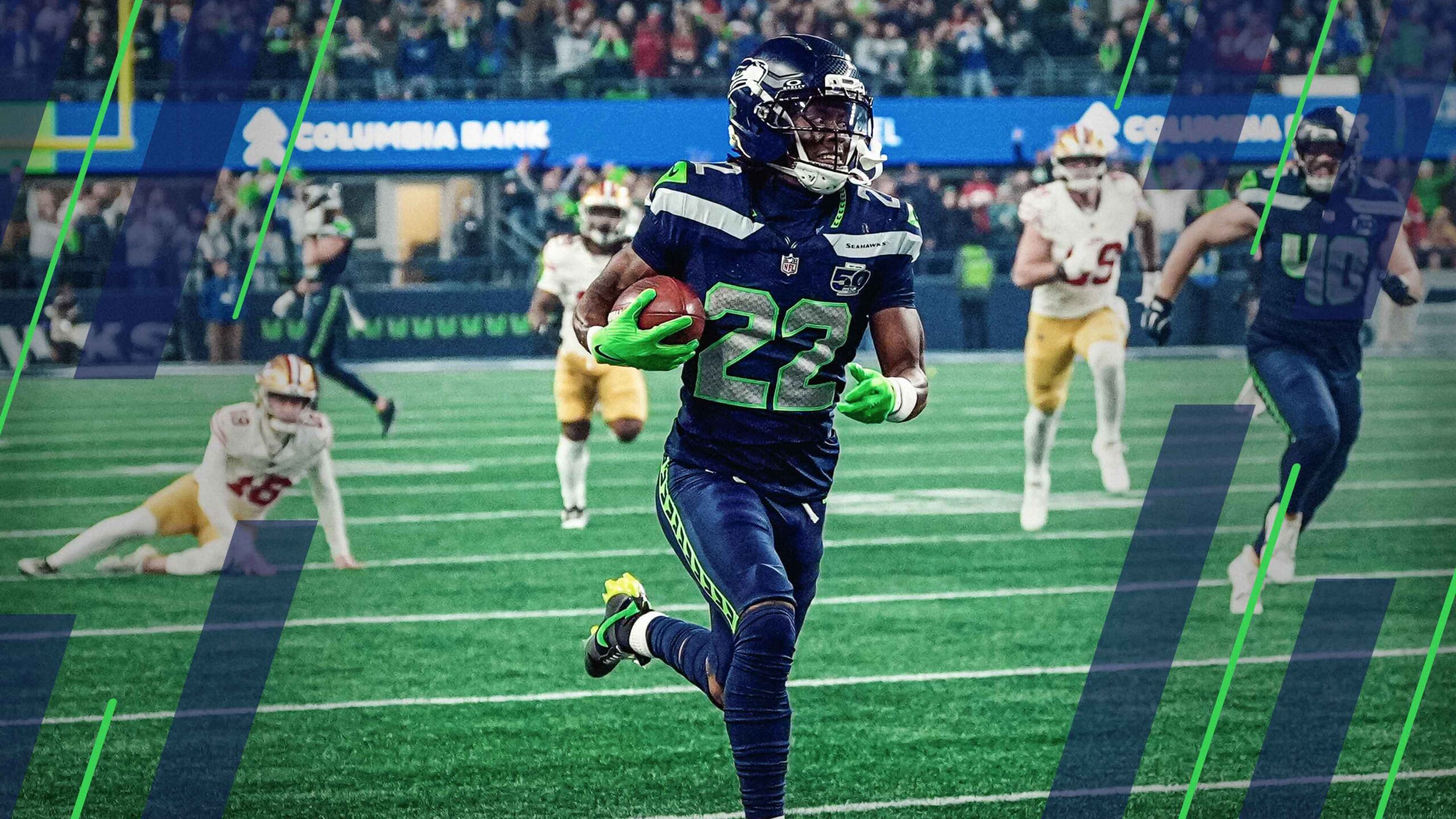
Unfortunately, the most-viewed live kickoff of the NFL season, the inaugural kick of Super Bowl 60, was booted through the back of the end zone by Andres Borregales. That’s only because he was avoiding a return from Rashid Shaheed, who brought an opening kickoff back 95 yards three weeks prior against the 49ers to produce one of the most electric playoff roars the sport has ever seen.
That sequence perfectly encapsulated the vision this rule change sought. The league wanted to promote safety when it adjusted the kickoff format, but it also wanted volatility — whether that’s in the form of a 95-yard house call or a game-changing fumble. All the while, coaches are paid to simply keep their teams above water prior to every drive.
Thankfully, the kickoff is no longer a ceremonial jog between commercials. An incremental rule tweak has led to a fairly rapid tactical evolution. Teams are now adjusting in real time, and the next great idea — on either side of the coin — might be just around the corner.