Zoom
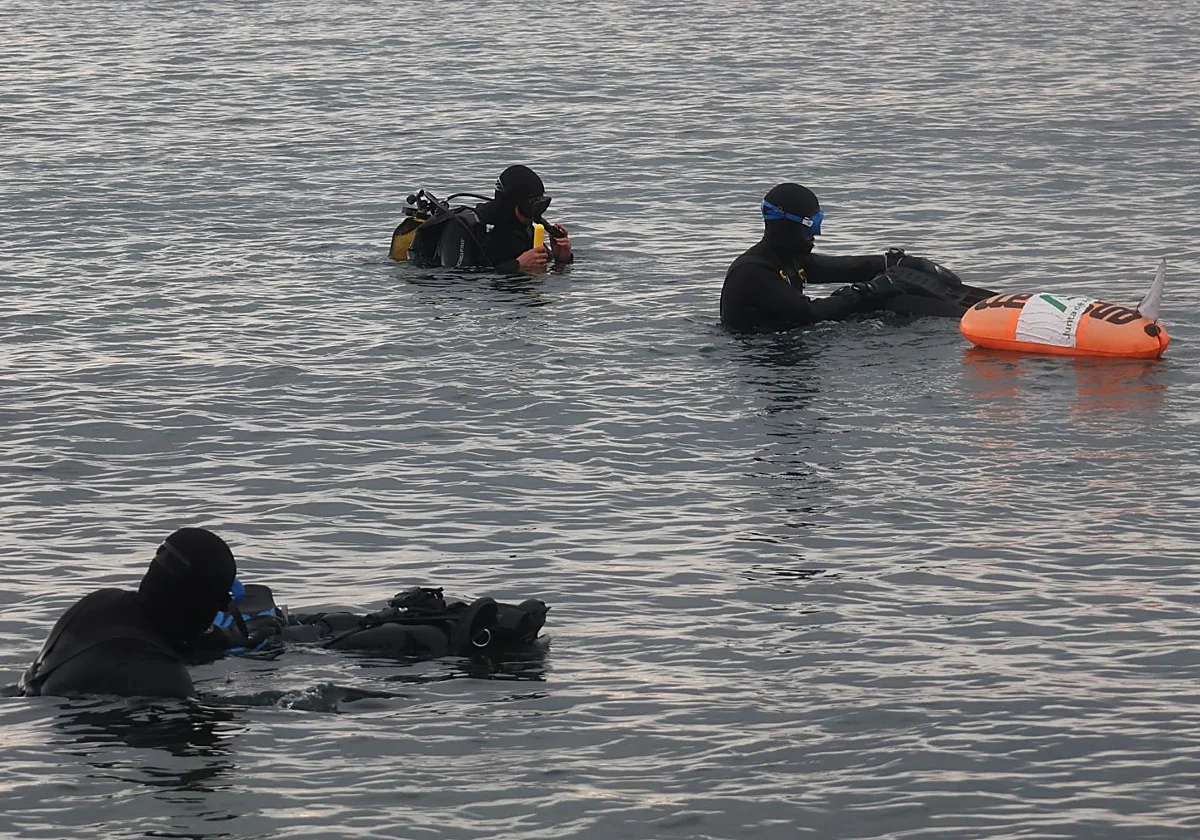
Divers setting up the Posidonia monitoring station in Calahonda. Josele Environment Ninth monitoring station in Malaga province for Mediterranean 'super plant' Posidonia installed in CalahondaThe regional government of Andalucía, in collaboration with Malaga University and Marbella-based organisation Produnas, has installed a new device to monitor this marine plant capable of improving the health of the planet and the coast
Mijas
Monday, 15 December 2025, 19:27
The sea at Calahonda, Mijas, has become the 'headquarters' of the ninth Posidonia monitoring station in Malaga province. Its purpose is to monitor the well-being of the meadows of this plant, which is exceptionally beneficial for both the coast and the planet in general, as it contributes to preservation and global warming prevention.
"It regulates carbon in greater proportions than a Mediterranean forest of the same size; it mitigates global warming and removes carbon dioxide (CO₂) from the atmosphere; it serves as a nursery for juvenile fish of commercially valuable species such as gilthead seabream, groupers, combers, white seabream and, occasionally, red mullet; it reduces coastal erosion; and it carries a seal of quality because it requires clean waters," lecturer in the department of botany and plant physiology at Malaga University Elena Bañares says. In other words, the Posidonia plant has 'magical' properties and it is also "endemic" to Mediterranean waters.
The new station in Calahonda (POS_39) is the 39th in Andalucía. It has been installed within the framework of Posimed - a programme for monitoring Posidonia meadows. Work is done with the participation of Produnas - an association created to preserve, protect and restore the last remaining dunes in Marbella of what was once an intact stretch from Cabopino to Río Real.
The western border
The Andalusian paradise of Posidonia is in Cabo de Gata, in the province of Almeria, where the areas of these marine phanerogams can be counted in hectares. "Almeria concentrates 99% of Posidonia in Andalucía," Bañares says.
The Malaga meadows are valuable because they are located at the western border of their distribution, in waters of obvious Atlantic influence. "The station will measure the density and coverage of the meadow to see if there are variations and what their state of health is," Bañares explains. The station registers, for example, whether flowering phenomena occur or whether sedimentation or mud cover the meadow.
Produnas will be in charge of the "supervision" of the station, data collection and "continuous" monitoring, "ensuring that this control point works correctly and provides key information for conservation".
The installation of POS_39 has been "an important step towards the monitoring and protection of the seagrass beds of the coastline", as Produnas has highlighted. Volunteer divers will manually carry out the task. The data is entered into tables that are validated by experts and form part of a process in which the regional government and the Hombre y Territorio association are collaborating.
The information obtained by the Posimed network, which has been in operation for almost 30 years and which has been collecting data since 2009, "helps in the management and conservation of this species", which contributes to the health of the planet and our coasts.