The NFL postseason is here, and with it comes a fresh wave of advanced data and analysis.
PFF’s media research team has been hard at work this week, preparing for kickoff by pulling target="_blank" rel="noreferrer noopener">Subscribe to PFF+ and get everything you need to win your fantasy season and gain an edge at the sportsbook.
Click here to jump to a game:
LAR@CAR | GB@CHI | BUF@JAX | SF@PHI | LAC@NE | HOU@PIT
Los Angeles Rams @ Carolina Panthers
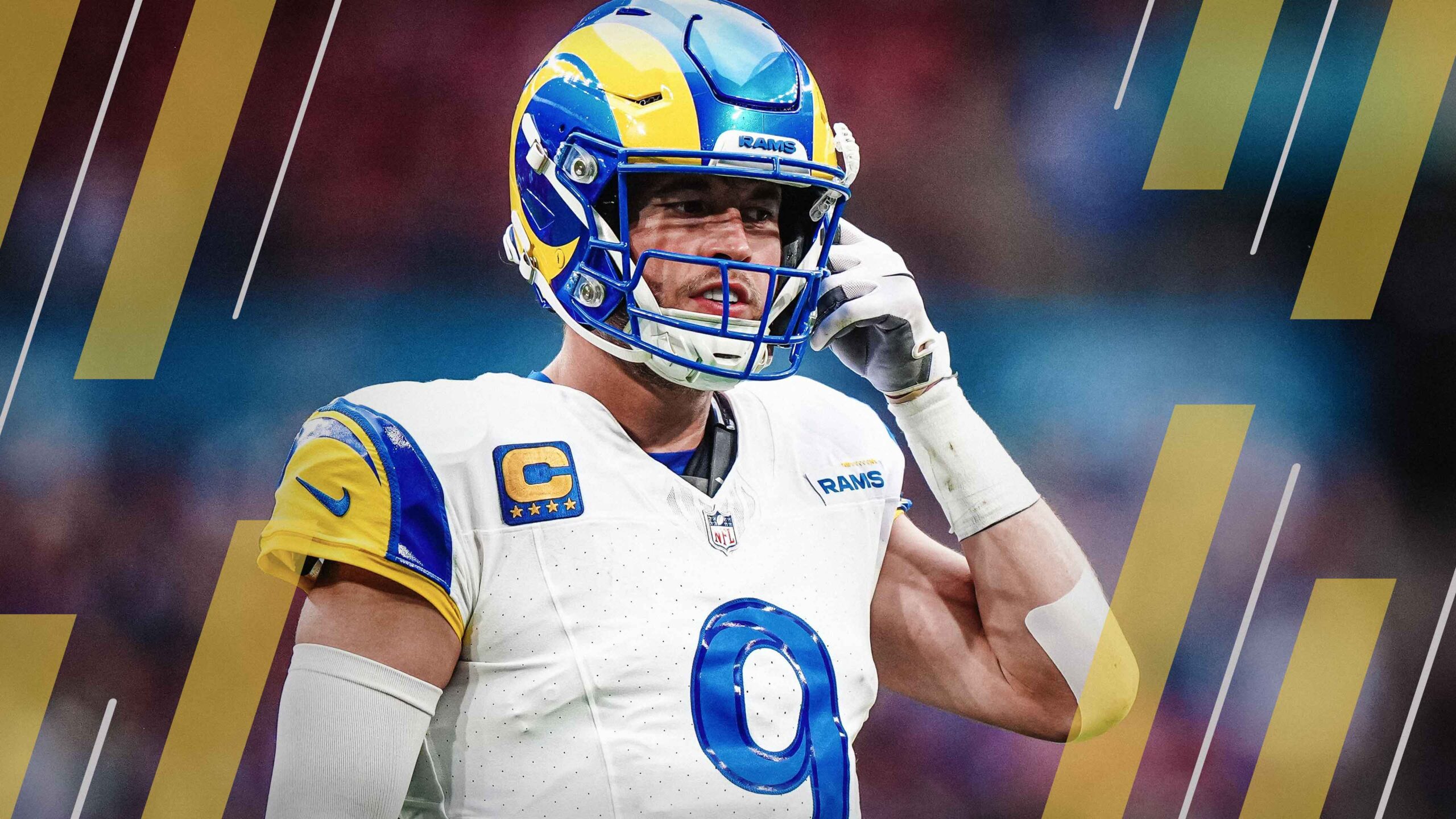
One of the premier matchups in the opening wild-card game is a true strength-on-strength battle: the Rams’ play-action passing game against Carolina’s play-action defense.
Los Angeles leads the league in play-action rate at 37% — the highest mark of any Sean McVay offense during his Rams tenure — and Matthew Stafford‘s elite production has justified the volume.
On play action, Stafford owns the PFF’s top passing grade (92.3), has generated a league-high 15 big-time throws, and ranks fourth with a 125.2 passer rating. His 22 play-action touchdown passes are the most by any quarterback in a season since 2006, and his 92 first down/TD conversions on play-action throws are the third-most over that same span.
However, Carolina has been one of the league’s toughest defenses to attack off play action, consistently limiting both efficiency and explosive plays. The Panthers have allowed a league-low 5.6 yards per attempt and the fifth-lowest passer rating (81.8) on play-action throws. Even while facing play action at a near-league-average rate (26%, 16th-highest), Carolina has surrendered just 38 first down/TD conversions — tied for the second-fewest — and their 11% explosive play rate allowed against play action ranks third-lowest in the NFL.
How Chris Shula adjusts his approach from the Week 13 matchup will be a key storyline, especially with the Rams’ usage of pass stunts. In that meeting, Los Angeles ran stunts on just 29% of Carolina dropbacks — the Rams’ third-lowest rate in any game this season. That’s notable considering the Rams led the NFL in 2025 with a 39% stunt rate and have consistently created havoc when leaning into them. When stunting, they’ve generated pressure on 48% of dropbacks (fifth-highest) and limited opponents to a 12% explosive pass play rate (sixth-lowest).
The challenge is that Carolina has shown it can handle stunt-heavy fronts better than most, both in protection and overall efficiency. The Panthers post a 39% success rate against stunts (11th-best) and have allowed just a 6% sack rate in those situations (11th-lowest).
So while stunts have helped Shula’s defense create disruption, the tradeoff has been giving up too many successful plays. Over the full season, the Rams have allowed a 42% success rate when using stunts — a bottom-five mark in the league.
The challenge is that Carolina has handled stunt-heavy pressure well, both in protection and efficiency. The Panthers' offense produces a 39% success rate vs. stunts, 11th-best in the league, and allows the 11th-lowest sack rate at 6%.
While pass stunts help the Rams generate disruption, the tradeoff has been giving too many successful pass plays. For the season, the Rams allowed a 42% success rate with stunts, 28th in the league.
Green Bay Packers @ Chicago Bears
Jordan Love’s last action came in Week 16 against the Bears in Chicago, when his day ended early due to a concussion. Notably, while Love was in the game, defensive coordinator Dennis Allen chose not to blitz him, as Chicago blitzed on just two dropbacks (12%), their lowest blitz rate against any quarterback or offense this season.
That approach was a sharp contrast from Week 14, when Allen blitzed Love on 44% of his dropbacks, the Bears’ third-highest blitz rate in any game this year. Love torched those looks, earning an elite 98.0 passing grade and a 156.3 passer rating while completing 9-of-12 passes with three touchdowns.
In the Week 16 rematch, with Allen leaning heavily on coverage, Love was far less efficient before exiting, as he produced just a 78.0 passer rating (his third-lowest of the season) and 5.9 yards per attempt (second-lowest). That split sets up a fascinating chess match this week — whether Chicago returns to an aggressive blitz-heavy plan, or sticks with the coverage-first approach that slowed Green Bay’s passing game.
Defending the run became a major issue for Green Bay down the stretch, and it’s an area the Bears will look to exploit. From Week 16 to 18, the Packers allowed 5.2 yards per carry on designed runs, ranking 28th in the league over that span. Even more concerning was the damage after contact — Green Bay surrendered a league-high 381 rushing yards after contact and allowed 3.8 yards after contact per attempt, ranking 29th over the final three weeks of the regular season.
That late-season dip represents a sharp decline from the Packers’ earlier profile. Through Week 15, Green Bay was one of the sturdier tackling units in the NFL, allowing just 2.5 yards after contact per rush, the eighth-lowest mark among all defenses.
Chicago’s backfield is positioned to benefit, particularly because both of the Bears’ top runners were more productive the second time they faced Green Bay. D'Andre Swift averaged 4.8 yards per carry with 2.8 yards after contact in Week 14, but improved to 6.0 yards per carry and 3.5 yards after contact in the Week 16 rematch.
Rookie Kyle Monangai showed an even more dramatic jump. After averaging 4.1 yards per carry with 2.1 yards after contact in the first meeting, he broke through for 5.6 yards per carry in the rematch, with 4.3 yards per attempt coming after contact. If the Packers can’t recapture their early-season tackling form, Chicago’s run game has the pieces — and the recent proof — to control this matchup again.
Buffalo Bills @ Jacksonville Jaguars
James Cook and Buffalo’s run game could be a major factor in determining the outcome of this matchup. Cook’s explosiveness has been a defining trait all season, as his 39 runs of 10 or more yards ranked second in the NFL during the regular season, trailing only De'Von Achane’s 40.
That production has been supported by strong work up front. Buffalo’s offensive line finished sixth in run-blocking efficiency, consistently creating clean lanes and favorable looks for Cook to operate within the structure of the scheme.
Cook also benefited from a league-best 2.1 yards before contact per carry, a key reason he emerged as the NFL rushing leader in 2025. However, that advantage will be tested against a Jacksonville run defense built to limit early movement at the line of scrimmage.
The Jaguars allowed just 1.1 yards before contact per rush attempt this season — the ninth-lowest mark in the league — and they’ve been equally strong at limiting chunk gains. Jacksonville’s 7.5% explosive run rate allowed ranked fifth-best among all defenses, suggesting big runs could be hard to come by.
If Buffalo is going to control the game on the ground, it will likely require Cook to continue creating beyond the designed structure — because Jacksonville has consistently proven capable of squeezing early-down rushing lanes and keeping explosive plays in check.
How Trevor Lawrence handles pressure will likely be one of the biggest determining factors in this matchup. When kept clean, Lawrence has been highly productive — his 25 touchdown passes from a clean pocket were tied for the third-most in the NFL this season. But when pressure arrives, the efficiency drops sharply. Under pressure, Lawrence has managed just four TDs against five interceptions, posting a 66.4 passer rating that ranks tied for 22nd in the league.
Even with those struggles, 2025 has been Lawrence’s best season under duress by the numbers. He’s set career highs in completion percentage (50%), yards per attempt (6.5), and passer rating when pressured, showing some growth in an area that has been a persistent issue throughout his career.
The concern, however, is volume. Since entering the league, Lawrence’s 24 interceptions under pressure are tied for the fifth-most among quarterbacks. And this matchup is likely to feature plenty of stressed dropbacks. Jacksonville’s pass protection has allowed pressure at a 32% rate (top 10 highest), and Buffalo’s defense generates pressure at a 37% clip, meaning Lawrence’s decision-making will be tested repeatedly.
Lawrence’s best counterpunch when the pocket collapses is his ability to create with his legs. Of his 42 scrambles for rushing attempts, 30 have come under pressure, and his four scrambling rushing touchdowns lead all quarterbacks this season. If Jacksonville is going to survive Buffalo’s rush, Lawrence’s ability to turn pressure into positive plays — and avoid the back-breaking mistake — will be central to the outcome.
San Francisco 49ers @ Philadelphia Eagles
San Francisco should expect to see plenty of light boxes from Philadelphia, as the Eagles lead the NFL with a 61% rate of defensive snaps featuring six or fewer defenders in the box. The 49ers’ run game hasn’t taken advantage of those looks this season, averaging just 4.1 yards per carry against light boxes — 30th among all offenses — with an 8.5% explosive run rate that ranks 29th overall.
While the ground game has struggled, Brock Purdy has consistently thrived when defenses keep numbers out of the box. Against light boxes, Purdy owns a 71% completion rate (third-best) and a 102.3 passer rating (tied for second-best), showing he’s been highly efficient when defenses prioritize coverage over run support.
What’s especially notable is that Purdy hasn’t simply lived on short throws. Even with Christian McCaffrey leading the team in receiving and posting a modest 2.7-yard average depth of target, Purdy still ranks among the league’s most aggressive passers in these situations. His 64% air yards percentage against light boxes is the third-highest among all quarterbacks, highlighting how often San Francisco is willing — and able — to push the ball downfield when defenses lighten the box.
Philadelphia’s deep passing attack could be poised for a productive day against San Francisco’s downfield coverage. Jalen Hurts has been effective pushing the ball vertically this season, with nine touchdown passes on throws of 20-plus yards, tied for the fifth-most in the NFL, and his 119.4 passer rating on deep attempts ranks fifth among qualifying quarterbacks.
That threat lines up well against a 49ers defense that has been vulnerable over the top. San Francisco has allowed the seventh-highest passer rating on deep throws (118.1) and surrendered 11 passing touchdowns on deep attempts, tied for the third-most in the league during the regular season.
Los Angeles Chargers @ New England Patriots
Justin Herbert has faced a barrage of pressure this season, as he faced pressure on 263 dropbacks (20 more than the next closest quarterback), and the Patriots will be another tough test with their strong interior pass rush.
The Patriots’ interior defensive line has combined to lead the NFL in pass-rush win rate (26.7%) and ranks sixth in total pressures (132). The unit received a boost with the return of Milton Williams in Week 18. With Williams and Christian Barmore on the field together, New England has posted a pressure rate of 42.0% that would rank second in the NFL.
The Patriots hold an advantage against a Chargers interior offensive line that has been among the league’s weakest units in pass protection. The group’s combined PFF pass-blocking grade (48.4) ranks 31st, and its 127 total pressures allowed are 14 more than any other interior offensive line.
Justin Herbert has been far more efficient when kept clean. From a clean pocket, he ranks fourth among qualifying quarterbacks in completion rate (77%) and ninth in success rate (47%), but when pressured, he ranks 23rd in completion rate (47%) and 21st in success rate (27%).
The matchup on the other side of the ball features the NFL’s most explosive passing offense in the Patriots against a Chargers defense that limits big plays. New England leads the league in explosive pass rate (17.7%), its highest mark since Tom Brady’s MVP season in 2017 (17.9%), while the Chargers have allowed the fifth-lowest explosive pass rate this season (11.2%).
Much of New England’s explosive production has come on deep passes. Drake Maye ranks third in PFF passing grade on deep throws (98.6) and second in deep completions (34), with strong chemistry driving that success. Among 70 pass-catchers with at least 10 deep targets, Stefon Diggs ranks first in catch rate (73%) and Kayshon Boutte ranks second (71%).
The Chargers, however, have defended the deep ball well. They are tied for first in deep completions allowed (16) and rank third in deep completion rate allowed (30%), while also ranking second in forced incompletion rate on deep targets (28%).
Houston Texans @ Pittsburgh Steelers
The Steelers offense against the Texans defense sets up as a battle of the quick game. This season, Aaron Rodgers ranks second among 32 quarterbacks in average time to throw (2.56 seconds), trailing only Tua Tagovailoa.
On the other side, the Houston Texans generate quick pressure — under 2.5 seconds — on 25.7% of dropbacks, the third-highest rate in the NFL, led by Will Anderson Jr., who ranks first among all defenders in quick pressures (58).
C.J. Stroud will need help against the Steelers blitz in this matchup. Pittsburgh blitzes on 39.8% of pass plays, the fifth-highest rate in the league, and Stroud ranks 13th among 32 quarterbacks in yards per attempt against the blitz (7.8). That number could climb if Houston’s pass-catchers generate more after the catch, though the Texans rank fourth-lowest in yards after the catch per reception against the blitz (4.9).
The Texans’ pass protection has also struggled to handle pressure when blitzed. Houston allows pressure on 45.8% of blitzes, ranking 26th in the NFL, but when defenses do not blitz, it allows pressure on just 29.4% of plays, the fifth-best rate in the league.