Estimated Reading Time: 11minutes
Prepare for the 2026 NFL Draft
Try the PFF Mock Draft Simulator — fix your favorite team by drafting and trading with other franchises.
Explore PFF Mock Draft SimulatorWe're diving into the top rookies by PFF overall grade from the wild-card round. To qualify, players needed to have logged at least 25 snaps.
1. TE Colston Loveland, Chicago Bears (90.6)
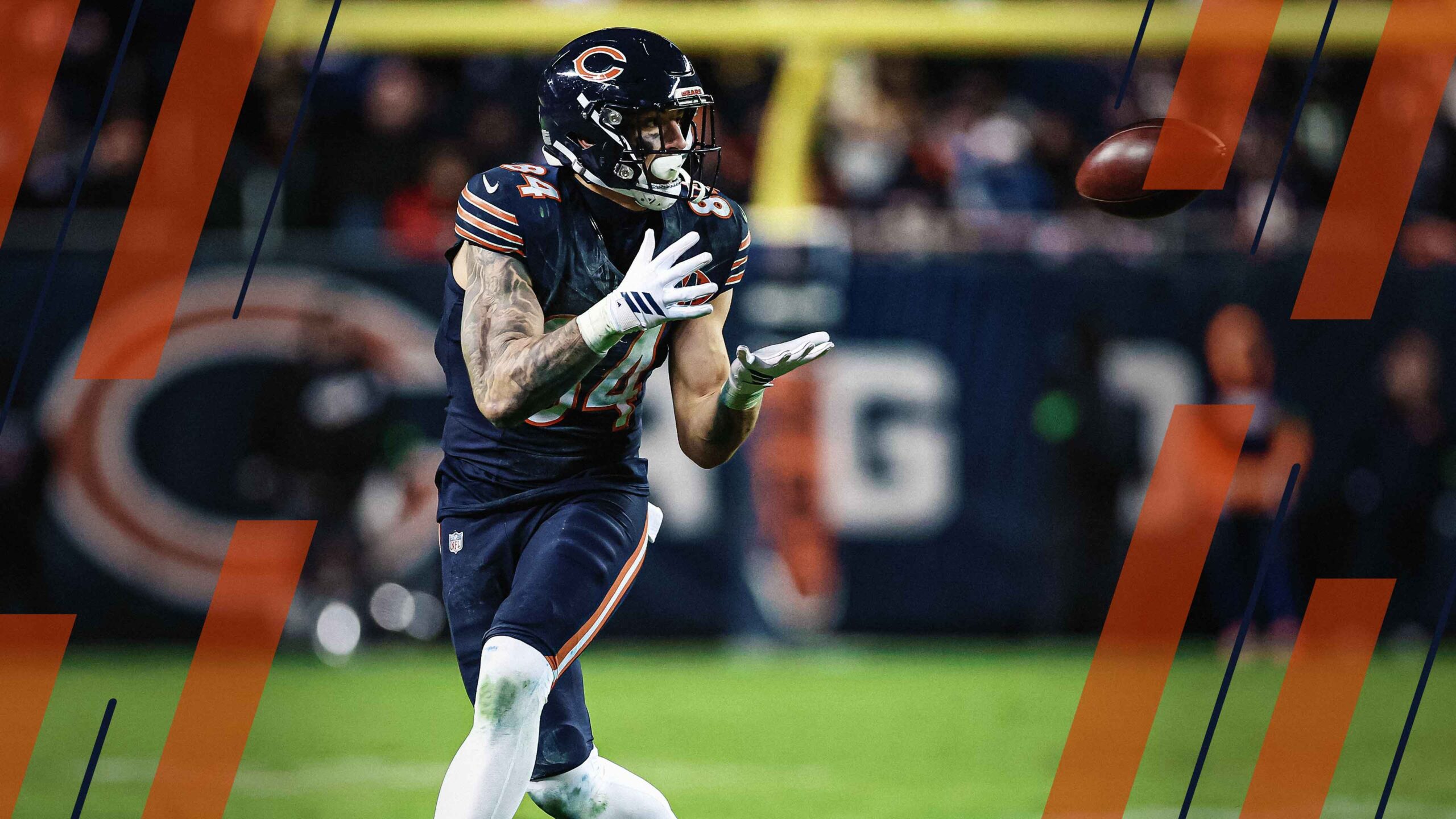
Loveland impressed in his playoff debut, grading out as PFF’s top tight end over the weekend after an eight-catch, 137-yard game against the Packers. He was targeted 15 times, with 11 coming in the second half. Loveland accounted for five explosive gains in the comeback victory, including four plays of 20-plus yards.
He caught a ball over linebacker Edgerrin Cooper for a 22-yard gain late in the first half, and he gained 29 yards off a deep target toward the sideline on third-and-7 early in the third quarter. He followed that up with a 19-yard gain off a shallow cross on the next play to move Chicago deep into the red zone. Loveland added catches of 22 and 21 yards in the fourth quarter, finishing the night with a 90.1 PFF receiving grade. He led all tight ends and wide receivers on wild-card weekend in PFF receiving grade and receiving yards.
The 2025 10th overall pick has been on fire, with three consecutive games of at least six catches and 90 receiving yards. Loveland leads all tight ends in targets (37), catches (24) and receiving yards (322) in that span. He has two touchdown catches and is the only tight end with double-digit first-down gains (14) during that stretch, too. Since Week 17, Loveland ranks second in yards per route run (2.75) while leading all tight ends in PFF receiving grade (88.9).
He is also the highest-graded tight end in the second half of games this season (90.0), having made 39 second-half catches for 497 yards with 11 explosive gains. The first-round pick is the Bears' most targeted player in that portion of the game (55).
Explore PFF Premium Stats
Game grades, positional splits and high-level metrics for Loveland's 2025 season.
Open Loveland's Profile2. WR Matthew Golden, Green Bay Packers (90.6)
Golden hauled in four of six targets for 84 yards and a touchdown — the first of his NFL career. The score came with just under seven minutes remaining in the game, as he took a screen pass 23 yards to the endzone, breaking three tackles along the way.
That wasn’t Golden’s only explosive gain. He was also able to break free from Jaylon Johnson early in the second quarter for a 36-yard pickup. Golden moved the chains with every catch and led all receivers this weekend with a 90.0 PFF receiving grade.
Golden finishes his rookie campaign having caught 33 of 46 targets for 445 yards. He moved the chains 20 times and recorded 11 catches of 15-plus yards en route to a 72.5 PFF receiving grade this season —fifth best among rookie receivers.
Golden logged PFF receiving grades of 83.9 or higher at every depth of the field, with his best work coming from 10-plus yards out. He caught seven of eight targets at that intermediate level for 90 yards, earning a 94.9 PFF receiving grade on those plays. Most of his receiving yards this season came from deep passes, of which he caught seven of 15 for 233 yards, leading all rookies with a 98.0 PFF receiving grade on those plays.
3. S Craig Woodson, New England Patriots (77.4)
Woodson graded out as the second-best run defender this weekend after finishing with two tackles and four assists, including one tackle for a loss.
He was also targeted five times in coverage, with three of those passes being dropped by Chargers receivers. He allowed two catches, both for first downs, but they came on the Chargers' final drive of the game with Woodson playing off-coverage. He added four more tackles in coverage, along with another stop, finishing the day with eight total tackles and no misses.
The fourth-round pick from California came into the playoffs as the fifth-highest-graded rookie safety in the regular season (66.5). He has stood out in run defense, grading out as the ninth-best run defender at the position (83.9). Woodson has made 26 tackles and 12 stops, and his 2.5% negatively graded play rate is tied for the best clip in the rookie safety class — and places him in the top 15 overall.
4. T Ozzy Trapilo, Chicago Bears (76.0)
Trapilo’s night and season ended on a somber note after he ruptured his patella tendon on the final drive of the game. Although he allowed a season-high seven pressures to the Packers' pass rush, he was excellent in run blocking (85.9 PFF run-blocking grade, second best in wild-card round), particularly in zone schemes (89.5).
Trapilo recorded the third-best impact-block rate among all offensive linemen this weekend (21.7%), along with the eighth-best defeated rate (4.3%). He finished the weekend as the third-highest-graded tackle.
Since taking over as the Bears' starting left tackle in Week 8, the second-round pick from Boston College logged a 76.3 PFF overall grade (third best among rookie tackles) and ranked in the top five in the draft class in PFF pass-blocking (75.4) and run-blocking (68.9) grades.
Trapilo's 7.0% pressure rate ranked 10th highest among starting left tackles, but he placed in the middle of the pack in total pressures allowed (20). Meanwhile, his 8.8% defeated rate as a run blocker ranked fifth best among starting left tackles.
5. T Will Campbell, New England Patriots (75.6)
Campbell stood out in the run game against the Chargers, earning a third-best 84.3 PFF run-blocking grade for the weekend. He paved the way with a position-best 89.8 PFF run-blocking grade in gap schemes and produced the ninth-best impact-block rate (12.5%).
He also tied with teammate Morgan Moses for the seventh-best defeated rate (8.3%). Campbell’s pressure rate was high (12.5%), as he surrendered five pressures, but he still graded out as the fourth-best tackle of the wild-card round.
In Campbell’s first two games back from a knee injury, his 84.7 PFF run-blocking grade ranks third. His impact-block rate (13.6%) over the span is tied for 13th best, and he holds 70.0-plus PFF run-blocking grades in zone (72.4) and gap (82.8) schemes. Campbell is the NFL's sixth-highest-graded tackle over the past two weeks (78.6).
Explore PFF Premium Stats
Game grades, positional splits and high-level metrics for Campbell's 2025 season.
Open Campbell's Profile6. S Marques Sigle, San Francisco 49ers (73.2)
Sigle came free around the edge midway through the fourth quarter of the 49ers' bout with the Eagles to hold Saquon Barkley to zero yards on a carry — one of five run-defense tackles for the 2025 fifth-round pick.
That stop was timely, as the Eagles were situated just outside of the red zone with San Francisco holding a one-point lead. Sigle’s performance helped him earn the fourth-best PFF run-defense grade over the weekend (76.6).
It was a standout game for the California product, as he entered the weekend with a 46.9 PFF overall grade (ninth worst) but showed up when the 49ers needed it. Sigle has spent most of his time on special teams (225 snaps), having played only nine defensive snaps in two games since Week 8 leading up to the playoffs.
Despite his struggles, Sigle owns a 77.1 PFF run-defense grade — the seventh-best mark in the draft class. He has recorded 22 tackles with five assists and nine stops. His 5.7% run-stop rate ranks second in the class, behind the Titans‘ Kevin Winston Jr. (6.0%).
7. WR Tetairoa McMillan, Carolina Panthers (72.2)
McMillan caught five of six targets for 81 yards against the Rams, all of which went for first downs. He tallied three explosive gains, with a long of 22 yards in the second quarter, and finished the day with a 70.9 PFF receiving grade (10th best over wild-card weekend).
The eighth overall pick from Arizona ended his rookie season with 75 catches for 1,095 yards. He placed in the top 15 among wide receivers in receiving yards, touchdowns (seven) and first downs (60) while ranking in the top 10 in explosive gains (33). Eighteen of those plays went for plays of 20-plus yards, tying for the ninth most at the position.
McMillan was successful against single coverage (77.3 PFF receiving grade) and zone coverage (77.1 PFF receiving grade). His 16 catches for 250 yards against single-coverage looks led all rookies. He was the only rookie receiver to gain double-digit first downs against single coverage (14).
McMillan also ranked in the top two among rookie wideouts with 51 catches against zone coverage for 746 yards and 39 first downs.
All three of his explosive plays against the Rams in the wild-card round came between the numbers, where he caught 43 passes and ranked in the top 10 in receiving yards (652), first downs (34) and catches of 15-plus yards (20) this season. He averaged 2.81 yards per route run and earned an 84.0 PFF receiving grade from that area of the field.
8. RB TreVeyon Henderson, New England Patriots (70.1)
Henderson handled nine carries and produced 27 rushing yards against the Chargers. His longest gain came from a 15-yard run up the middle with less than two minutes in the game to move the sticks and end the contest. Henderson finished the night with a 67.7 PFF rushing grade.
The second-round pick from Ohio State has rushed 189 times for 938 yards and nine touchdowns in his rookie campaign. He leads all rookie running backs in touchdowns and is one of two with more than 900 rushing yards (Ashton Jeanty, 975).
Henderson has gained 291 yards before contact and has picked up 647 additional yards after initial contact. He ranks in the top five in the class in first downs (46), missed tackles forced (31) and explosive runs (19).
9. S R.J. Mickens, Los Angeles Chargers (67.3)
Mickens had a quiet night against the Patriots, making two tackles in the Chargers' loss. He was targeted once without giving up a catch.
Mickens' playing time increased in Week 6, and the sixth-round pick from Clemson finished the season as the third-highest-graded rookie safety (70.8). He was a strong coverage defender, allowing four catches on 10 targets for 28 yards — the second fewest among all safeties, albeit on a smal sample size.
His longest catch surrendered gained 11 yards, and he also picked off two passes. Mickens' 8.3 NFL passer rating when targeted was the best in the league, and his 74.2 PFF coverage grade led all rookie safeties.