Zoom
Social media Sadfishing: the art of opening your heart on social media to get likes and followersThe algorithm rewards drama and the audience responds with messages of support, hearts and views
Wednesday, 7 January 2026, 17:27
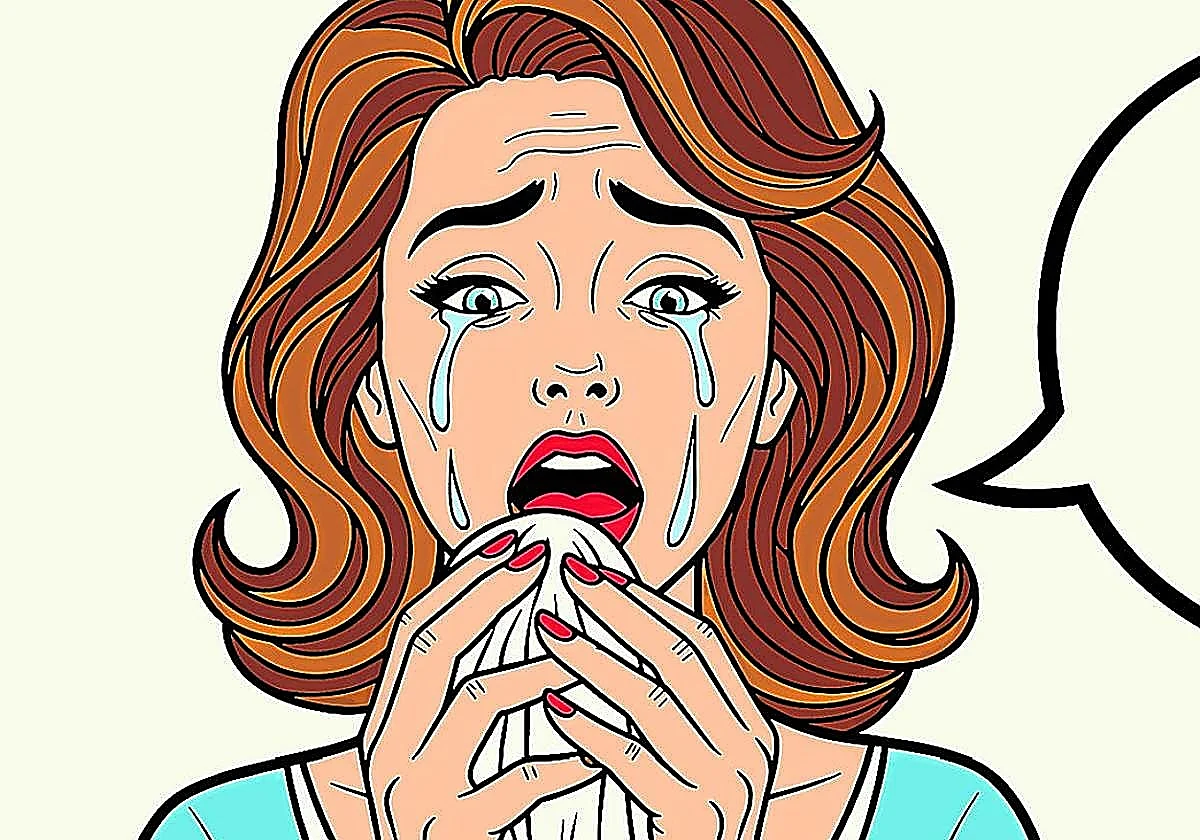
An influencer who announces her latest break-up in floods of tears via TikTok, an anonymous young man unable to articulate words while explaining that he has not been able to get onto the university course of his dreams, a woman who has just been fired from her job and posts several 'stories' explaining in great detail exactly what happened, complete with dramatic pauses... These types of scenes are becoming more and more common and are being posted by everyone, from celebrities with millions of followers like Lola Lolita or Justin Bieber, to perfect strangers, who don't think twice about sharing their miseries with an audience addicted to the drama.
This behaviour is known as 'sadfishing' or, to put it bluntly, the fashion of seeking pity on social networks to gain popularity. "The faces, platforms and motives change, but the pattern repeats: exposing personal suffering publicly to receive comfort, support or validation," summarises Oliver Serrano León, director and professor of the Master's degree in General Health Psychology at the Universidad Europea.
The term is not new, but its popularity is. It was coined in 2019 by the British writer Rebecca Reid in an article in which she analysed a series of posts published on social media that sought only a huge response. In fact, the name of this behaviour "alludes to the idea of using sadness as bait to attract emotional attention", explains the expert. Sharing publicly that you are sad, tired or going through a bad time "is a legitimate and human behaviour". The problem arises when that suffering is used in a strategic or exaggerated way with the sole objective of gaining likes, supportive comments, followers or even economic benefits.
Kendall Jenner, the pioneer
In such cases, sadness works as a powerful tool: the algorithm rewards intense emotion and the audience responds with messages of support, hearts and views. The case that popularised the term was when the model Kendall Jenner shared a very personal message on Instagram about how badly she had been affected by acne as a teenager and the huge impact it had on her self-esteem.
It turned out that the post was part of an advertising campaign for a cosmetics brand to treat the skin condition and many of her followers felt manipulated. What appeared to be an intimate confession was, in reality, emotional marketing.
Since then, other well-known faces have been accused to a greater or lesser extent of sadfishing on their social media. Justin Bieber, for example, was criticised when he spoke publicly about his mental health problems. In Spain, images such as those of Spanish influencer Lola Lolita crying inside her car because of some personal problem have become a recurring example of this type of emotional content. And this is precisely one of the keys to this phenomenon: it is almost impossible to tell from the outside whether the crying is genuine, exaggerated or directly instrumentalised and this makes it a double-edged sword. "This ambiguity feeds both empathy and rejection," agree the experts.
From a psychological point of view, sadfishing can be understood as a continuous search for social validation. In an environment where self-esteem is largely built through the response of others, showing vulnerability can become a way of feeling seen, liked or understood. While this behaviour may be initially liberating for the person who posts the story, it also carries, according to experts, "significant psychological risks. The first is extreme emotional exposure in an unempathetic environment. The internet does not always respond with care, and well as the messages of support there can also come mockery, discrediting or harassment".
Nature or manipulation?
Another risk is dependence on external feedback. "When emotional relief depends exclusively on likes and comments, the capacity for emotional self-regulation is weakened and a dangerous cycle is generated: post to feel better, receive support, need to post again to get the same relief. This mechanism is similar to other addictive behaviours. Social media activates reward circuits in the brain through intermittent social reinforcement. You never know how many 'likes' you will receive and that uncertainty makes the behaviour repeat itself," explains Oliver Serrano León.
Moreover, sadfishing can trivialise serious mental health problems. When everything becomes content, there is a risk of "reducing suffering to an emotional narrative that is part of a personal brand". In this sense, some experts warn of the negative impact this behaviour can have on teenagers, "for whom emotional hypervisibility can normalise the idea that you have to show pain to exist on social media".
Where then is the line drawn between authenticity and emotional manipulation? The reality is that there is no straightforward answer. What may seem like exaggeration or victimhood to an onlooker may be the only way for the person posting the content to ask for help. That is why many psychologists insist on looking at context and frequency. "A one-off posting at a difficult time is not the same as a constant exposure of suffering to maintain attention. In the first case, it may be a valid form of catharsis; in the second, an unhealthy pattern," they say.